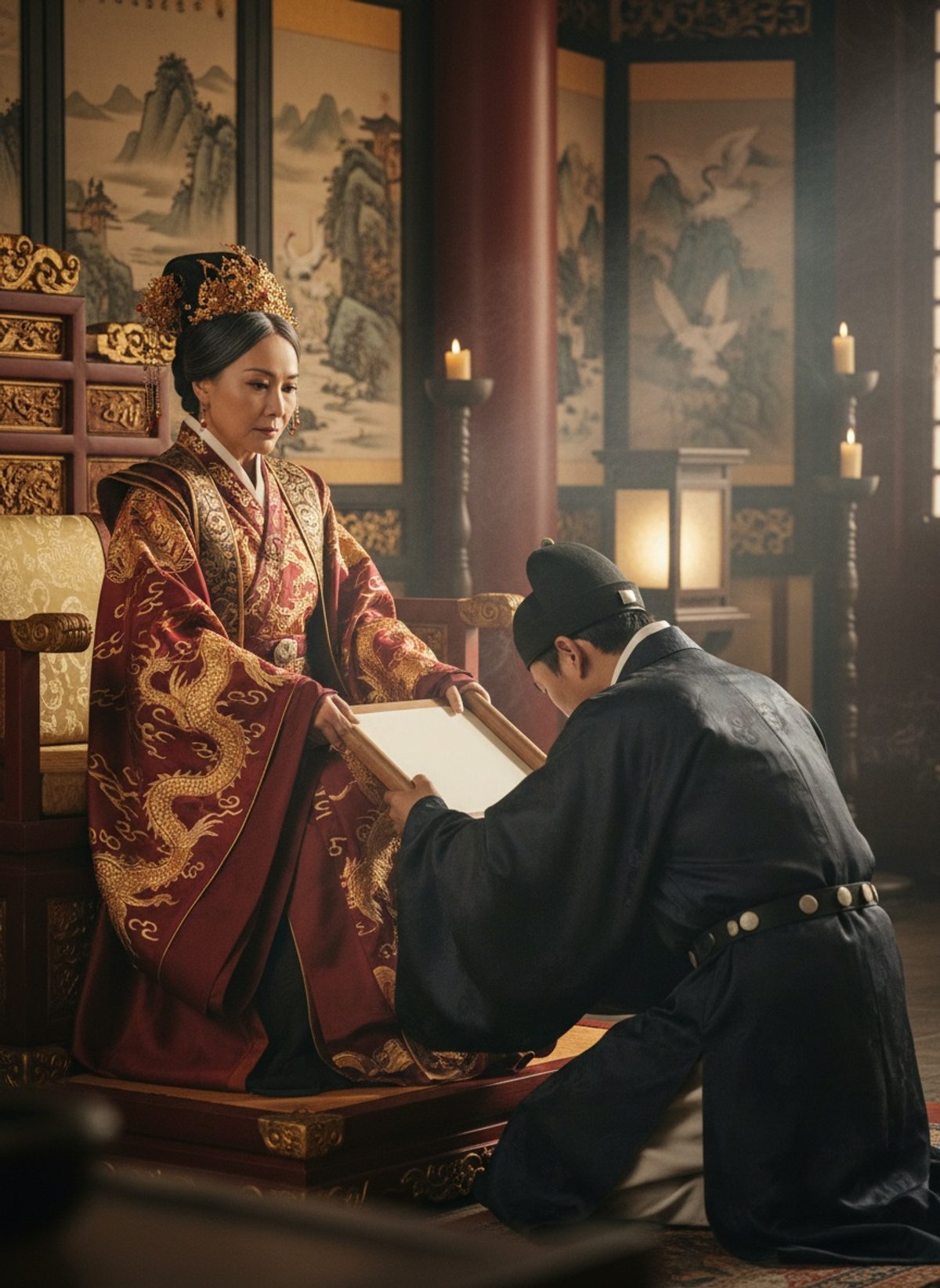
The aged stone halls of the imperial palace at Luoyang stood bathed in the golden glow of the late afternoon sun. A gentle breeze rustled through the ancient palms, whispering secrets of the Tang Dynasty's grandeur. As courtiers shuffled in their embroidered silks across the serene courtyards, the air was tense with anticipation. In AD 693, such a feeling signified more than routine unease—it heralded the arrival of a petition directed straight to the heart of power. And today’s petitioner had challenged the unspoken rules by her very existence on the parchment: a common scholar's widow had written directly to the formidable Wu Zetian, the ruling Emperor of China.
Breaking Through Tradition
At the heart of China's flourishing empire during the Tang Dynasty was a woman who had transcended all expectations and norms. Wu Zetian, the first and only woman to take the title of Emperor in four millennia of Chinese history, enthralled and terrified the realm in equal measure. Born to a relatively modest family, Wu Zetian had risen from the status of a concubine to empress, and finally, against all conventions, to emperor. Her reign, marked by both cruel purges and cultural refinement, was defined by her iron will and strategic acumen. The walls of the court guarded countless tales of ambition and cunning, yet nothing prepared them for a petition penned by a woman of no great social standing, addressing Wu Zetian directly.
In the structure of Tang society, writings addressed to the emperor were meant to traverse a complex web of bureaucracy, dissected and scrutinized by officials at each level. For a widow, one living at the fringe of significance, to send her words straight to the "Son of Heaven" was an affront to these layers of custom. Yet, here they were, the characters inked by a determined hand, now unfurling before the eyes of the most powerful woman in the world. As the court held its collective breath, bracing for a familiar wrath, Wu Zetian read in silence. What those characters contained—reasonings and requests—wafted like incense over the gathering of dignitaries, who awaited their ruler’s unpredictable embrace of the petition.
The Unwavering Ink
In the historical panorama of the Tang Dynasty, Wu Zetian’s court was a theatre of evolving gender roles, though strides towards equality remained saplings among the giants of tradition. Her tenure was noted for propelling capable individuals from all walks of life into government and for nurturing the arts and education. However, for a common widow—identified not by her name in history but by her defiance—to engage directly with the emperor through a mere petition, it was an accomplishment almost as remarkable as Wu’s ascension itself.
As Wu Zetian's eyes scanned the petition’s content, the court officials exchanged nervous glances, each anticipating their emperor’s verdict. Would this audacious challenge to protocol yield punishment or mercy? In her seasoned hands, the scroll might have appeared but a fragile link between a distant voice and the throne. Yet within its fibres, the ink had crystallized the legitimacy of an ordinary soul’s plight into words potent enough to quiver the ruling order. Wu Zetian’s decision to act upon the widow’s plea was not simply a nod to her unorthodox approach; it signified a deeper recognition that power could resonate with equity—if only momentarily.
A Windswept Change
The court’s stone walls had borne witness to many decisions delivered by Wu Zetian, but few reverberated with such cultural weight as her acceptance of this humble plea. The widow’s petition, once thought to court inevitable reprimand, instead translated into a triumph of audacity and an illustration of Wu Zetian’s complex yet astute leadership. For the great many who navigated life outside the confining palatial walls, this moment became a beacon of hope, however fleeting, that one’s voice—though muted by birth and circumstance—could still ripple through the vast tides of imperial influence.
Why would Wu Zetian, a figure described by many contemporaries as formidable and unyielding, heed the appeal of a scholar's widow? Perhaps the answer lies in Wu’s own odyssey from obscurity to the pinnacle of power. Her unique perspective may have endowed her with an empathy, however calculative, that saw reflections of her own struggle in those who dared carve pathways through the rigid social strata. In honoring the petition, she not only acknowledged the power of the written word but also subtly reinforced the changing roles and contributions of women in her era.
Wu Zetian’s reign stands as a testament to the intricate dynamics of power, tradition, and transformation. Her decision to listen to the solitary, determined voice amid the thundering chorus of convention speaks to the potential within every dissident whisper. Veiled by time and mystery, this episode reminds us that history, in its immutable guise, is often moulded by the ephemeral courage and conviction of the overlooked. Today, as we delve into the stories left untaught, we find the echoes of a woman's ink on parchment—an ink that, for a brief moment, commanded the attention of an empire.