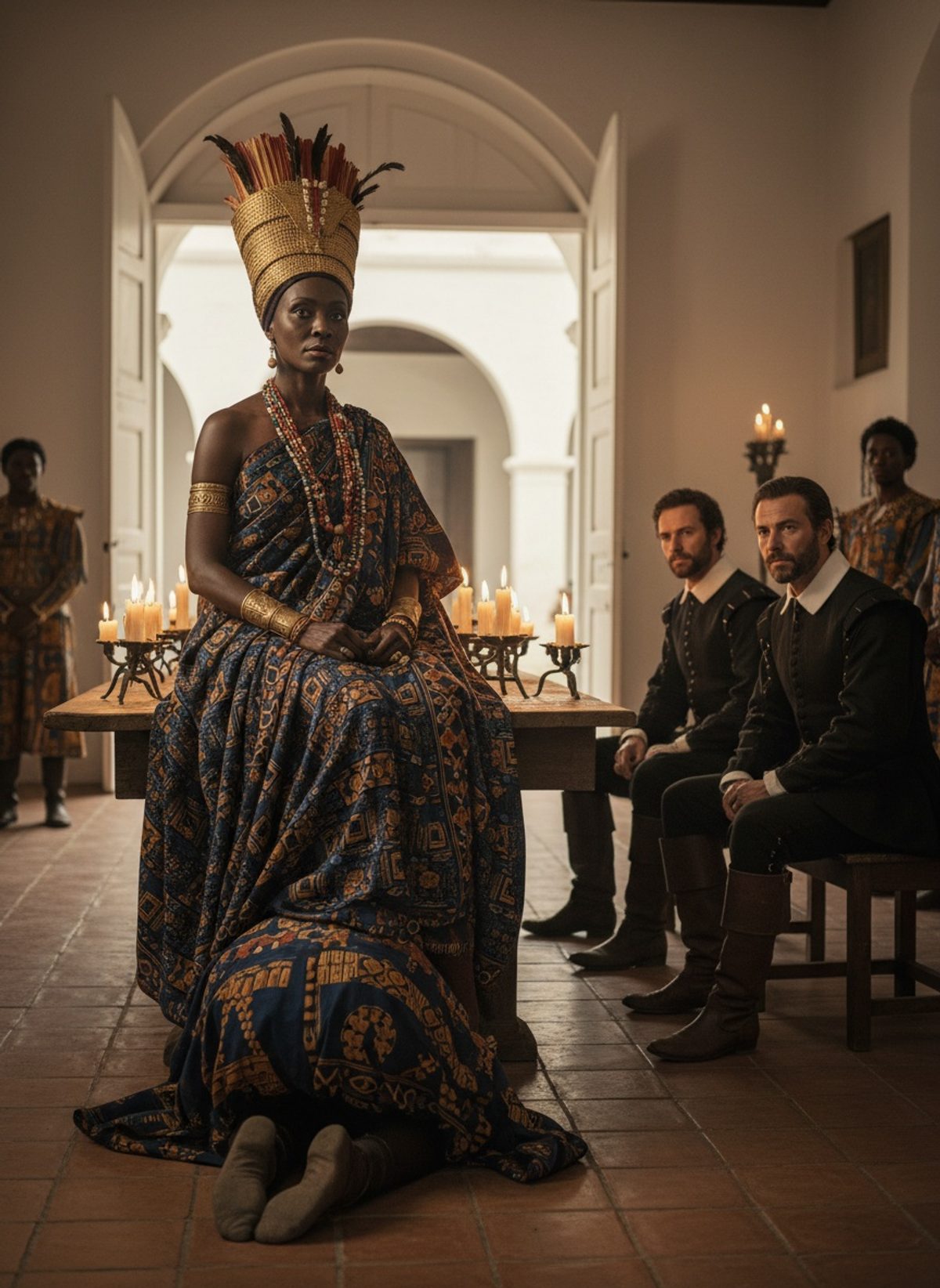
The sun loomed high over the Angolan landscape, casting its relentless heat over the colonial court. The pungent aroma of salt and sea mingled with the earthy scent of the African savannah, creating an intriguing mix that danced in the air around the wooden docks and stone buildings. It was here, in 1622, where history trembled at the threshold of the Governor's mansion in the Portuguese outpost. Today, Queen Nzinga of Ndongo was to negotiate a peace that would redefine power and resistance.
The Conundrum of Diplomacy
Within the walls of that colonial chamber, ornate yet oppressively foreign, sat the commander of the Portuguese trade and conquest in West Central Africa. The governor assumed his usual place of dominion, ready to assert imperial authority. Facing him stood Queen Nzinga, leader of the Ndongo and Matamba kingdoms, celebrated for her tactical brilliance and indomitable spirit. A master of political acumen amidst the treacherous landscape of colonial subjugation, Nzinga knew that this meeting was much more than a mere diplomatic encounter; it was an arena where dignity and sovereignty itself was at stake.
As she entered, Nzinga's eyes scanned the room, noting its richly draped windows and lavish furnishings — except for one glaring omission. No chair had been prepared for her. This was a deliberate snub, a calculated move by the Portuguese to communicate her deemed inferiority. Many might have yielded to such an affront, allowing their dignity to bend under the weight of colonial expectation. But not Nzinga. Her decision in that moment echoed far beyond the confines of the room, resonating through the ages as a symbol of shrewd resolve.
The Unyielding Alternative
In many cultures, the act of kneeling was not just a physical posture but a declaration of submission. The Governor's intention was to underscore Nzinga’s place in a perceived hierarchy, one in which the power of Portugal was lord over all. Yet, the seasoned queen had anticipated every move. With an imperceptible nod, she signaled her entourage. A servant hastened to her side, and without hesitation, fell to hands and knees. In this unexpected transformation, the absence of a chair no longer mattered. Nzinga sat upon her human throne, looking directly at the governor with unflinching gaze. She exuded an air of regal authority, transforming an intended moment of humiliation into one of empowerment.
This deliberate action carried immense weight. It transformed the dynamics of the discussion that followed. In one elegant maneuver, Nzinga elevated her status from a supplicant foreign dignitary to an equal negotiator. It was a bold gesture of autonomy and a reminder that the great crown of Ndongo did not come with concessions of sovereignty.
The Complex Chess of Politics
The subsequent negotiations were fierce, as Nzinga wielded her intellect and eloquence against colonial subjugation. The conversation shifted from one of demands and expectations to mutual acknowledgment of power. Nzinga navigated the complexities of Portuguese ambitions with tact, performed in languages both literal and cultural, which allowed her to straddle Indigenous and European worlds proficiently. She became a diplomat extraordinaire, crafting agreements with the intricacy of an experienced strategist, coolly defending her people's rights while maintaining the delicate balance of power.
Throughout, Nzinga was assertive in defending her lands from becoming just another addition to the Portuguese colonial portfolio. Her presence alone was a masterstroke of defiance, ensuring that Ndongo was regarded as not just a realm on a map, but a forbidden territory of fierce resilience and foundation for national identity.
The Legacy of Defiance
After this moment of confrontation, Nzinga's name became intertwined with narratives of resistance across the continent and colonial discourse. Stories of her audacity spread, inspiring and kindling flames of resistance in other cultures. Even in European records, she was recognized not merely as a leader but as an unparalleled strategist. Her refusal to bow illustrated the profound impact a single act of defiance could have against the backdrop of oppressive colonial structures.
Debates about the tactical maneuverings and ramifications of her negotiation still capture modern-day imaginations. The symbolic nature of that encounter with the Portuguese governor at Ndongo stands as a vivid reminder that sometimes, the greatest victories are not won on the battlefield but in a simple act of sitting with assurance of one's place in the world.
Reflections on Sovereignty and Strategy
Queen Nzinga's encounter with Portuguese authority is more than the story of a queen who refused to kneel. It invites us to ponder contemporary issues of power, representation, and autonomy. In a world where voices continue to assert and reclaim sovereignty, Nzinga's brave defiance remains a guiding beacon. Her story isn't merely an African tale but a universal one, echoing a timeless truth — that sovereignty and dignity cannot simply be conferred or removed by another but must be boldly lived and fiercely guarded at all times.