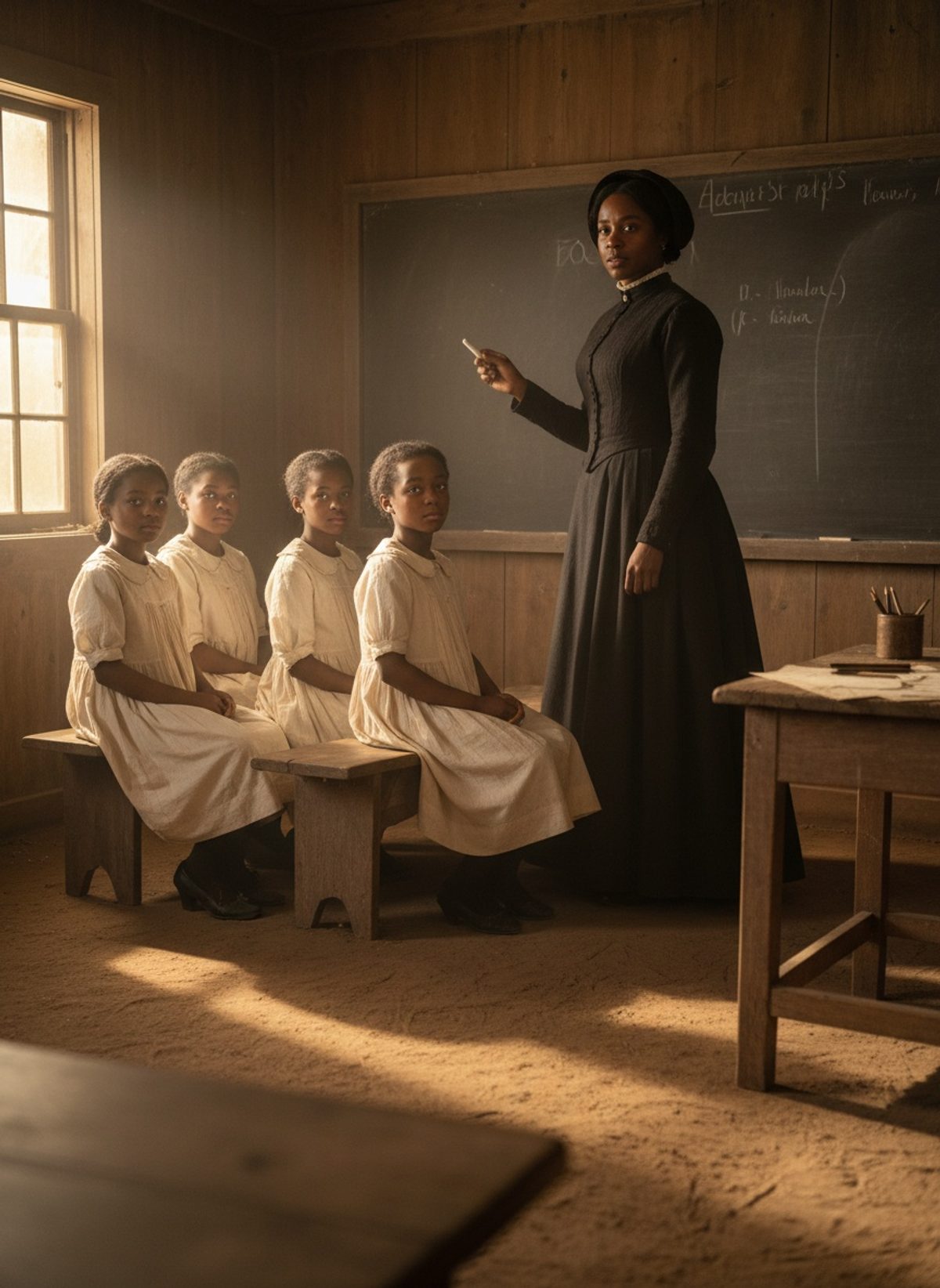
The air was thick with the tang of charred wood as Mary McLeod Bethune rubbed the blackened end of a stick on a scrap of paper, fashioning it into a makeshift pencil. Around her, five eager pairs of eyes followed every movement in the dim light of a rented shack, a modest space that vibrated with potential. These were mere girls sitting before her, a mere dollar and fifty cents tucked in her skirt pocket, yet what unfurled at that wooden table would pave pathways for generations.
In 1904, when Bethune first stepped across the frontier of Daytona Beach, Florida, it wasn’t the sandy beaches that caught her eye, but the barren expanses of opportunity. She had been born in 1875 to parents who had once been enslaved, a life story shaped in the dust and toil of South Carolina fields. Yet, unlike the static legacy of her heritage, Mary was born with an insatiable hunger for knowledge. Her early experiences were marked by the profound realization that education was the torch to light her way out of obscurity, and she was determined to uplift others with its flame.
The echo of history’s somber notes still resonated loudly in 1900s Florida. With former slaves scattered amidst settlements but no truly equal footing, it was an audacious landscape for Bethune’s ambitions. Mary found her calling in teaching; she saw education as the cornerstone of genuine freedom, not just an endpoint, but the very instrument of liberation. Her arrival in Daytona Beach, with little more than dreams and dedication to burden her suitcase, was nothing short of a leap of faith.
Her first "students" came from local African American families uncertain and suspicious of promises long unkept. They hesitated, but Bethune’s fervor was infectious enough to draw them in. The schoolhouse in that rickety shack was their sanctuary, and though its desks were mere crates and its supplies a fascinating patchwork of found objects, Mary instilled respect for every bit of learning that occurred within its walls. She created lessons from the simplest resources—math taught with stones, reading from the pages of an old Bible, and science from observing the natural world outside.
Fueling her resolve was a deep-seated belief that through education, the next generation could emerge from the shadows of their forebears, breaking cycles of poverty and ignorance. Bethune spent many nights at her humble abode, scribbling plans by the dim glow of an oil lamp, dreaming more for her students than just literacy. She saw doctors, teachers, leaders—all ushered forth from this tiny beacon of knowledge right by impoverished tracks.
It wasn’t just the physical manifestations of her school’s growth that signified progress. Over the years, Mary’s reputation grew. Townsfolk whispered stories of the formidable woman in Daytona Beach who had the grit to argue with city fathers for funding, the audacity to demand respect for her pupils. Word spread beyond Florida of an institution where the quality of education matched, if not surpassed, traditional schools at a fraction of the resources.
By 1923, the indomitable spirit Bethune carried with each lecture and lesson brought her institution an official partnership with the Methodist Church, which underpinned its stability. That temporary shack bloomed into the Bethune-Cookman University of today, standing as a robust testament to human potential realized through tenacity and spirit, resilient against daunting odds.
Her journey continued beyond the confines of the school, reaching into the very fabric of American society. An unrivaled advocate, she championed civil rights and worked closely with key national figures. As a close advisor to President Franklin D. Roosevelt, she wielded influence that few African American women of her time—and even those beyond—could claim. The National Youth Administration, through her efforts, opened new avenues for black youth, an emblem of her enduring commitment to empowerment.
Indeed, Mary McLeod Bethune’s story embodies the power of a singular dream, afloat upon a sea of aspirations, willed into reality when all seemed impossible. Her resolve and creativity transformed the educational landscape, igniting sparks in the minds of many who entered her institution and emerged leaders.
Today, as we reflect on her legacy, Bethune’s school doesn’t just echo through the halls filled with the energy of future generations but through the very bones of societal progression. Her life reminds us that change begins with education, a vision coupled with action to chip away at inequalities that stand firm. As long as there is a world waiting to be taught, there will be a place for people like Bethune, who, with nothing more than a charred stick and monumental determination, have made history less a record of victories past and more a blueprint for futures unwritten.