The ambers of the setting sun cast a fiery glow across the Nile's waters as the Kushite chariots rolled to a halt before the grand walls of Memphis. Above the distant murmur of terrified citizens and the rustle of reeds, Piye's warriors adjusted their leather armor and peered across the expanse with practiced eyes. The sound of war drums echoed across the horizon—a low, rhythmic pulse that signaled the beginning of an audacious chapter in history.
The Unexpected Might of Nubia
Long before Piye gazed upon the walls of Memphis, the Kingdom of Kush seemed a distant and inconsequential land to the myriad rulers of Egypt's divided territories. Located south of Egypt in what is now Sudan, this Nubian kingdom basked under the sun-drenched skies, rich in resources and steeped in distant mysticism. Yet to those who considered themselves the true heirs of the pharaonic legacy, Kush was a land of little consequence, one they hardly deemed a threat. What they did not anticipate was the unwavering ambition and strategic brilliance of Piye.
Piye, a figure both commanding and revered, emerged from Nubia not only as a ruler but as a man of vision. Drawing inspiration from his ancestors, he saw a fractured Egypt ripe for consolidation under a single rule—his. He rode out with an army that matched the ferocity and spirit of the land he hailed from, a coalition of charioteers, archers, and seasoned warriors of Nubian heritage. Their strength and mobilization marked a pivotal turn in the political landscape of the region. As word of Piye's campaign spread, few could have predicted the shockwaves it would send throughout the ancient world.
The Fall of Memphis
Among the dust and chaos of besieged Memphis, those who peered down from its fortified towers saw a spectacle they had not imagined—Kushite banners flapping defiantly in the desert wind. Piye, standing resolute at the epicenter of an impending storm, orchestrated a single, devastating assault that would enter the annals of history. His army moved with a precision and purpose that seemed almost divine, breaching defenses with a swiftness that left the city's inhabitants reeling.
Memphis, with its grand temples and expansive boulevards, symbolized the heart of Egypt's power and prestige. For this vibrant metropolis to fall so spectacularly would be unfathomable, yet fall it did. Within days, the great city succumbed to Piye’s might, setting off a chain of events that would alter the course of Egyptian rule. The other local rulers, who had scoffed at the thought of a Nubian commanding their lands, now found themselves facing a new reality—submission or destruction.
Pharaohs in Submission
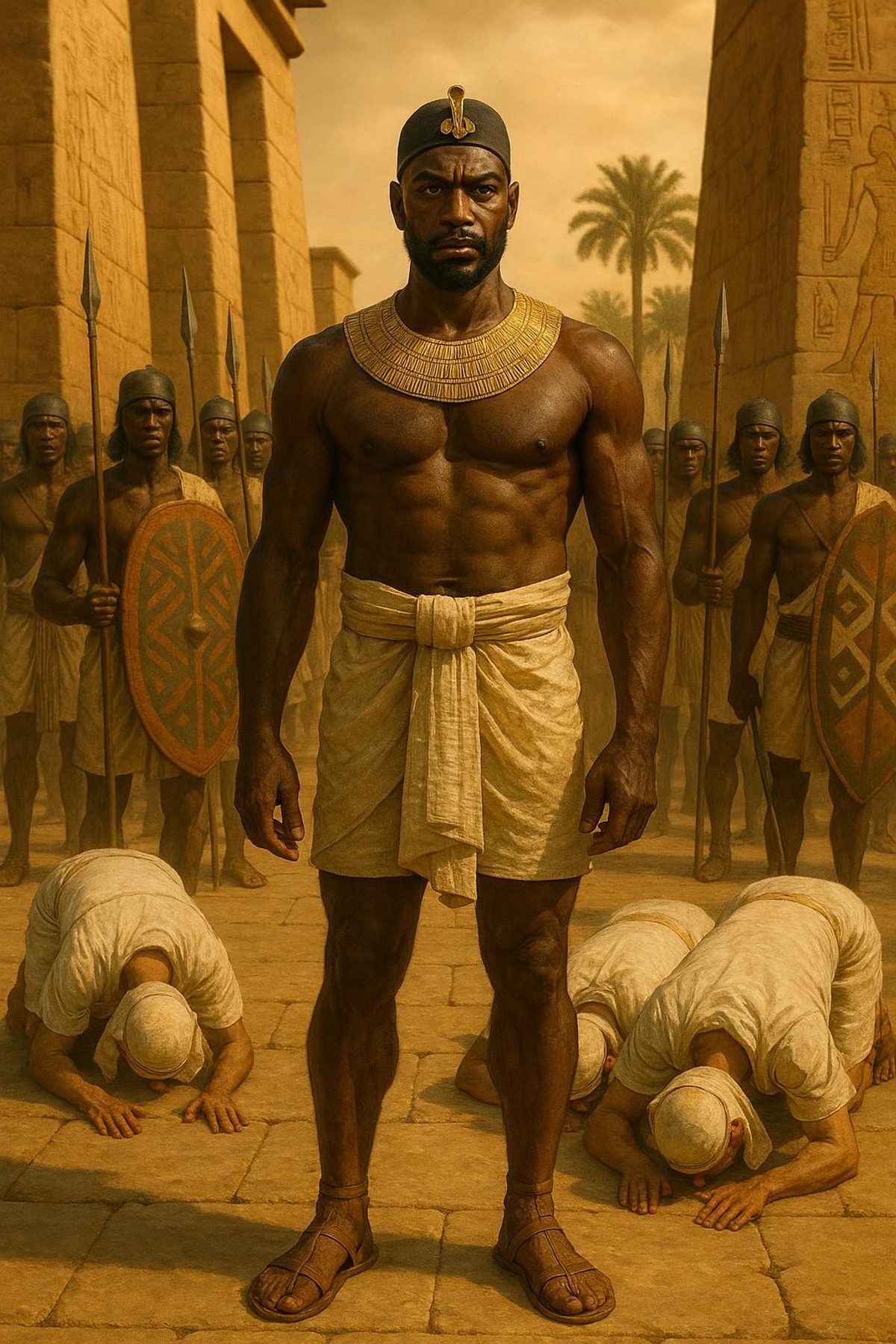
The scene that unfolded after Memphis's fall was one of palpable tension. Four pharaohs, their pride and sovereignty shattered, knelt before Piye. Here, in the land of sand and gold, where gods and rulers intertwined, a new order was taking shape. Egyptian culture was replete with rituals of dominance; to kneel was not just a submission of autonomy, but a profound cultural shift. Yet, Piye did not disturb the sacred Nor custom of Egypt. Instead, he respected their rituals and religion, envisioning a synthesis between Nubian governance and Egyptian culture, rejuvenating Egypt’s fracturing traditions under Kushite tutelage.
The surrender of these pharaohs signified more than just a change of command; it embodied the epochal shift from a fragmented array of rulers to a unified entity under the visionary rule of a Nubian king. Such a comprehensive capitulation was rare, rekindling whispers in temples and marketplaces about the reincarnation of Egypt’s long-lost unity, not through internal revolution but an external reconquest.
Back to Nubia: A Leader's Return
Once the campaign was complete, with his objectives achieved, Piye's actions took an unexpected turn. Unlike conquerors drawn to ever-expanding empires, Piye sailed back to Nubia, leaving Egypt to be administrated by his loyal governors. This choice mystified many as he returned to his homeland, content with his dominion over the land he had subdued without succumbing to the allure of its riches or excessive glory.
Piye's decision not to permanently reside in Egypt speaks volumes of his character and intentions. He viewed Egypt not as a conquest to be pillaged, but as a kingdom to be revitalized—a testament to his profound respect for its culture and history. His withdrawal back to Nubia was not abandonment; rather, it sowed the seeds of stability from afar, ensuring that Egyptian traditions could continue blooming under the guidance of a distant, but watchful, Kushite rule.
Thus, Piye's campaign stands as a chapter of bloodless wisdom overshadowing the urge for relentless rule—a rare calculus of power that left an indelible mark on both Nubian and Egyptian history. It is a story that reminds us of an era when humility, vision, and respect wove the tapestry of success expansively—reminding us that leadership knows neither borders nor expects unending praise. Through his actions, Piye demonstrated the profoundness of leadership that bends history—leaving memory gently etched into the sands of both Nubia and Egypt.