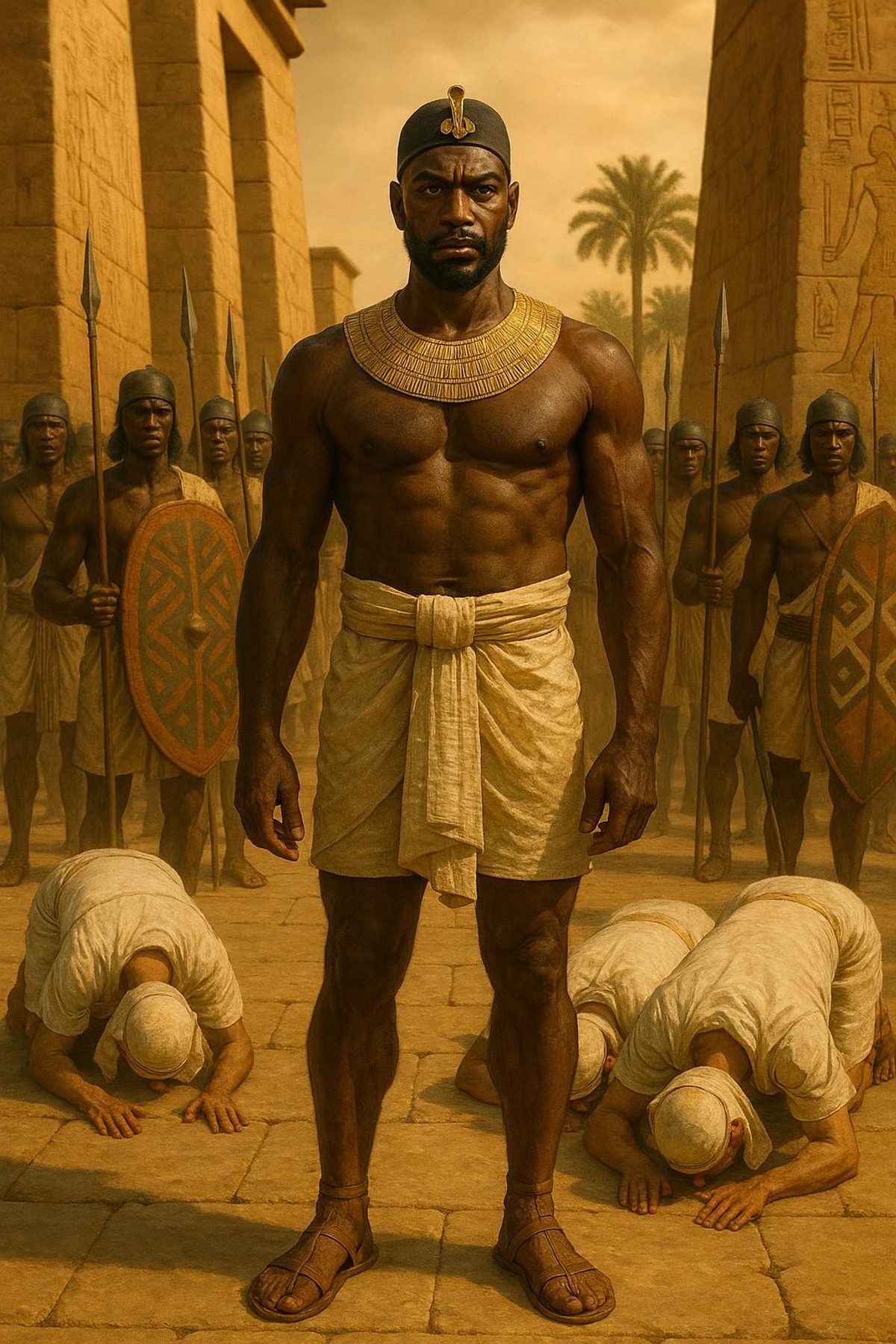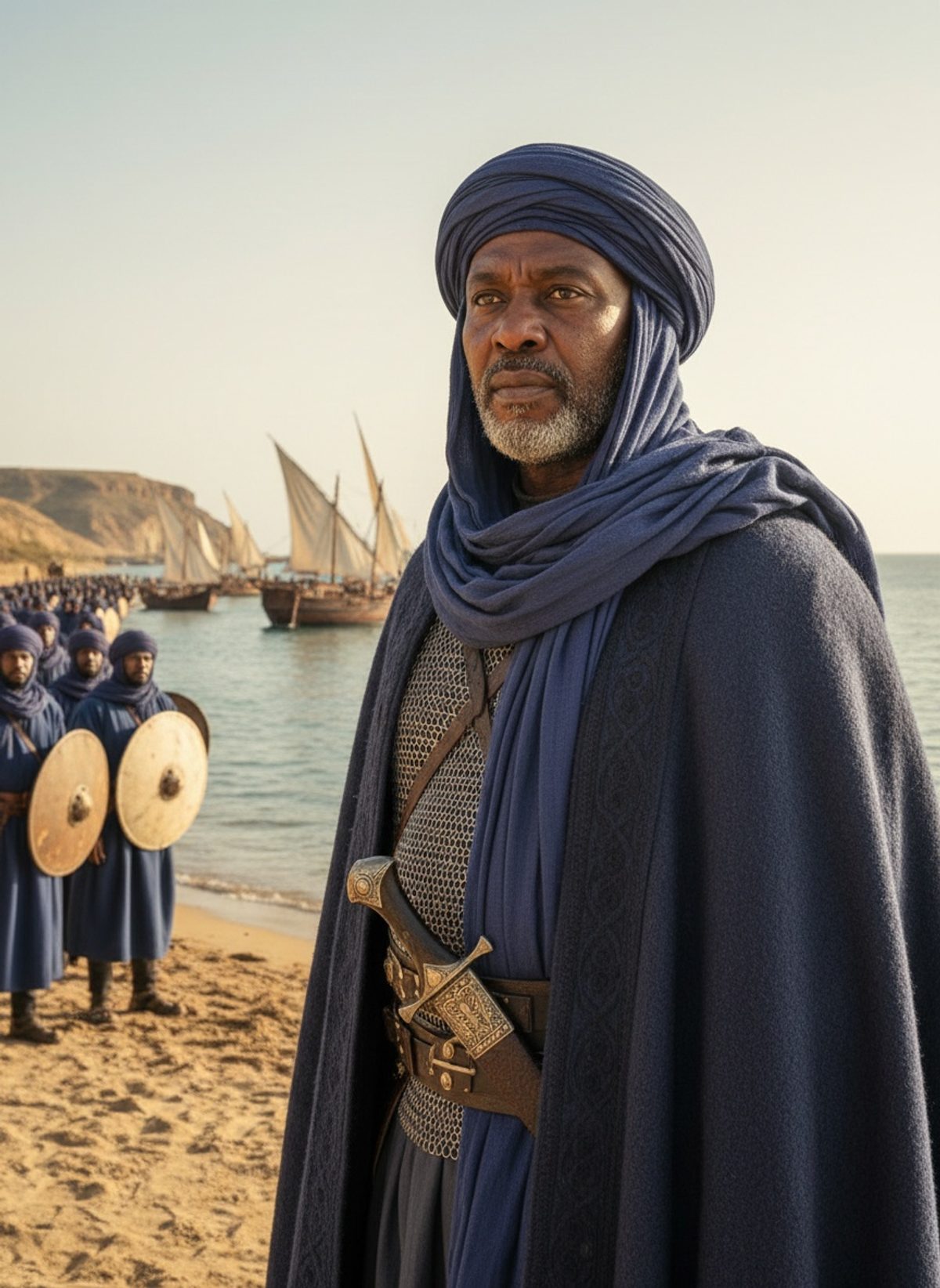
A thin mist clung to the morning air of the Strait of Gibraltar, where the endless blue of the Atlantic meets the warmer Mediterranean Sea. The sun peeked over the horizon, its light casting a soft golden glow over the rippling waves, while the call of seagulls echoed faintly on the breeze. It was here, amid the majestic tranquility of sea and sky, that a powerful transformation of history was about to be set in motion. For across these waters lay Al-Andalus, precariously balancing on the knife-edge of survival, and it was to this land that Yusuf ibn Tashfin, the fierce leader of the expansive Almoravid Empire, would soon ride. His crossing would alter the fate of Spain forever.
The Desert Warrior's Dilemma
Yusuf ibn Tashfin was a man forged in the harsh crucible of the Maghrebi landscapes. Emerging from the desert sands, he built the Almoravid Empire from disparate North African Berber tribes, uniting them with a strict adherence to Islam and a formidable military prowess. His rise from obscurity to greatness was a remarkable story in itself; however, his eyes were now set not on the familiar sands of Africa, but on the rich, embattled lands of Al-Andalus across the strait.
By 1086 AD, Al-Andalus found itself fractured and faltering. The once-glorious caliphate had fragmented into a patchwork of taifa kingdoms, each ruled by local emirs whose power was waning against the relentless advances of the Christian Reconquista. Kings from the north pushed ever further, biting into Muslim-held lands with increasing boldness. Desperation, tinged with the urgent whispers of looming defeat, led these emirates to seek a savior from across the sea.
Envoys dispatched hurried messages to the Almoravid court, their words both a plea and a promise, inviting Yusuf to step into their quarreling midst as a unifying force. Yusuf accepted, not only out of religious duty to protect fellow Muslims but also as an opportunity to extend his influence into the heart of the Iberian Peninsula. Here was a chance for glory, to etch his name into the chronicles of history, and perhaps, to carve out a new domain on European soil.
But, as the sound of oars sliced through the cool waters of the strait and the coastlines of Iberia came into view, Yusuf faced a complex political tapestry. The land was a rich tapestry, yes, but one filled with paradox and peril. How does a leader balance the honor of conquest with the promise of support? The delicate balance of power and faith, conquest and cooperation, loomed large before Yusuf as he prepared to land.
Arrival in Al-Andalus
The first step of Yusuf's army onto Iberian soil was transformative—a collision of desert-born resolve with the old-world beauty and sophistication of Spanish architecture and culture. Yet this was no social visit. Yusuf was here with purpose: to halt the advancing Christians who were quickly encroaching beyond their northern strongholds. The Andalusian air, heavy with the scent of orange blossoms, was briefly overshadowed by the dust of cavalry hooves and the disciplined strategies of the Almoravid warriors.
At the Battle of Sagrajas, just months after his arrival, Yusuf faced a large Christian coalition led by Alfonso VI, King of León and Castile. Historically noted for its decimation, the battle was gruesome; the fields ran crimson with the spilled blood of soldiers who had marched south with religious fervor only to meet a well-timed strike by Yusuf's forces. The Christian advance was blunted, their hubris checked for the moment, as Yusuf demonstrated the formidable might of his desert-bred forces seasoned through years of unyielding African campaigns.
But as decisive as his victory was, Yusuf's choices after the battle were as unpredictable as they were revelatory. Eschewing immediate expansionist desires, he turned his forces back toward Africa after the battle's successful conclusion. Was it a tactical withdrawal, a political maneuver of delayed gratification, or a deeper adherence to the responsibilities waiting for him in his homeland? His departure posed as many questions as it answered, the implications reverberating throughout the complex dance of Andalusian and Maghrebi politics.
The Unseen Ripples of Yusuf's Departure
Having tasted both victory and the tempting promise of new rule, why did Yusuf retreat? In a story resonant with suspense and strategy, his decision to cross the strait again to return to Africa remains significant and somewhat enigmatic, layered with possible motives and consequences. What lay behind that retreat which, at a glance, seemed counterintuitive? Perhaps Yusuf, the pragmatic leader, recognized the subtle threats posed as much by potential allies as by stated enemies. Or maybe he saw the enduring nature of his power as rooted not in sprawling territorial ambitions but in careful consolidation and cautious watchfulness.
The truth, it is believed, was not only tactical but calculated: Yusuf intended to manage potential discord within the Almoravid Empire, fortify his holdings, and prepare for the right moment to return. The landscape of power often required stepping back to assess before making the next decision, a sign not of weakness but of shrewd foresight.
Yusuf's actions left a profound mark. The unified Taifa states under his nominal protection remained guarded; they faced renewed conflicts, but now with a deeper sense of resilience and readiness that his intervention had sparked. For Spain, Yusuf’s journey over and back across the strait was transformative—a catalyst that slowed the Reconquista while simultaneously setting the stage for further conflicts and the eventual Almoravid return.
Today, the story of Yusuf ibn Tashfin's crossing might not fill standard history textbooks, yet it echoes with endless relevance. It offers a contemplative lens through which to view leadership dynamics, the complexities of alliance, and the intricate web of conquest tempered by restraint. In a world where history often paints in broad strokes, Yusuf's deft hand played out in subtle, but undeniably abiding ripples that defined the very essence of a continent's story.