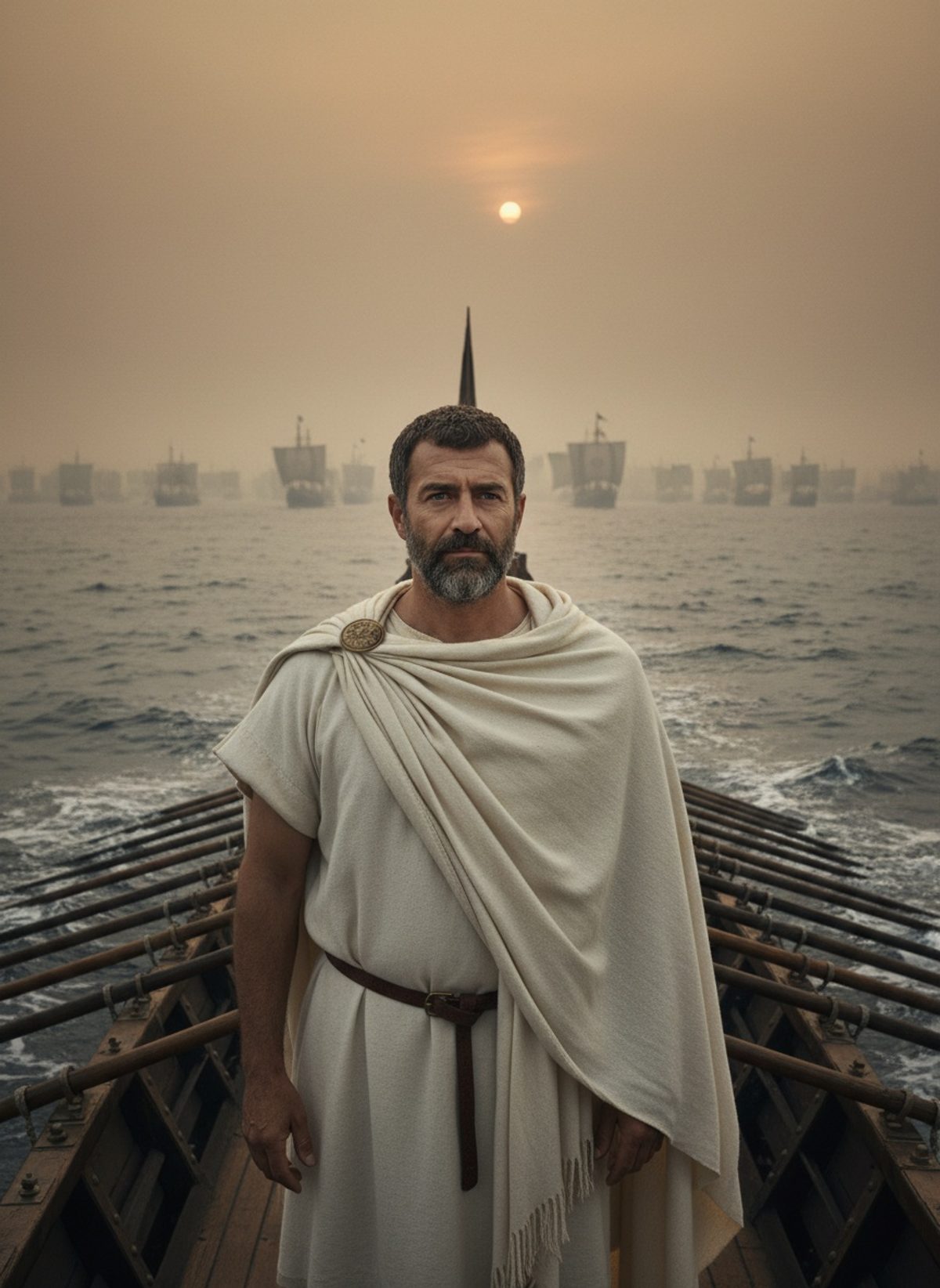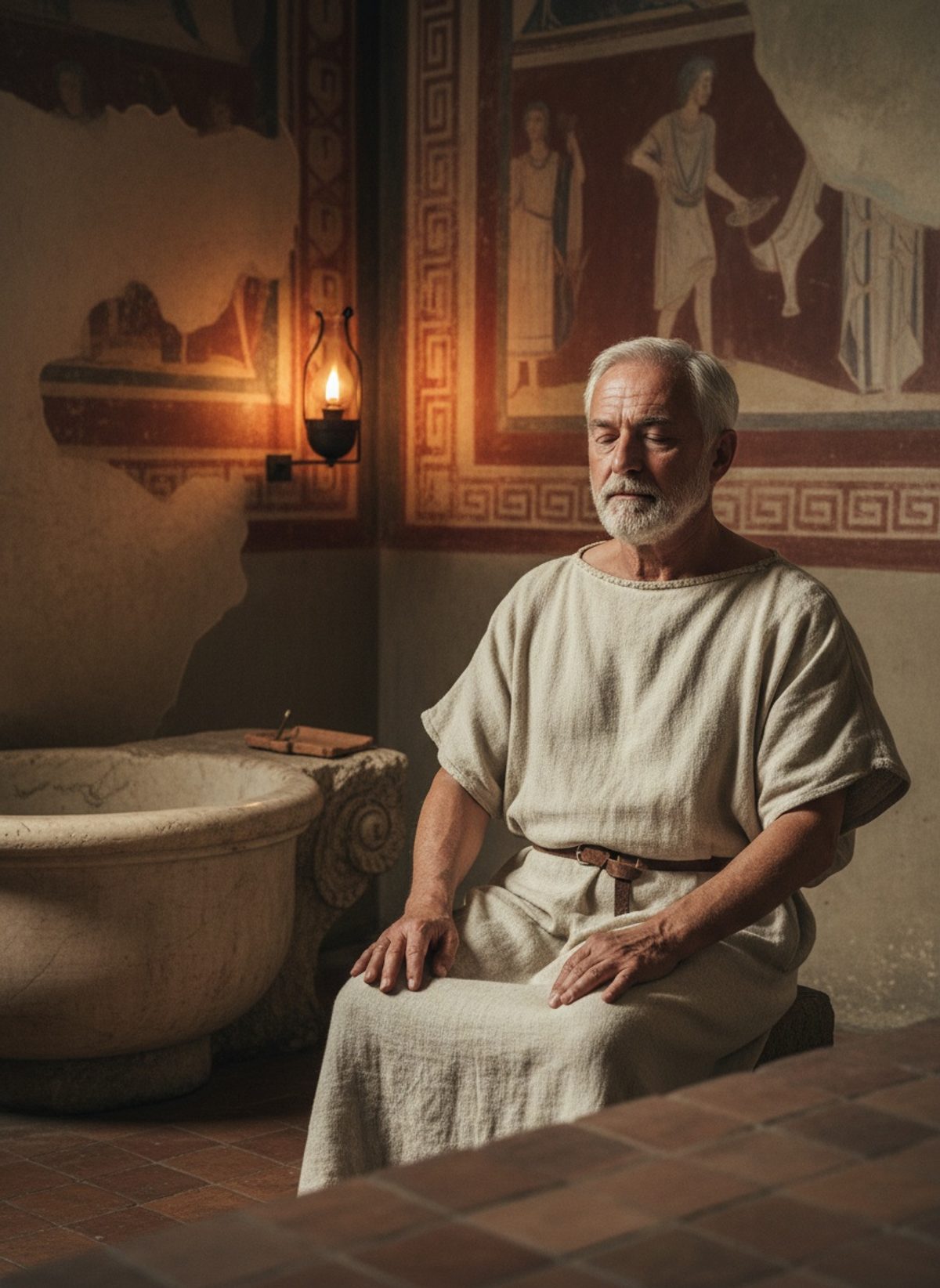
The skies over Rome were a muted grey on that fateful day in 65 CE, casting a somber hue over the sprawling city. The typical hustle of Roman life continued unabated; sandal-worn cobblestones bearing the weight of vendors, citizens, and slaves all weaving through the thrumming marketplace. Above this vibrant tapestry, in a villa removed from the noise, a different kind of silence reigned. The world seemed hushed around a garden where Lucius Annaeus Seneca, philosopher, statesman, and former tutor to the emperor Nero, awaited his fate.
Seneca had taught Nero everything he knew, guiding the young emperor from the shadows with wisdom collected over a lifetime. He had witnessed Nero rise to power and had tried, with words and gestures, to mold the ruler into a beacon for the people of Rome. But now, Nero's trust was gone. The emperor had turned vengeful, paranoia seeping into the corners of his mind, and the tutor who once wielded influence was now seen as a threat.
Though Seneca's counsel had once been a shield for the emperor’s volatile impulses, Rome had changed them both. Nero’s early reign saw a guidance of justice and fairness — echoes of Seneca’s teachings reflected in the decrees of the young ruler. Yet, over time, the taste of power altered Nero’s course, drawing him into shadows Seneca could not illuminate or conquer. The conspiracy led by Piso against Nero's life was the perfect accusation, though tenuous, to demand Seneca’s death. It was a tragic culmination of politics, power, and betrayal.
In the quietude of his garden, amongst the fragrant herbs and chirping birds, Seneca faced his mortality with equanimity. He dismissed his friends and family, asking them to retreat, to leave him to decide the course of his final hour. There was no fear in his eyes, only the resolute acceptance of a philosopher who had spent countless hours pondering life and death, cause and consequence. He would not tremble before Nero’s decree. Instead, he would embrace it with dignity and grace.
The tale of Seneca’s final hours is both poignant and a mirror into the soul of a man who could choose how to leave his mark upon the world, even in death. It is said he entered a warm bath, bloodletting as was customary for suicides of political persuasion, speaking in hushed, fervent tones that those present strained to hear. His voice, a balm and a beacon, resonated not with lamentation but with calm acceptance, reminding listeners of his unyielding belief that death was not to be feared but embraced as part of nature’s design.
As Seneca surrendered his body to the waters, blood entwining with the warmth, his thoughts likely wandered through the arc of his journey. He was born in the province of Hispania, rose to prominence in the heart of Rome, and found wisdom in Stoicism, a philosophy that shaped and defined his life and works. His life was entwined with power and humility, a paradox that reflected Rome’s tumultuous pulse. Seneca’s writings, rich with themes of ethics, virtue, and rational thought, were as much a mirror to his soul as a legacy left behind for those willing to listen.
The garden around him, lush and unyielding, bore witness to Seneca's final lesson: the inevitability of nature’s course. Just as seasons transition from verdant spring to the dormancy of winter, so too did Seneca transition from life to death with a peaceful acceptance. It was here, surrounded by where life thrived unerringly, that Seneca made his final stand. Not with defiance but with a quiet surrender to a fate he not only accepted but exemplified.
In choosing the manner of his death, Seneca claimed authority over one of the few remaining aspects of his life Nero could not taint. His demise was not simply the end of a life; it was the conclusion of a philosophy exemplified in practice. His passing rippled through Rome, touching even those who never heard his words directly. The message was clear: integrity and wisdom could outlive the darkness of despotism, resonating through the annals of history.
In the annals of history, Seneca's death stands as more than a footnote in Nero’s tyrannical reign; it is a story of choice, control, and the power of the human spirit. Even when silenced, his teachings continued to influence generations of thinkers who came after him. The quiet garden, now a historical symbol, marks a place and a moment where one man, faced with betrayal and ruin, chose the kind of legacy worthy of remembrance. It serves as a poignant reminder of the enduring power of wisdom over tyranny, a narrative of choosing grace over despair, and the eternal garden of thoughts that nurture each of us from within. Ultimately, it underscores the timeless battle between power's corruption and philosophy's unwavering light—a battle as ancient as Rome and as relevant today.