The morning of September 11, 2001, in Manhattan was bathed in the kind of clarity that made the vast cityscape appear as if sketched in vivid detail against a sharp azure sky. The early autumn sun cast long, warm shadows, caressing the steel and glass facades of the towering landmarks that defined New York City's skyline. Amidst this serene luminescence, the heart of the metropolis pulsed with the usual cadence of life, buses groaning along avenues and streams of people pouring into skyscrapers, ready to begin another workday.
But as time ebbed away from a peaceful beginning, a shadow of unimaginable peril loomed above. In mere moments, the unthinkable happened. The attack on the World Trade Center altered the cityscape as the north tower of the World Trade Center was engulfed in smoke and flames following the strike by a commandeered airplane. As the tragic events unfolded, another plane met the south tower with terrifying force, declaring to all who watched that the world had shifted irrevocably. As civilians stumbled out of the towers, wide-eyed and disoriented, a monumental reverse exodus began to brook against the tide.
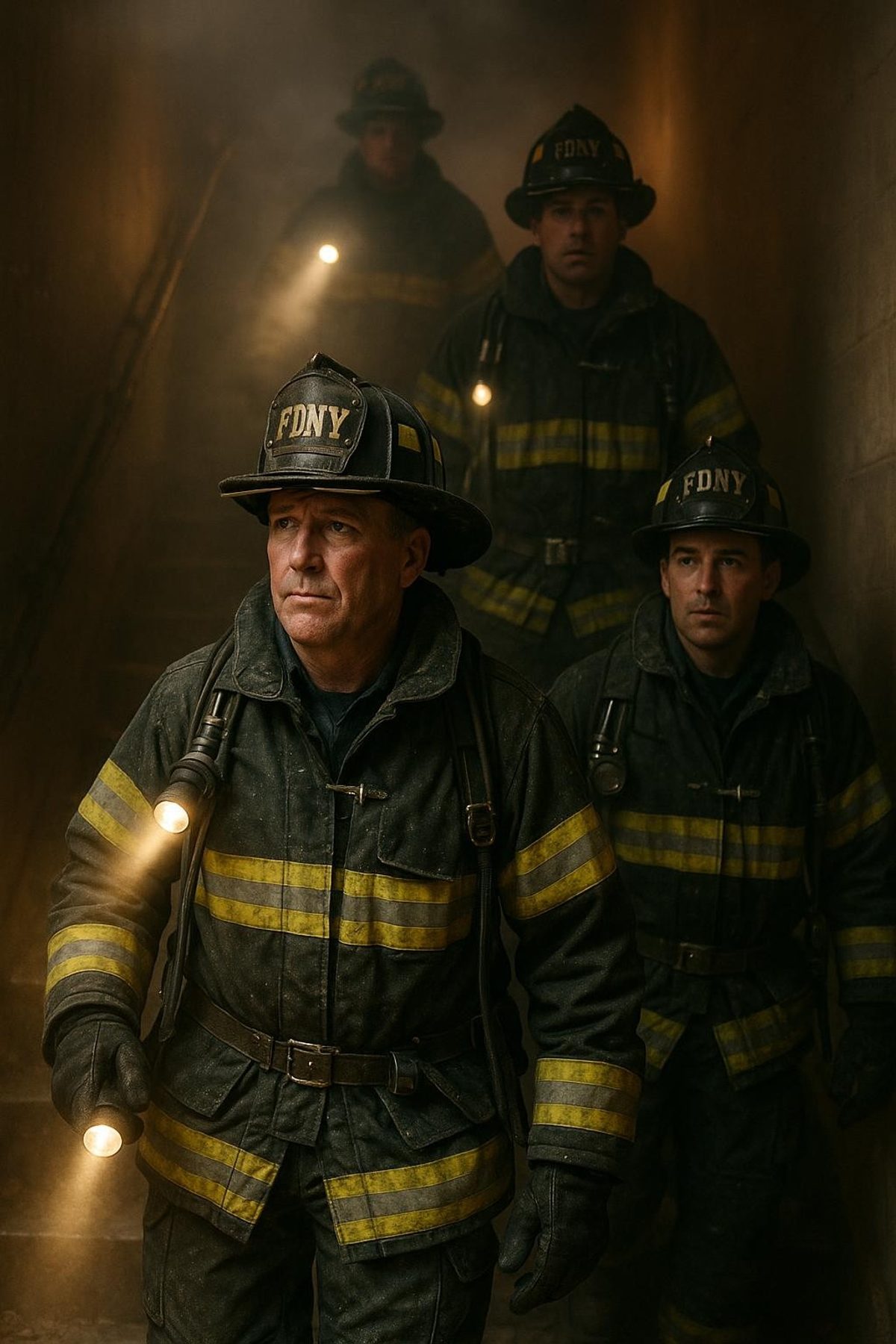
Amid the inflow of destruction, heroes bore against the panic, turning toward the danger that others fled. The firefighters of New York City, known for their valor in the face of extremities, arrived on the scene with a daunting yet unequivocal mission. Their firehouse calls had been routine many times before, but none of those held the gravity of this catastrophe that demanded an unwavering response. Towering infernos spitting black plumes skyward framed their path as they approached, the clamor of sirens merging with the chaos of alarms and cries, yet a unity of resolve steeled their nerves amidst the cataclysm.
A collective detachment from self-preservation seemed to infuse their actions as they rushed into the buildings, donning heavy gear impervious to every strain except the human spirit it carried. In scenes defying any training regimen, these first responders wrought a different calculus of sacrifice. They climbed knowingly toward a point of no return, through stairwells clogged with desperate souls seeking escape. Floor upon floor, step upon step, they climbed, a brigade of courage meeting each flight with stoic determination.
As civilians streamed downward, their harrowing descent marked by the urgency of survival, the firefighters ascended toward the insidious unknown lurking above. While faces reflected terror cascading through the crowd below, the faces of those ascending bespoke a silent, solemn resolve. Their movements were assured, deliberate under burdens that no physical load could compare—a knowledge of entering a lessened field of time predicated on absolution of duty.
The rescue operations they undertook surpassed the confines of routines bred by protocol and pushed into the realm where humanity surfaces unbidden—a world where acts of compassion are a testament to ideals that forge connections across a chasm laughter or tears could never bridge. Each of these individuals was part of a brotherhood—343 firefighters who answered the call to serve beyond themselves. It was a convergence with destiny that etched their names in the annals of history not by triumph but through unwavering fidelity to the mission that lay before them. They rescued countless lives even as the sands of certainty slipped between fate’s fingers.
The greatest tragedy and sacrifice manifested as the towers crumbled, each entwined tale of bravery captured within, becoming stories untold, known only in the whispering echo of lives improved or saved. In those final moments of sacrifice, they joined an lineage of the valiant who liberated courage from conscious confines, etching it into the complex legacy New York, and indeed the world, embraced thereafter. Their resolve painted a different skyline, a narrative made vivid by the lives they touched, encompassing the essence of enduring hope that arises from human empathy and selflessness.
As history peered into this chasm, it found not a void left in their absence but a profound presence infused into every subsequent droplet of resilience and communal spirit. The legacy that emerged from suffering illuminated paths that resonated with the essence of unity, inspiring dialogue born not of fear but of courage and solidarity.
The memory of these 343 firefighters, alongside countless others who lent their courage that unforgettable day, offers us a mirror through which we view our capacity to rise from despair. We remember them not just for their final sacrifice, but for the renewal they inspire in the human spirit—a reminder that even in our darkest chapters, there are stories of light and valor that forever alter our course and understanding of what it means to come together when it matters most. Their legacy, written not in the ashes of destruction but in the renewal of hope, continuously invites us to listen and learn, to stand as one in defiance of the darkness. Let us not forget the stories they did not tell, but forever remember the actions that spoke volumes.