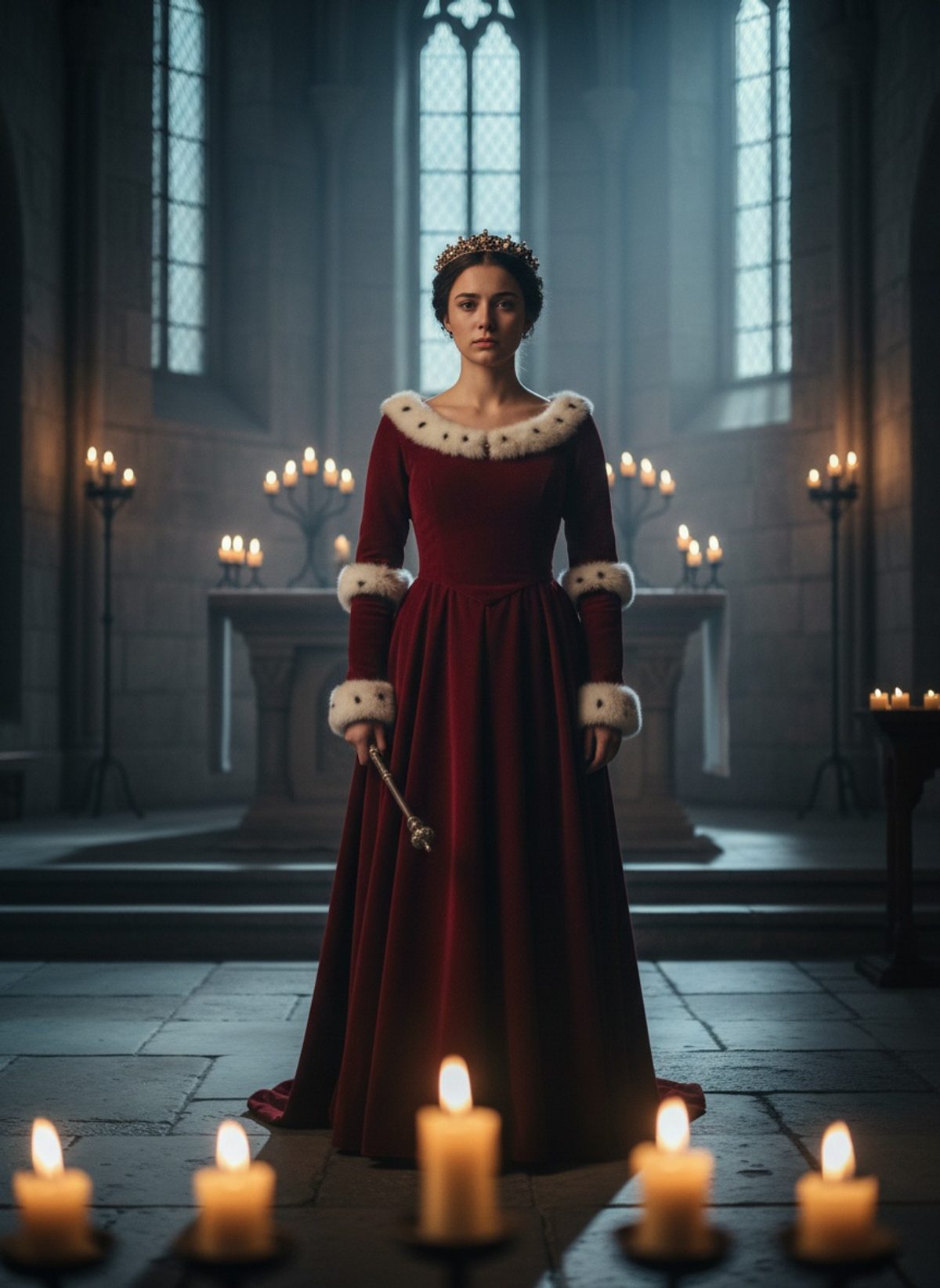
Jadwiga of Poland was a queen. But she was also a young girl in love, torn between personal desire and the weight of a kingdom's future.
A Young Queen's Dilemma
At just fifteen years old, Jadwiga stood at a crossroads that would determine not only her fate but that of an entire nation. Born into a world where royal duty trumped personal happiness, she was thrust into a decision that would shape the history of Poland. Her heart belonged to Wilhelm of Habsburg, a suitor she had known since childhood. Their union was one of both affection and alliance, sealed in the eyes of two families eager to fortify their bonds.
Yet in the shadows of the burgeoning nation-state, Poland's nobles murmured of a different fate for their young queen. The kingdom, precariously positioned amidst the shifting power dynamics of late medieval Europe, required not just a marriage of love but a strategic union strong enough to fortify its standing. The whispers grew louder, urging Jadwiga to forsake her Austrian prince and unite with a pagan duke from Lithuania, whose allegiance could secure Poland's borders.
Choosing Kingdom Over Love
The choice that lay before Jadwiga was nothing short of a sacrifice. To reject Wilhelm and marry the Lithuanian duke, Jogaila, meant not only abandoning her love but setting aside her personal wishes for the greater good. This was not a decision to be taken lightly; it bore the weight of a nation’s survival. At fifteen, an age where most are shielded by the bliss of adolescence, she was asked to shoulder adult decisions.
Jogaila would bring more than just a pair of strong hands to the marriage. With him came the promise of Lithuania’s conversion to Christianity, a strategic move that would consolidate power against the ever-shadowing threat of the Teutonic Knights. Poland’s political tapestry was woven with territories endangered by external forces, and Jadwiga’s marriage to Jogaila had the potential to fortify the nation’s frayed edges. The nobles knew it; she knew it too.
Jadwiga, King of Poland
In 1384, Jadwiga’s coronation was atypical yet symbolic. She was not declared queen but crowned as *rex*, or king, a title that underscored her authority in a male-dominated hierarchy. This was a significant diversion from tradition — a bold statement of her autonomy and the role she had chosen to play. As King of Poland, Jadwiga was no mere consort. She ruled in her own right, making decisions that shaped the kingdom's destiny.
Over time, Jadwiga became known for her wisdom and benevolence, traits that endeared her to her subjects and strengthened her legacy. Her reign was marked by efforts to bolster education, exemplified by her role in the founding of the Jagiellonian University in Krakow, one of the oldest in Europe. Her influence extended far beyond the domestic sphere, as she deftly navigated alliances and treaties, ensuring Poland’s prominence in the region.
The Memory of Sacrifice
Though Jadwiga's life was entwined with success and strife, her personal sacrifice remained a poignant undercurrent. Her decision to part ways with Wilhelm was publicly vindicated by the prosperity and strength it brought to her kingdom, yet it lingered as a private elegy within her heart. Stories of her deep piety and charitable works suggest a queen who sought solace and absolution, grappling with the cost of her choice amid her devotion to her people's welfare.
Jadwiga's marriage to Jogaila not only ended the threat of encroachment but also laid the foundations for the Polish-Lithuanian Commonwealth, a significant power in Central Europe. Her ability to prioritize the needs of her kingdom above her own desires provided a template of leadership that resonated through the ages. Poland remembers her not just as a queen who reigned, but as a leader whose personal sacrifice paved the way for a strong, unified state.
The story of Jadwiga resonates because it explores the timeless tension between duty and desire. Her decision stands as a profound example of leadership driven by responsibility and vision. In every facet of history, it is these narratives of individual sacrifice for communal gain that continue to inspire and provide insight into the costs of leadership. In remembering Jadwiga of Poland, we reflect on the intricate dance of personal and public service, knowing that sometimes the truest act of love for one's country is the hardest to make.