The air was thick with tension and smoke. All around, the city of Athens crackled and hissed as flames devoured its wooden homes, hungry tongues licking up the columns of their beloved temples. The acrid smell of burning carried far beyond the city's boundaries, a bitter herald of destruction, as families watched their heritage turn to ash. But amongst the chaos and despair, one figure stood resolute, his vision unwavering. Themistocles, a bold statesman, dared to see clarity where others saw only doom, interpreting riddles whispered by Pythian voices in Delphi, the famed oracle. The god Apollo's words spoke of doom through cryptic verses, warning that the city would come to ruin, save for the protection of "wooden walls." Themistocles' interpretation of these words could mean salvation or obliteration, and with thousands of lives at stake, the weight of history lay heavy on his shoulders.
Delphi, the spiritual hub of ancient Greece, perched high on the slopes of Mount Parnassus, filled the Athenians with both awe and dread. The Oracle, housed within the Temple of Apollo, was reputed to be the mouthpiece of the gods. Her prophecies, often veiled in metaphor, wielded immense power, capable of steering the course of nations. Before the encroaching threat of a Persian onslaught, Athens sought guidance that would avert their impending annihilation. Yet, rather than solace, they received a chilling pronouncement from the Oracle: destruction was nigh, but salvation lay within "wooden walls." Conventional minds interpreted this cryptic message as an insistence to barricade themselves within the safety of their existing city walls, a seemingly logical but ultimately futile plan against the Persian force's expansive might.
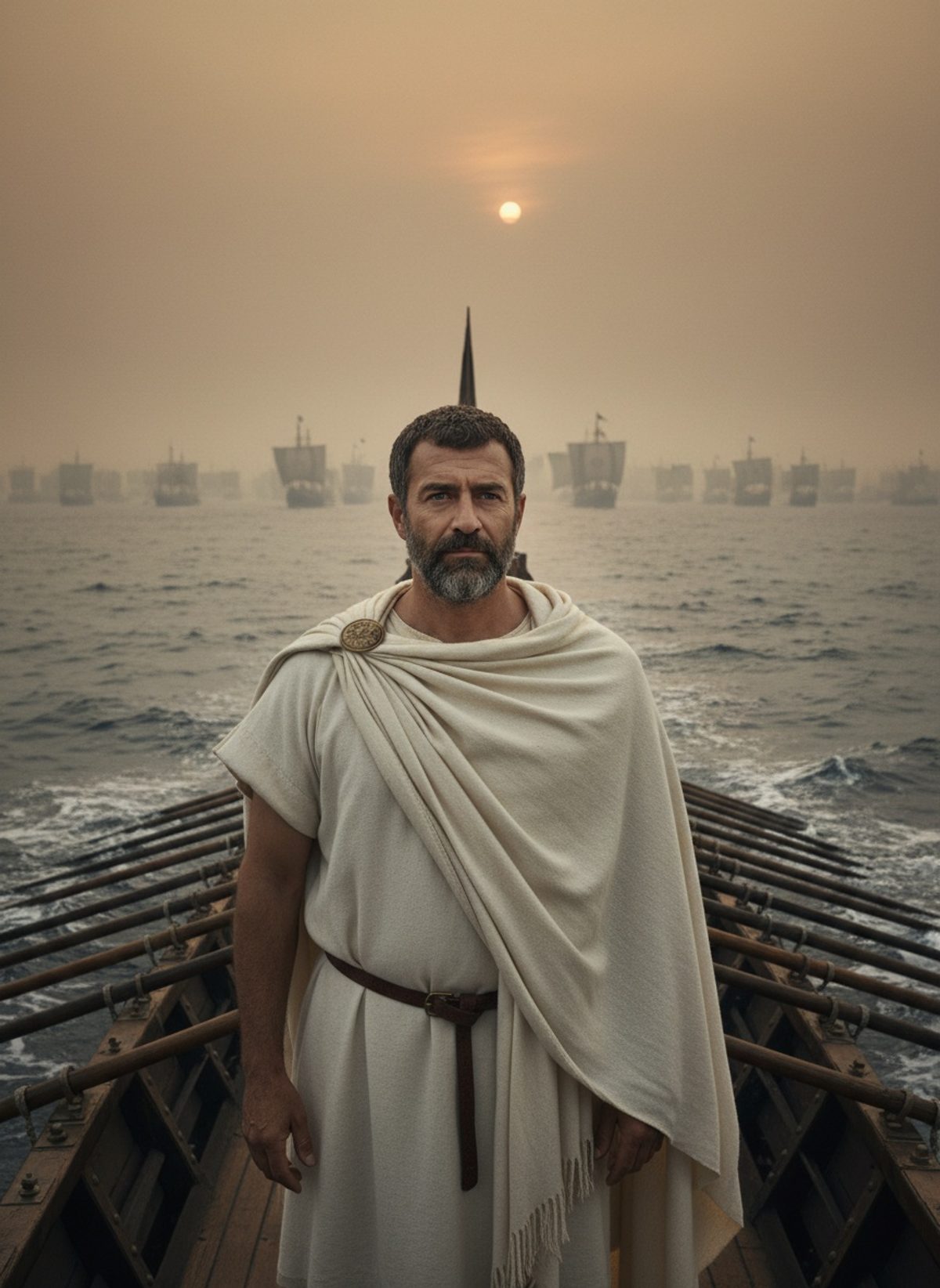
In those dark days of 480 BCE, just when Athens believed no path of retreat remained, Themistocles offered a lifeline as audacious as it was brilliant. He posited that the Oracle's "wooden walls" could not be made of stone but rather of ships — a formidable fleet of triremes. This was not just a play with words, but a strategy that took into account the geopolitical lay of the land. Themistocles understood that on the open seas, Athens could exploit their naval prowess against the Persian armada, nullifying the numerical superiority that the Persians enjoyed on land. It was a vision crafted not just in desperation, but in the intellectual heart and soul of an Athenian, a people who cherished debate, strategy, and knowledge above all else. What made this moment so gripping was that it required the Athenians to abandon their physical city, a surrender that at face value seemed like a defeat, but one that held the key to an improbable victory.
The momentous task of evacuating the city unfolded over tense days and sleepless nights. The citizens of Athens — men, women, and children — boarded the ships which were to become their new refuge. The sound of thousands of feet against the cobblestones merged with the cries of women and children, reluctant to leave their homes and ancestral lands behind. But as they watched the billowing smoke enshroud the Acropolis, they moved, following Themistocles’ guidance to uncharted waters of both the Aegean and fate.
Meanwhile, the Persian King Xerxes, whose ambition to subdue Greece was well known, had brought his mighty forces to the forefront of the Hellenic world. His fleet, vast and fearsome, had already destroyed cities and crawled ever nearer, a tidal wave of destiny threatening to engulf Athens and its allies. But in perhaps the most dramatic of ironies, it was the Persians' very confidence in their numbers that Themistocles intended to exploit. He devised a cunning plan to lure Xerxes' forces into the narrow straits of Salamis. There, the bulk and might of the Persian ships would be rendered ineffective, floundering in confines that allowed no room for maneuver.
The Battle of Salamis stands not only as an epitome of cunning naval strategy but also as a testament to Themistocles’ deft persuasion. As triremes clashed in the raging waters, the distinctive sound of hulls crashing and sails tearing created a harrowing symphony of war. Tension adorned every sailor's face as they engaged with singular focus, guided by a belief that the wooden walls of their ships were indeed their only line of salvation. And amidst the chaos rose Athens’ triremes, swift and precise, appearing to dance through the enemy like agile predators, striking disbelief and disarray into the Persian ranks.
At the end of this maelstrom, when the debris of crushed ships eventually floated back ashore, it was the Greeks who emerged victorious. Against all the odds, Themistocles’ vision had secured not simply a tactical victory but a strategic triumph that marked a turning point in the Greco-Persian War. His gamble on a different interpretation of fate had not only saved Athens but had preserved the potential for what would become one of the most influential eras of Western civilization — the Golden Age of Greece.
As history unfolded beyond Salamis, the import of Themistocles’ decision rippled through the annals of time. This singular event, precipitated by a man reading more into the inscrutable whispers of oracular prophecy, reaffirmed the strength of human intellect over brute force and tradition. It exemplified the profound power of perspective and interpretation, daring to see beyond the immediate and the evident. The smoldering ruins of Athens were not the end, but a new beginning, vividly illustrating that sometimes what is required is not just courage, but vision to interpret 'messages' from the unseen, even from an otherworldly oracle. Perhaps, in considering this pivotal moment, we are reminded of the timeless lesson that innovation often resides just beyond our initial despair, waiting eagerly to be discovered by minds brave enough to dream.