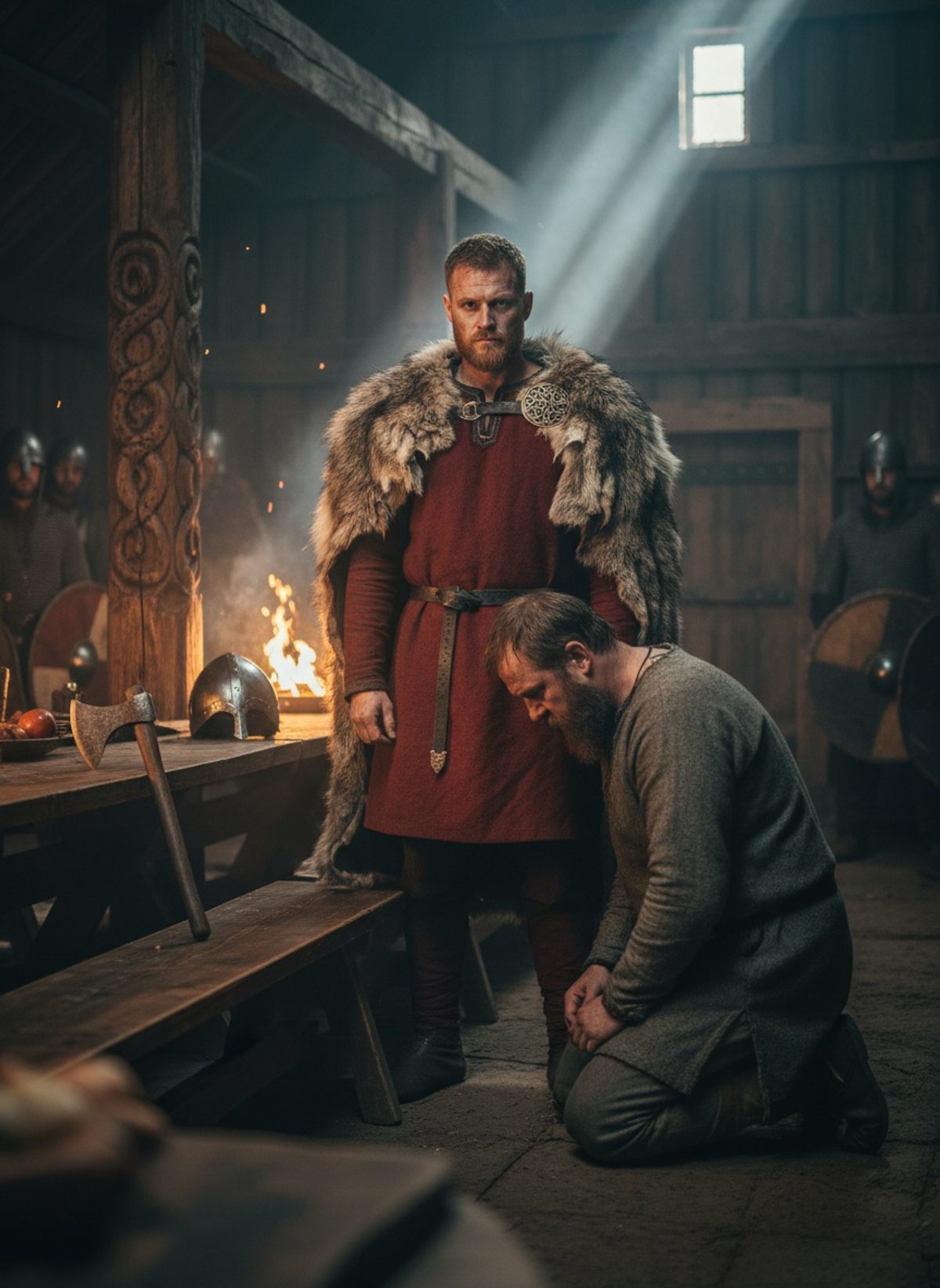
The autumn air was crisp along the fjords of Norway in 1028 AD, with low-hanging clouds hugging the towering cliffs and the scent of the sea lingering ever present. A somber quiet prevailed, broken only by the distant call of seabirds and the gentle lapping of waves against the rocky shores. In this peaceful, yet charged landscape, a moment unfolded that would ripple through history. King Olaf Haraldsson, the mighty Viking ruler feared across Europe, stood before a captive rebel chieftain—an adversary whose demise many had eagerly anticipated. Yet, Olaf’s poised strength was met with an unexpected choice that defied the brutal conventions of his time.
A Seasoned Warrior King
By his early twenties, Olaf Haraldsson had already carved a saga across the European continent, making his mark in a world steeped in violence and ambition. Olaf, known for his prowess on the battlefield, had voyaged across the seas, leading raids and battles that would echo through history. His exploits spanned from the more temperate climates of England to the frozen reaches of the North, shaping his reputation as a formidable warrior and a shrewd leader. Despite his young age, his experience was seasoned by the unpredictably bloody tides of Viking Europe, an era defined by the conquests and collapse of kingdoms.
But Olaf’s aspirations went beyond just conquest. Within Norway, a land divided by constant clan warfare and rival chieftains vying for power, Olaf found his true calling. He sought not merely to conquer, but to unify and mold these fractious states into a singular, cohesive realm under his rule. His dream was both audacious and laden with challenges, for Norway was a tapestry of feuding territories and deeply entrenched traditions.
The Battle of Stiklestad: Prelude to Mercy
Conflict came to a head when some regional chieftains, threatened by King Olaf's consolidating power, rose in rebellion. At the Battle of Stiklestad, Olaf faced a coalition of these rebellious forces determined to dismantle his nascent authority. The battle was fierce and costly, leaving many in its wake who would not see another dawn. Although initially driven into exile, Olaf harbored the relentless ambition to reclaim his throne, his heart set on reuniting the lands he had once bound under his rule.
Fate, however, had more in store than mere victory or defeat. As the dust of battle settled and Olaf stood among the remnants of his adversaries, he was compelled to confront the essence of true leadership. Yet it was not on the battlefield that he would leave his most indelible mark.
Mercy in the Heart of Viking Dread
Among the captured that afternoon stood the rebel chieftain—a man who had once raised his sword to end Olaf's reign. This was no mere enemy; he symbolized the fractured soul of Norway itself, a nation fractured by internal strife and external distrust. Olaf’s jarls, seasoned warriors and steadfast allies, clamored for vengeance. Execution, they argued, would erase the threat in one decisive stroke. Yet Olaf, standing in the crisp afternoon chill of that autumn day, saw a different path.
With unexpected resolve, Olaf offered the rebel peace instead of death. Such mercy was nearly mythic in a time when kin often slew kin and rivers ran red with the whims of revenge. The decision was not just radical; it was transformative. In that moment of human grace, Olaf extended a branch of unity, choosing the unpredictable paths of peace and forgiveness over the bitter finality of vengeance.
The Price of Clemency
Olaf’s choice, while noble, bore its own perilous cost. In choosing mercy, he dismissed the immediate safety his allies craved. By sparing the life of the rebel chieftain, Olaf sowed seeds of goodwill but also unease among his ranks. The complexities of honor in the Viking Age meant that showing mercy was sometimes viewed as a weakness—a dangerous gap in armor that could potentially be exploited by those thirsting for power.
The magnanimity that Olaf demonstrated indeed returned to him, just not in his lifetime. For Olaf himself met a tragic fate—a king dispossessed and eventually martyred. Yet his sacrifice resonated throughout Norway and beyond, turning him into not just a historical figure but a legendary one. His legacy paved the way for the eventual Christianization of Scandinavia and the cultural transformations it would bring.
A Kingdom’s Sainted Legacy
In the years that followed, Olaf Haraldsson was canonized as Saint Olaf, revered in Scandinavia as a symbol of both national unity and Christian conversion. The legends of his sacrifice and his courageous choice of mercy over wrath became mythic threads woven into the fabric of Norwegian identity. This decision that defied the era’s expectations showcased a profound shift where the pen of mercy proved mightier than the sword—a moment that overshadowed even the bloodiest of battles.
Stories of Olaf's life and deeds spread, invigorated by tales of miracle and faith, anchoring him as a spiritual and cultural beacon. His legacy provided a crucial pivot from the age-old traditions of Viking vengeance to a future shaped by compassion and unity.
Olaf’s choice, the mercy that echoed beyond his reign, remains a powerful reminder of how even the most relentless warriors sometimes find their greatest strength in forgiveness. In offering redemption at the cost of his own destiny, Olaf Haraldsson became part of a legend that continues to inspire—a saint who carved a pathway not merely through lands but into the heart of a nation’s soul.