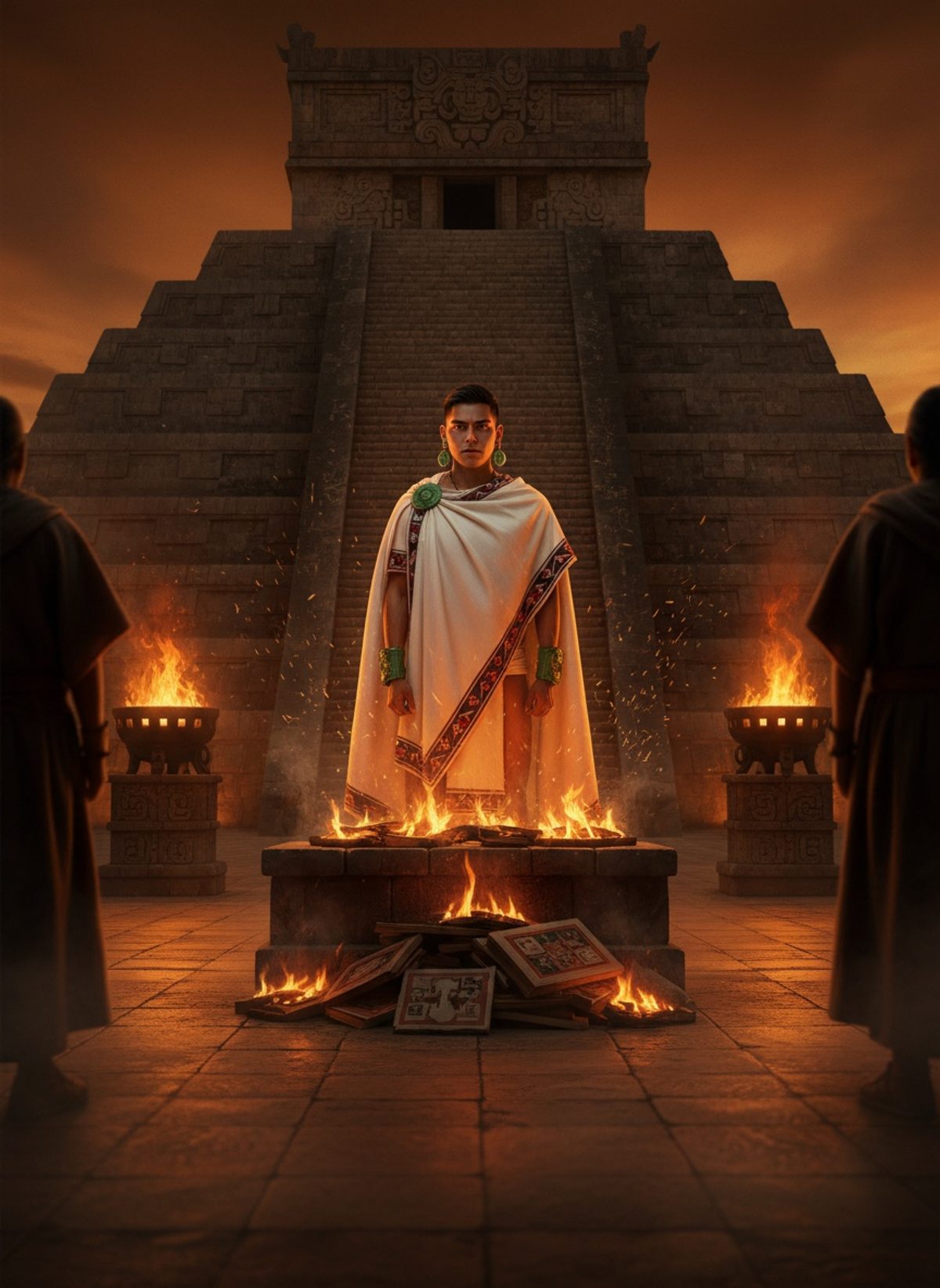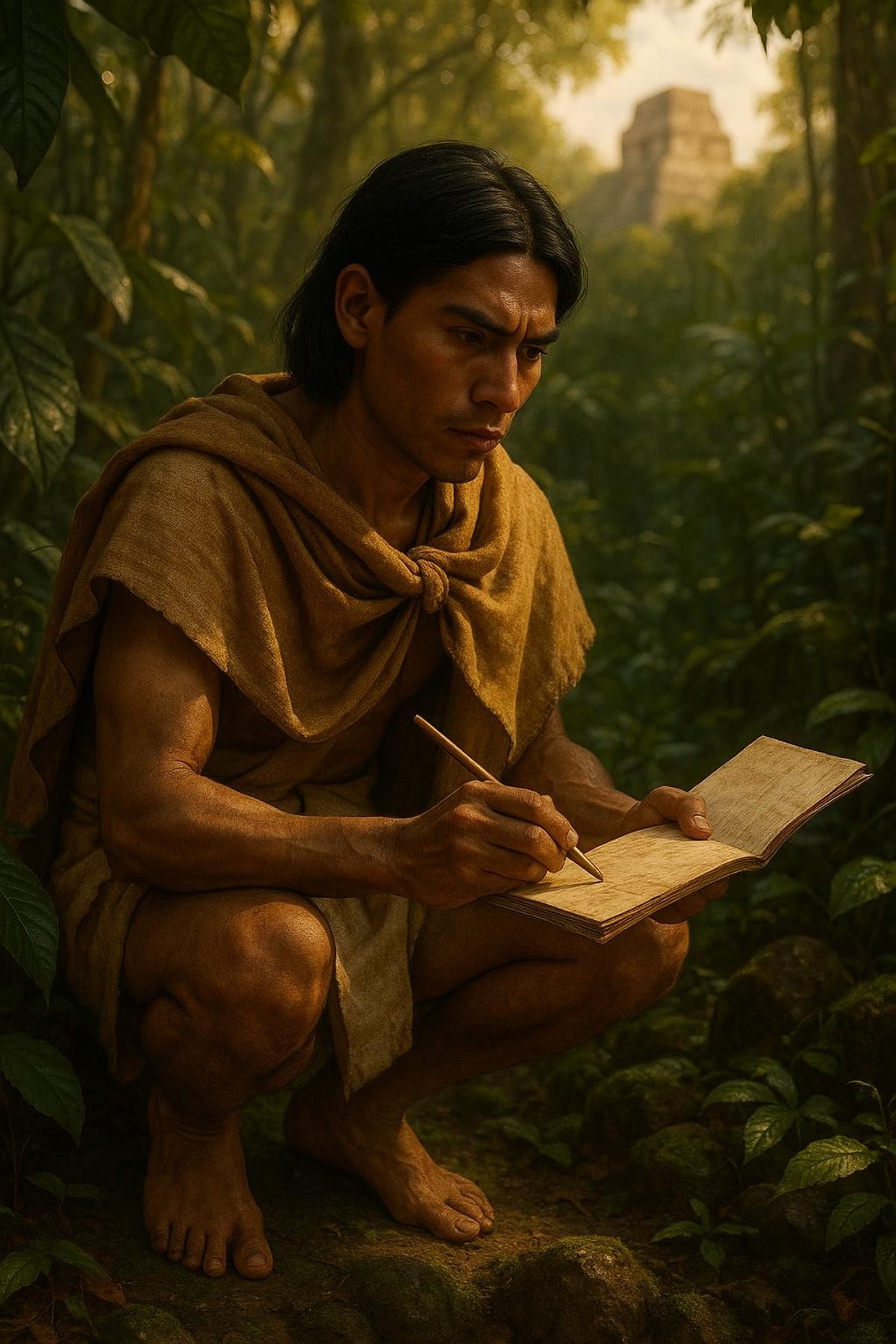
He was a hunted man in a world where might often superseded intellect and creativity. Yet, rather than taking up arms, he wielded a quill, crafting words that would echo through time. This man was Nezahualcoyotl, a prince of Texcoco whose poetic soul defied the chaos around him.
The Shadow of Tezozomoc
As the 15th century dawned over the sprawling Aztec Empire, Nezahualcoyotl faced a storm of adversity at an age when most are concerned with youthful frivolities. His father, the king of Texcoco, was brutally murdered, and the throne was usurped by Tezozomoc, a powerful ruler inclined to expand his dominion through bloodshed. With a death warrant hanging over his head, the young prince escaped into the lush jungles and rugged mountains that sheltered his homeland.
These were not the romanticized sanctuaries of literature; they were wild, untamed spaces where survival demanded every ounce of wit. Despite the dire circumstances, Nezahualcoyotl found solace in the natural world that surrounded him. It was here, amidst the dense foliage and the symphony of wildlife, that he began to craft his first verses. His spirit, indomitable and resilient, was undeterred by the threat of pursuit and violence. Instead of harboring thoughts of vengeance, he channeled his energies into creating beauty amidst turmoil.
Words as Weapons
Nezahualcoyotl's poetry was not a mere retreat from his realities; it was his rebellion against the brutality of his age. The verses flowed with reflections on justice, existence, and the cosmos itself. Through his words, he questioned the very nature of power and the legacy of tyranny. His poetry, characterized by profound philosophical musing and an innate sensitivity to beauty, provided not only personal salvation but a strategic pause — a time in which he could plan for eventual reclamation of his birthright.
While hunted, his words carved pathways back to sanity and empowered him with insights often obscured by violence. This poetic foundation would later reflect in his governance when he became a ruler more renowned for wisdom than warfare. Few knew that the articulations penned in the heart of the wilderness would lay the groundwork for future prosperity and peace for his people.
A City of Splendor
Against seemingly insurmountable odds, Nezahualcoyotl returned to Texcoco, his home both in heart and heritage, to reclaim what was rightfully his. At his side were not only warriors but men and women inspired by the ideals breathed into life through his poetry. His return marked not just a political victory but a cultural renaissance. Under his enlightened rule, Texcoco blossomed into a beacon of culture and science, standing proud among the grand cities of the Aztec Empire.
The city saw advancements that were far ahead of their time — lush gardens, extensive libraries, and architectural marvels that highlighted Nezahualcoyotl’s dedication to harmony and beauty. He commissioned the construction of magnificent structures whose grandeur he had envisioned during his days of hardship. Each brick and mural was a testament to a mind that saw beyond mere conquest and understood the profound importance of art and thought in society.
A Legacy Written in Verse
Nezahualcoyotl’s story is a counter-narrative to the tales of war and empire that dominate our historical consciousness. The prince who became a poet, then a king, teaches us that there are diverse forms of resilience, where words can be as powerful as swords. The city he built and the literature he inspired became a testament to his extraordinary vision — one that valued poetry as a pillar of civilization rather than a mere pastime.
His legacy endures, not only in the physical remnants of Texcoco but also through the enduring power of his words. Today, Nezahualcoyotl's poems are studied by scholars and enthusiasts alike, providing insights into the worldview of a man who navigated adversity with an unyielding commitment to the human spirit. His life invites us to reconsider the narratives we value, reminding us that creativity and intellect can transcend the oppressive tides of power and violence.