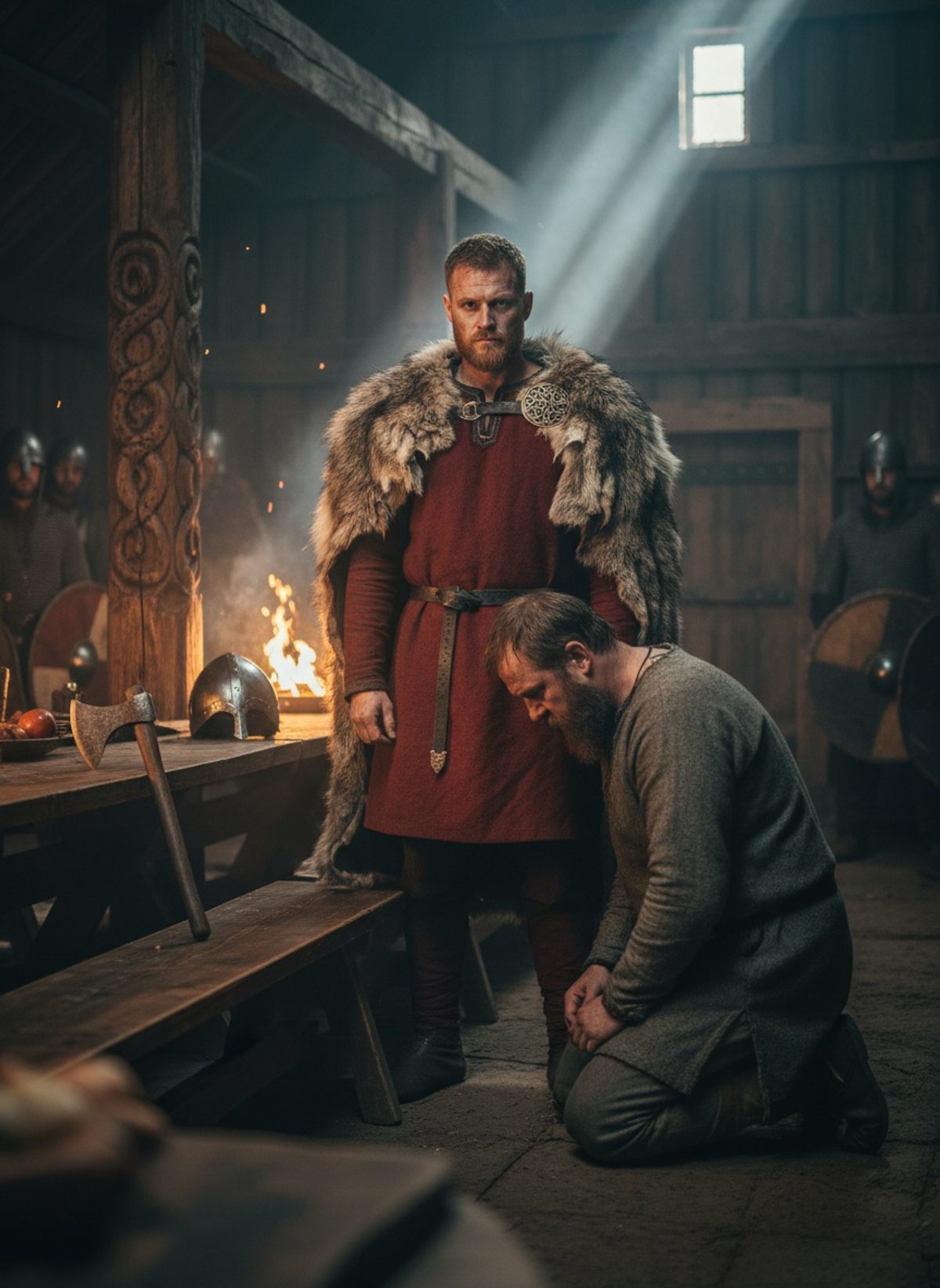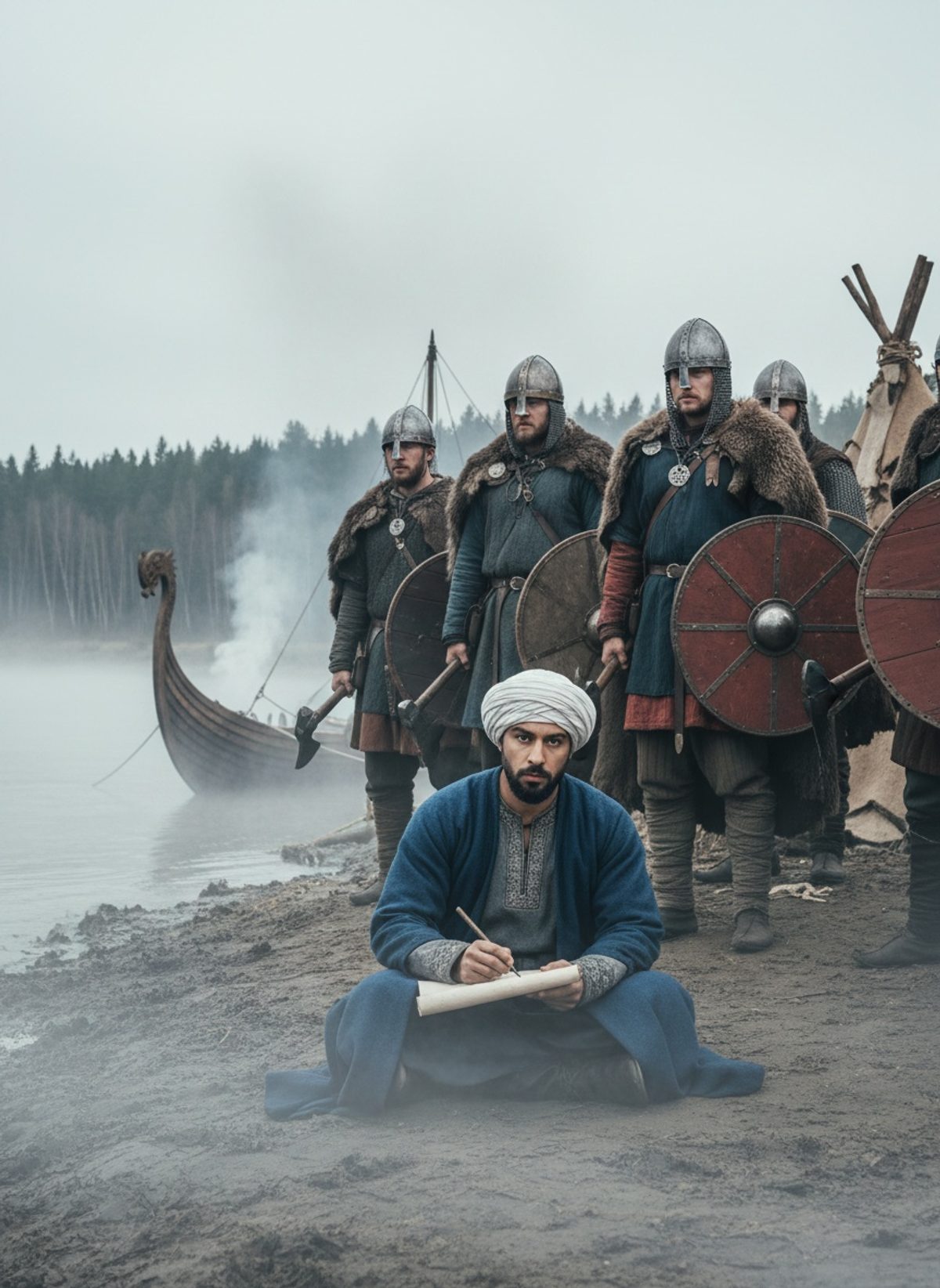
Ahmad ibn Fadlan had never seen snow before. It was only the beginning of what he would encounter on his extraordinary journey.
In the year 921 A.D., the cultural and geographical horizons of the medieval Islamic world stretched wide, from the sparkling coasts of Spain to the bustling markets of India. Yet, Ahmad ibn Fadlan, a seasoned diplomat from Baghdad, embarked on a journey that would pull him into an unexpected narrative, one filled with raw truth and fascinating encounters. His mission was a diplomatic one: to deliver a message from the Caliph of Baghdad to the king of the Volga Bulgars. But little did he know, his journey to the north would change how the world viewed a rather mysterious group—the Rus Vikings.
As ibn Fadlan and his entourage made their way deeper into the vast grassy landscapes of the Eurasian steppes, they encountered climates and cultures starkly different from their own. The air was crisp, biting and the days seemed drawn out under the overcast sky. He found strangeness in almost everything—the way the land shifted, the scents carried by the wind, the woods that loomed ominously when dusk descended. Yet, nothing could prepare him for the sight of the Rus Vikings on the Volga River banks.
The Rus were a group of Norsemen, peoples whose presence was as enigmatic as it was imposing. Ibn Fadlan described them in a way that spoke of both fear and fascination. These men were tall, their bodies physically robust as if carved from stone, and their stature increased their already intimidating presence. Wrapped in garments that seemed to have weathered both storms and battles, their eyes were the color of the storm-tossed sea, hard and penetrating. Their beards were like wild, windswept thickets, a testament to both ruggedness and neglect.
One of ibn Fadlan's most famous observations involved a Viking funeral—a stark contrast to the Islamic burial rites to which he was accustomed. As he witnessed the ceremony, he noted the intricate rituals, bizarre and unsettling. The chieftain's slave girl, destined to follow her master in the afterlife, was lavishly adorned and doted upon in her last moments, a spectacle both riveting and chilling. Ibn Fadlan's hand trembled as he wrote. He couldn't understand it by his standards, yet, it was his duty to meticulously document such customs, preserving every nuance for those who would read his account.
Interestingly, the fearsome exterior of the Vikings masked a rich tapestry of life filled with tales of exploration, trade, and warfare. To ibn Fadlan, their practices seemed barbaric, yet, beneath their rough exteriors were people of complex social stratification and deeply ingrained traditions. The Vikings were expert navigators and traders who possessed an uncanny ability to survive in and adapt to the world's harshest climates. Their longships, sleek and silent, cut through the water with unparalleled speed and agility, spreading their influence from Scandinavia to the distant reaches of the Islamic empire.
In recording his experiences with the Rus, ibn Fadlan was not merely offering a glimpse into a foreign world but was also providing a vital historical linkage between the medieval Islamic world and the Norse realms. Through his articulate narrative, we gain insight not only into the lives of the Rus but also into the prejudices and perceptions of his own culture. The juxtaposition of these worlds in his writing enriches our understanding of both cultures through the eyes of a man who stood unflinchingly in the midst of an unfathomable reality.
Perhaps what makes ibn Fadlan's account particularly valuable is the raw, unfiltered lens through which he presented his observations. Rather than embellishing the truth to suit the sensibilities of his audience back home, he painted a vivid picture of each encounter, treating his documentation as both a duty and an art form. From describing the Vikings' rudimentary methods of hygiene—harshly contrasting the Islamic practices of ritual purity—to capturing the robust bond these warriors shared with the landscape and elements, ibn Fadlan left no detail overlooked.
As ibn Fadlan returned to the warmth of his homeland, his writings did more than catalog a series of encounters; they provided an indispensable ethnographic account, bridging gaps between cultures often thought of as worlds apart. His narrative serves as a distinct reminder that history often unfolds through the courage and curiosity of those willing to step into the unknown, to write with clarity even when faced with the inexplicable.
In reading about ibn Fadlan's journey, one can't help but reflect on the idea of perception—how vastly it can differ based on one's viewpoint. This story isn't merely about the meeting of two cultures—the Islamic scholar and the Viking warrior—but a broader commentary on humanity’s tendency to both fear and be fascinated by the unfamiliar. Ibn Fadlan’s encounter with the Vikings compels us to question how we view the "other" and whether, thousands of years later, those perceptions have truly evolved. Through his pen, we catch a glimpse of a world where boundaries blur, where a scholar's courage to document truth transcends the limitations of time and geography. He has left us with an indelible etching of humanity at one of its most profound intersections.