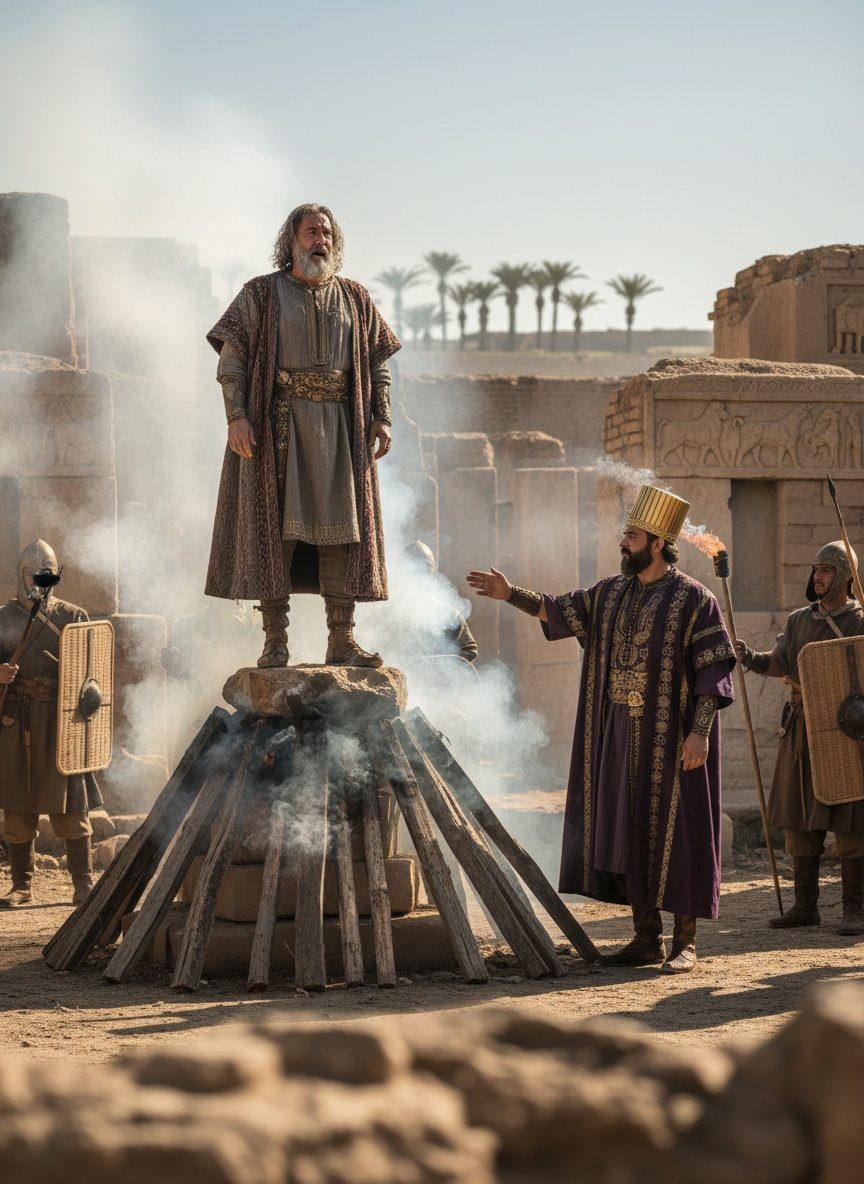
As the chill of the desert night crept into her bones, Enheduanna heard the distant clamor of shouting. The rhythmic pounding of war drums echoed through the crumbling corridors of Ur's temple, signaling her exile. The rebel forces were relentless, determined to claim the city and all its sacred spaces. Dim torches cast flickering shadows against the walls as Enheduanna felt the looming presence of the soldiers, their intent unmistakable. With each step she was forced to take away from her sacred seat, the fabric of her world unraveled, but within her, an unyielding resolve began to take shape.
The Unseen Siege
The city of Ur, a jewel of ancient Sumeria, lay in the grip of turmoil. Once the pulsating heart of civilization, it had become the boiling cauldron of rebellion and conflict. Enheduanna, the esteemed high priestess of the moon god Nanna, daughter of the great Sargon of Akkad, found herself stripped of her station, cast aside by the very hands meant to protect her. Her father, Sargon, had united Akkad and Sumer, creating an empire that stretched beyond the horizon. Yet even with such power, the intricacies of political unrest proved to be a formidable adversary. The rebel governor of Ur sought to shatter that unity by seizing control.
Enheduanna was not only a spiritual leader but also a political symbol. Her role as high priestess was akin to being the voice of the divine, wielding influence over the spiritual and temporal realms. Her authority meant cohesion for Sargon's empire, making her a prime target for dissidents eager to fracture the imperial structure. As she retreated from the temple, the very air seemed to thicken, suffocating in its treachery. Yet, amid her heart’s turmoil, the seeds of invention took root.
Finding Voice in Silence
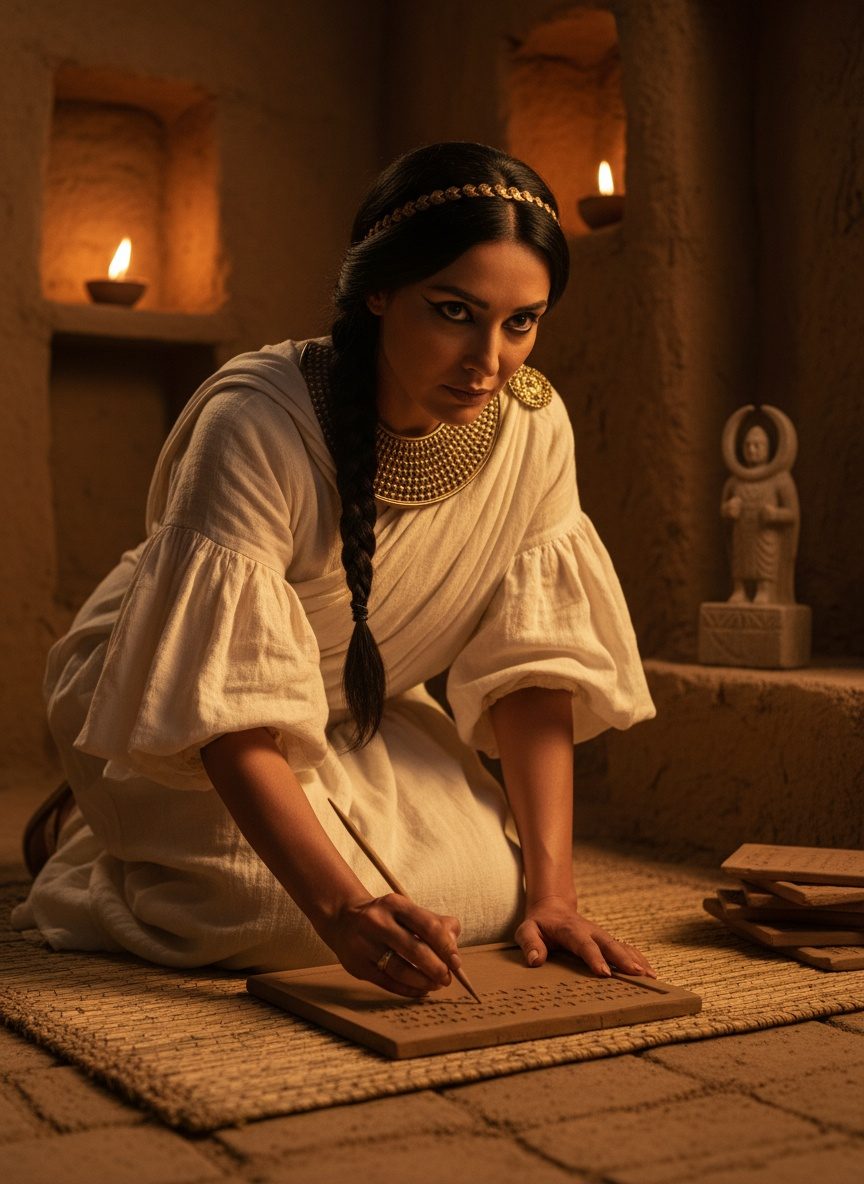
It was in the quiet solitude of forced seclusion that Enheduanna's true power unfurled. She had no soldiers to rally, no fortification from which to mount a defense—only the enduring strength of her pen. Her weapon: the reed stylus, with which she meticulously etched her thoughts upon clay tablets. In a world where words were often ephemeral, bound to the breath of the speaker, Enheduanna’s writings became eternal.
The hymns she composed during this period were revolutionary, not only in their content but also in their existence. These works are the oldest signed literary creations known to history, claiming authorship in an epoch where anonymity was the norm. Enheduanna's voice emerged, rippling through the annals of time to tell stories of divine struggles, cosmic order, and human tribulations. Her dedication inspired the gods themselves—or so the stories go—and through her words, she sought justice and restoration.
The Return of Majesty
The weight of divine attention did not go unnoticed. As Enheduanna poured her soul into each crafted hymn, her plight resonated beyond the mortal realm. Her invocations were said to stir the celestial spheres, aligning human affairs with divine intentions. At last, her perseverance bore fruit. Enheduanna’s father, the indomitable Sargon, rallied his forces, reclaiming the city from rebel hands. Order was restored, and Enheduanna returned to Ur, her seat as high priestess reinstated and her influence more profound than before.
Upon her return, the temple in Ur wasn’t merely seen as a place of worship but a testament to resilience and the enduring power of words. Enheduanna’s position was no longer a mere inheritance of power; it had been reforged through her wit, her faith, and her pen. The temple, once shrouded in shadows of mutiny, now basked in the glow of a priestess who had overcome not with arms, but with art.
Eternal Reverberations
Enheduanna’s hymns endured the ravages of time, surviving millennia to become the foundation of literary history. Her influence extended beyond her lifetime, inspiring not just religious leaders but poets and writers across civilizations to come. Her works assert the enduring human quest for understanding, justice, and continuity in the face of adversity.
Such was the legacy of Enheduanna, whose unique voice proclaimed the indomitable spirit of a woman who, without ever wielding a sword, struck mighty blows in defense of her place and her beliefs. Her story resounds across time, remarkable not merely as the tale of an ancient priestess, but as an ode to the enduring power of language and the written word.
In the echo of Enheduanna's story lies a profound truth: the mightiest fortresses crumble, empire boundaries shift, but the words etched into clay remain steadfast, an unyielding measure of a civilization's soul. It’s a reminder of how voices from the past can still speak to us, urging us to recognize the resilience within and the revolutionary power of the written word.