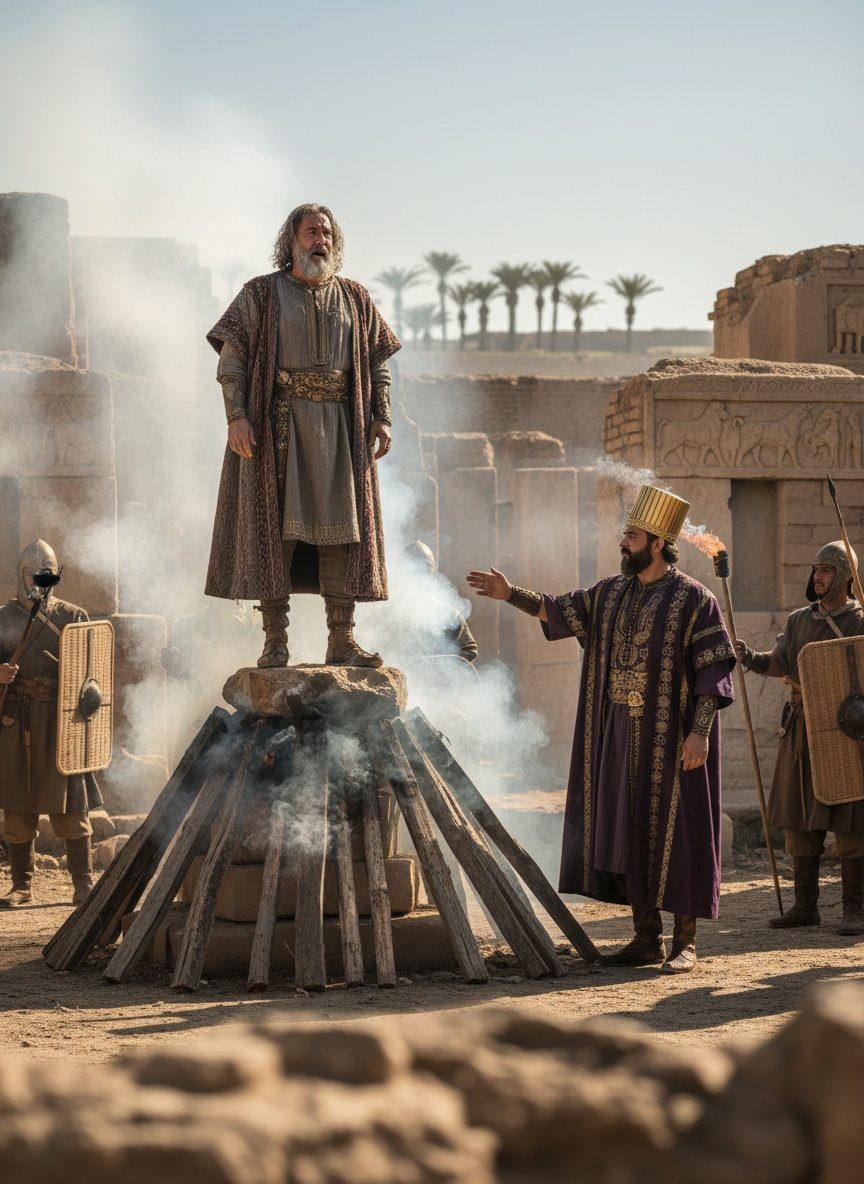
The flames danced hungrily at the edges of the pyre. Their crackling whispered doom, licking closer to a figure standing resolutely at its center, his regal attire now singed and sullied. It was Croesus of Lydia, once the richest man in the known world, who now faced the end on this platform of wood. His gaze was steady, but his heart must have pounded with the weight of a thousand regrets. Around him, Persian soldiers and Lydian captives alike watched, their eyes locked on the spectacle of a king about to be devoured by fire. But as the heat began to claw at his skin, the unexpected broke the tension — a voice that cut through the roar of the blaze with a command that stunned the onlookers into silence.
The Weight of Wealth and Warfare
The fall of Sardis in 547 BCE marked the painful unravelling of Croesus’s rule over Lydia. His wealth was legendary, so much so that his name became synonymous with riches in cultures far beyond his own. The kingdom of Lydia, situated in what is now Western Turkey, thrived under his rule, its coffers swollen from the gold-rich waters of the Pactolus River. The capital, Sardis, stood as a fortress of prosperity and art, until the ambitions of Cyrus the Great cast a shadow over it.
Cyrus, the astute ruler of the Achaemenid Empire, understood more than the art of war; he wielded strategy like a sword. The conquest of Lydia was not merely about acquiring land but about toppling the bastion of wealth and influence that Croesus represented. Deep alliances, formidable armies, and great wealth had fortified Croesus, but they also painted a target on his back. As his golden reign drew to a close amidst the flames and chaos, it seemed that even the richest man in history could not buy immortality.
The Moment of Mercy
In that moment, as the fire began to consume the pyre, the unexpected happened. Cyrus, watching from the sidelines, was moved to act. He ordered the flames to be extinguished, a decree that seemed to ignore the rules of conquest and the expected manners of victory. To his soldiers and foes alike, it was an astonishing act.
Why spare a vanquished enemy? This was a question that rippled through the ranks of Cyrus's army and around the lands of Asia Minor. Some say it was the echo of Solon’s wisdom that reached Cyrus's ear just in time. Croesus, as legend tells, had once remarked on the fleeting nature of happiness, sharing a conversation with the wise Athenian lawmaker, Solon, about the capriciousness of fortune. As Croesus stood on the pyre, he reportedly cried out Solon's name, a lamentation or a prayer that reached Cyrus’s curiosity and perhaps his heart.
The King Turned Counselor
The relationship that blossomed from this moment of clemency was unique. Rather than a prisoner to be humiliated or ignored, Croesus was elevated to a position of respect and influence. Cyrus’s decision to spare him was not merely humanitarian; it transformed Croesus into a sagacious advisor, tapping into the depth of his experience and insight into the complexities of leadership and governance.
This role reversal from rival monarch to trusted confidant was significant. Croesus had once been a king who lived in a world defined by material wealth, but under Cyrus, he found a new kind of stature — one built on wisdom and counsel rather than gold. It was, in a way, the first documented instance of one great leader assimilating another’s mind rather than merely defeating him in body.
The Story's Enduring Legacy
In the annals of history, this dramatic pause in the cycle of vengeance and retribution stands out as a remarkable example of mercy prevailing over conquest. In saving Croesus, Cyrus demonstrated an enlightened sense of power that went beyond the mere accumulation of territories. It redefined the dynamics between victor and vanquished, laying down a template for what leadership could look like — generous in the hour of triumph, receptive to the wisdom of the fallen.
Today, as we contemplate the challenges of leadership and power in our own time, the story of Croesus and Cyrus offers a potent reminder that strength is not only in defeating others but in understanding them. The decision to extinguish the flames highlights a pivotal moment in history where compassion shaped the destiny of nations, suggesting that the choices made after victory can be as transformative as the conquest itself.