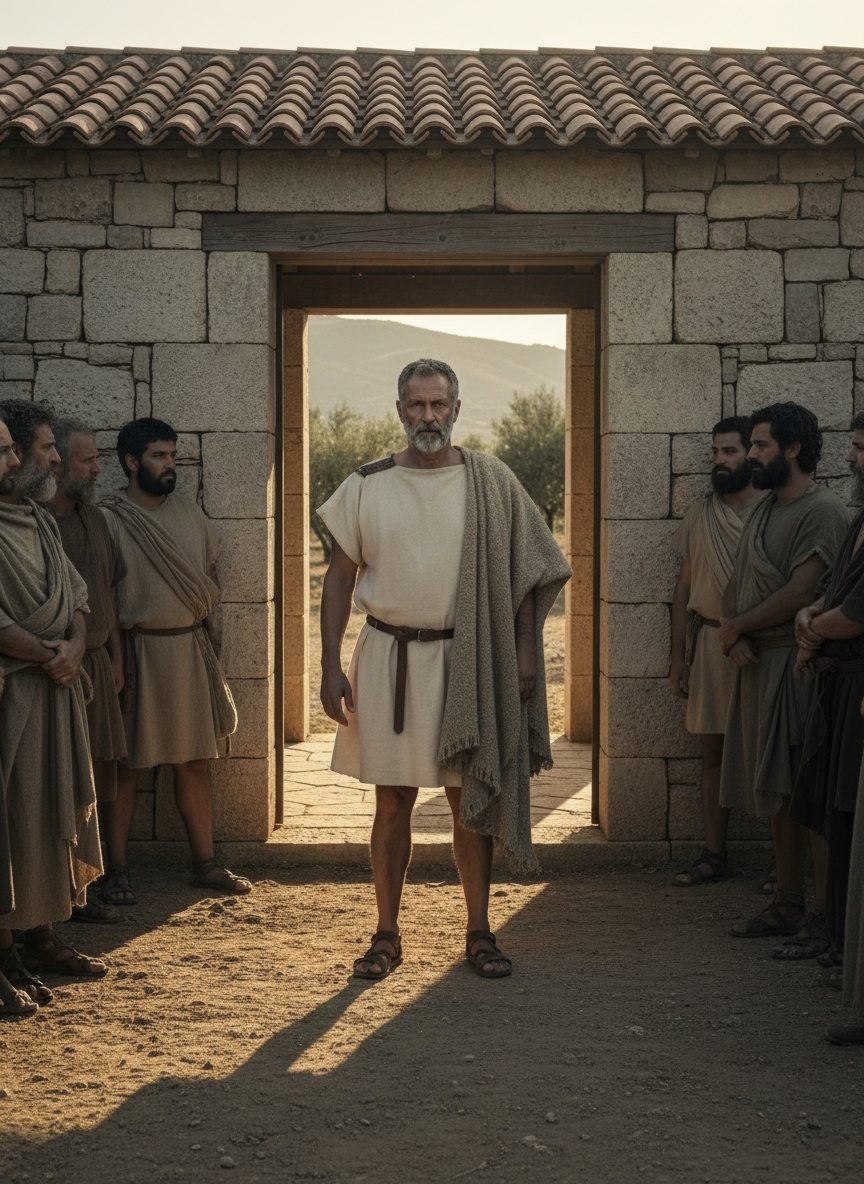
The morning air over Sparta was crisp and heavy with the scent of olive groves under an ancient sun. The streets, a labyrinth of dusty paths, lay quiet, except for the rhythmic clattering of hoplites drilling at a distance. The shadows were long, stretching over a city defined by its iron-clad warriors and relentless pursuit of strength. Yet, in the heart of this martial bastion, an unexpected ripple of change was about to emerge.
The Magistrate with a Single Line
In the sacred halls where the ephors convened, Chilon of Sparta stood poised. His visage was austere, his frame lean but commanding—a testament to both the harshness and the discipline of Spartan life. The ephors, guardians of the Spartan ethos, were accustomed to counsel steeped in strategies of war and conquest. But Chilon, one of the esteemed Seven Sages of Greece, had come with a different wisdom in mind. His voice, steady and resonant, pierced the solemn silence with a simple utterance: "Know thyself." These words, pregnant with meaning, unleashed waves that would surge far beyond Sparta's iron borders, reaching the furthest edges of the Greek world.
To the soldiers who gleamed with the ferocity of well-forged iron, such introspection was not customary. Yet here stood Chilon, challenging the very foundation upon which Sparta was built. "Know thyself" was an invocation to look inward, sowing seeds of reflection in a city that valued the collective above individual contemplation.
Wisdom Amidst Iron
Chilon's philosophy resonated in a society normally resistant to change. Sparta, a city often viewed through the lens of its formidable phalanxes and rigorous agoge training, had honored the values of courage, discipline, and cunning; however, introspection was never celebrated among these virtues. But Chilon's words carried the weight of logic and foresight, urging a reevaluation of identity—a form of psychological self-armor just as vital as the tangible protection of shield and spear.
Though primarily known for their martial prowess, the Spartans were not blind to the necessity of wisdom. By embracing Chilon's assertion, the Spartans began to recognize the value of balance. The message "Know thyself" urged citizens to understand their strengths and limitations, an insight that served not just the warriors but also extended to governance and judicial matters.
The Echo Across Greece
Beyond the rugged terrains and olive-grooved lands of Sparta, Chilon's words breached the wider Greek consciousness. Philosophers and thinkers from Athens to Corinth began discussing the implications of this introspective wisdom. While Athens was a city renowned for dialogue and intellectual exchange, even there, Chilon's thoughts sparked conversations that bridged the gap between action and reflection.
Greek culture, rich with the nurturing of human thought, held the sayings of the Seven Sages in high esteem. Chilon's maxim became a philosophical anchor, spanning generations and shaping ethical discussions. It engaged minds such as Socrates, who later championed a method of inquiry founded on self-awareness and dialectical reasoning.
The cultural interplay fostered through these dialogues is often underappreciated. As Sparta's dominance thrived through military power, Athens cultivated a dominance of thought. The paradoxical symbiosis of these cities crystallized a progressive Greek civilization where strength and wisdom were given platform in diverse ways.
The Enduring Wisdom
Even as empires shifted and epochs passed, the saying "Know thyself" endured, a testament not only to the simplicity of the message but to its timeless resonance. The profound wisdom embedded in these words influenced Renaissance humanism, reemerging through history's most contemplative figures, challenging humanity to reflect deeply on individual and collective identity.
In a contemporary world fraught with external expectations and noise, the adage holds a rare clarity and urgency, inviting reflection far beyond its initial utterance in a city devoted to physical strength. Chilon's wisdom offered a different form of armor against the chaos of life—a defense through understanding oneself—an ancient echo urging us today to embrace inner clarity just as fervently.
Chilon's voice was not a loud battle cry but a whisper of wisdom that pierced Sparta's armor. To this day, these words inspire introspection, inviting each person to journey inward, questioning the very fabric of their beliefs. Bridging the past and present, the legacy of Chilon's simple line reveals the understated power of wisdom to ignite enduring change, even within the heart of history's most unyielding cities.