April 23, 1400 BC. The sun cast its golden hue over the great city of Thebes, shimmering off the limestone of its monumental structures. This city, steeped in an aura of divine sovereignty and awe-inspiring grandeur, stood as a centrepiece of Ancient Egypt's splendour.
On this particular day, the otherwise bustling business of Thebes seemed slightly hushed, as if the city itself was holding its breath in anticipation. The news had spread quickly: Sennefer, the city's esteemed mayor and a loyal servant to Pharaoh Amenhotep II, was to receive an unprecedented honor. He would be granted a tomb befitting not just his lineage, or lack thereof, but his service, in the manner of Egypt's most sacred tradition. This was a departure from the rigid norms that typically confined such privileges to the royals and high priests.
As a commoner, Sennefer's life was neither one of a god nor of a king. Yet under the reign of Amenhotep II, he had risen through ranks to hold a position of significant influence. The Pharaoh, known for his remarkable athletic prowess and a somewhat strict demeanor, saw something in Sennefer that merited a reward usually reserved for those of royal blood.
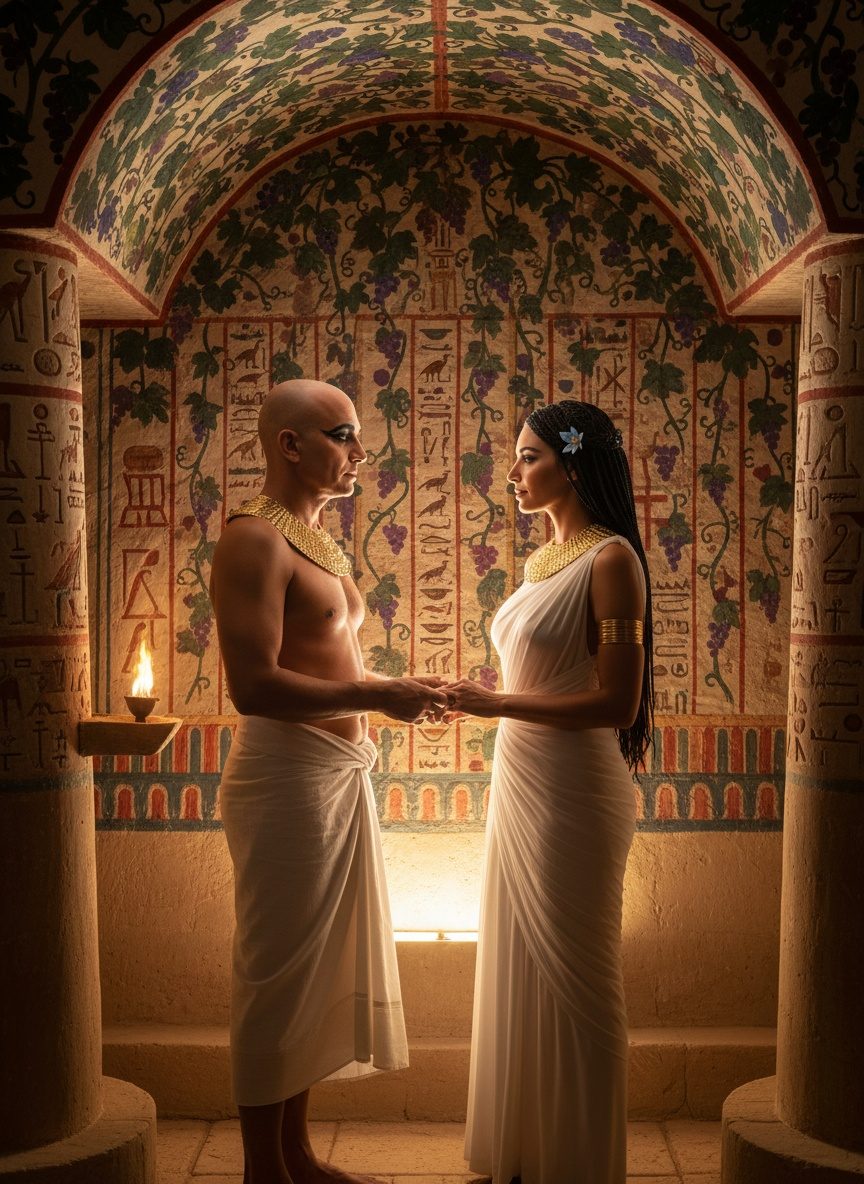
The arid desert winds danced alongside the Nile's fertile banks, as artisans began carving into cliff faces that would erect Sennefer's eternal sanctuary. This tomb was to be unlike any other, with walls that told stories of harvest and festivity in vibrant colors, and ceiling spaces adorned with intricate grapevines. These were more than mere embellishments; they were symbols deeply woven into the essence of eternity, depicting comfort and abundance in the afterlife. It was a vision of paradise, eternal and unyielding, bestowed upon one who had walked amongst men but served with the devotion of a god.
Inside this tomb, we find a man seeking not isolation but continuous connection to life’s vivacious dances—a testament to what he strove for during his days. The tomb's decorations unfolded the tales of earthly joy and harmony, drawing a parallel to the governance he upheld. Underneath the painted grapevines, Sennefer would continue to tread familiar paths, much like the ones on which he wandered amidst the living.
The Pharaoh's permission for such lavishness spoke volumes. In an age where only blood or extraordinary divinity dictated posthumous grandeur, Amenhotep II’s endorsement of Sennefer's tomb carved a niche in history where loyalty and meritocracy could briefly intersect with divine elevation. The Pharaoh was not blind to the value of stewardship and fidelity, and his decision was a reflection of a sophisticated understanding of leadership.
The tomb was not merely an individual benediction. It was a monument that reflected the intertwined destinies of a ruler and his subject—both committed to creating a legacy that transcended the mere trappings of power. For Amenhotep's Thebes, with its burgeoning wealth and power, the grand tomb was also a reflection of the times themselves, where the lines between divine intention and mortal achievement blurred.
While ancient scribes and their scrolls often focused on the pharaohs and gods, the story of Sennefer shines like a rare gem amidst these annals, a reminder that history contains layers of ordinary lives imbued with extraordinary moments. His tomb stands out not just as a physical space but as a conversation—etched in stone—about the values of justice, loyalty, and the human spirit.
It’s often said that the silent streets of Thebes whisper the echoes of its past. Perhaps they tell the stories of people not sculpted into legends but who carried out their duties in the realm of human possibilities, shaping history in their humble, steadfast ways. With every desert wind that sweeps over the Valley of Kings and stretches beyond the sun-scorched stones of Sennefer’s eternal abode, we are reminded of how his remarkable legacy still pervades the sands of time.
In studying Sennefer's tomb, modern travelers find more than just a relic of the past. They encounter artifacts of communication, embodying the eternal dialogue between the mortal and the everlasting, the ruler and the servant, ambition and humility. Sennefer's life and his tomb's existence question the legacies we seek to build, reflecting a universal truth that it is in the bonds of trust and loyalty that we leave our most enduring mark on the world.