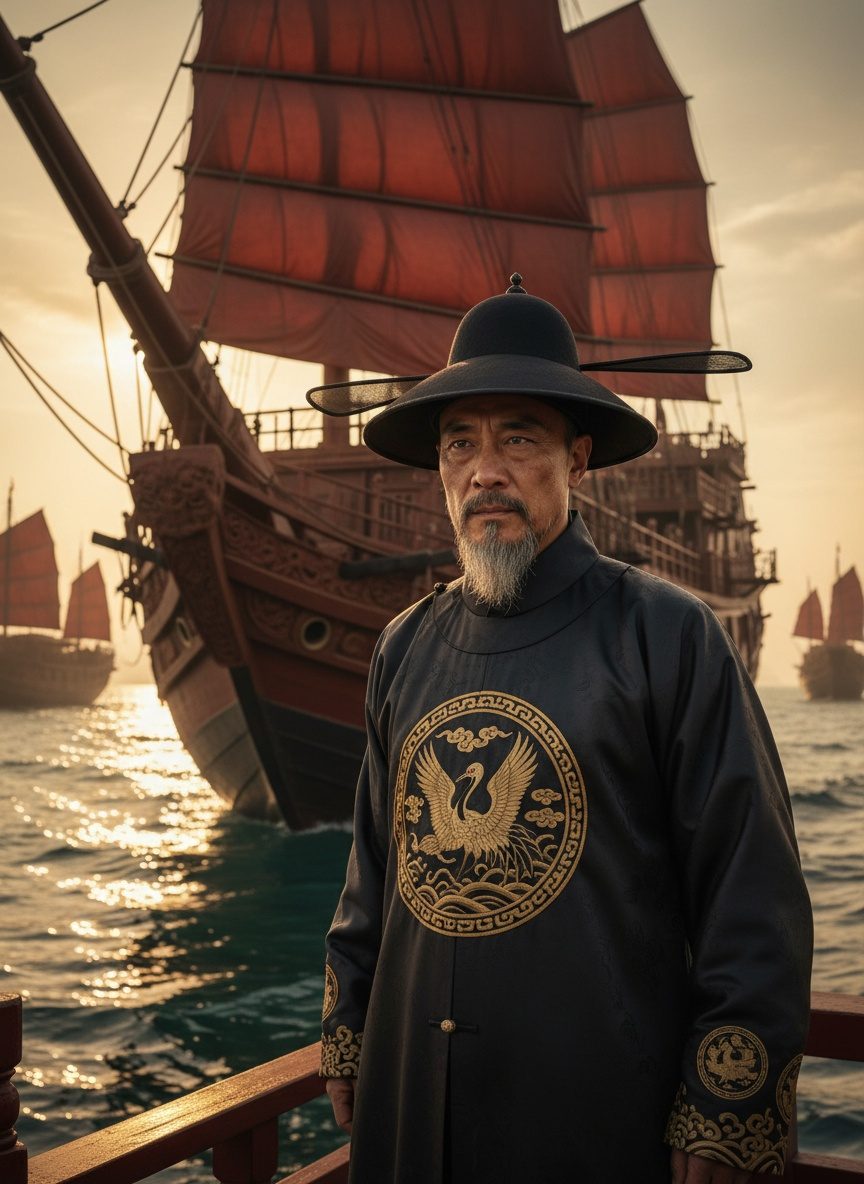
He was not a native-born sailor. Zheng He, the great Chinese admiral who commanded the seas, was born far from the ocean, in the mountains of Yunnan.
A Child of Unlikely Beginnings
Zheng He was first known as Ma He, a name echoing his Muslim heritage, a rarity among Chinese bureaucrats. Before he became known as one of the most formidable navigators of his time, his early life was filled with turbulence. Captured as a ten-year-old during a Ming military campaign, he was taken to the imperial court, far away in Nanjing. It was here, amidst the grandiose halls of power, that he transformed from a captive into a trusted confidant of the prince who would one day become the Emperor Yongle.
Renamed Zheng after his family's service in the campaigns, his rise from humble beginnings to a revered figure says as much about his character as it does the shifting tides of fortune in the Ming dynasty. He did not just step into a position of power; he charted a course for an entire nation to follow. It was his vision and the emperor's ambitions that set the stage for China’s unprecedented nautical enterprise.
Ruling the Oceans: The Conquest Begins
Launching from the bustling port of Nanjing in 1405, Zheng He's first voyage was nothing short of a spectacle. Imagine 300 massive junks, ferried by favorable winds along the echoing calls of navigators. Each voyage would take him across the mysterious expanses of the Indian Ocean, a maritime world that was yet to be comprehensively mapped. Covered with crimson sails and towering above the waters, these ships were unlike any others at the time—nearly five times the size of Columbus’s Santa Maria.
The fleet charted territories that most Chinese had only heard whispers about: Java, Ceylon, India, Hormuz, and the rich Swahili coast of East Africa. But these were not voyages for conquest. Instead, Zheng He carried porcelain, silk, and the towering elegance of Chinese culture on each journey. He built diplomatic bridges, exchanged gifts with foreign dignitaries, and brought back novel items foreign to Chinese soil—giraffes from Africa left citizens awestruck and whispering of qilins, mythical creatures of luck and prosperity.
The Edge of Exploration: A Strategic Withdrawal
But tides of change are relentless. When Emperor Yongle died, the political wind shifted with him. The voyages, though rich with exchange and potential, were draining the imperial treasury and testing the patience of the Confucian scholars at court, who saw such endeavors as excessive luxuries. By 1433, a new emperor took the throne, more concerned with internal matters than the allure of distant lands. The finality was swift and decisive. The mighty junks were harbored forever, their robust timbers left to fade into the rivers they once commanded.
In one decisive move, the emperor ordered the records of these voyages destroyed. Whatever reasons were voiced, from appeasing court officials to reallocating funds to peasant relief, the impact was more profound. The cessation of voyages came not silently but with a shroud pulled over their existence, casting doubt and mystery that leave historians puzzled even today.
The Hidden Costs: An Ocean Consigned to Memory
The end of Zheng He's expeditions was not merely a retreat from maritime ambition; it marked a philosophical turn inward. While Europe was on the brink of global exploration, China closed itself off, its rich narratives of foreign diplomacy and cultural exchanges reduced to near whispers over time.
China’s retreat from exploration and naval prowess left its coasts vulnerable to pirates and, later, European colonial powers. What might have been a legacy of global maritime dominance was submerged under isolationist policy. The physical presence of those ships vanished, but they left behind a legacy of what could have been—a future where China might have explored and engaged on its terms rather than defensively conceding station to Western powers.
The Lingering Echo of Silenced Voyages
In contemplating the absence of Zheng He's voyages, we are reminded of the fragile nature of history. A single decision can irrevocably alter a nation’s path. His voyages, as grand as they were, remain largely shadowed by subsequent generations. Yet this story challenges us to reflect: How might the world be reshaped had China chosen a different course, had it not turned its back on exploration and engagement?
Zheng He serves as a symbol of what happens when grand visions are curtailed by shifting political winds. It’s a resonance that defies time—a remarkable endeavor curtailed just as it neared the verge of an even greater transformation. The ships may have burned, but their trail of potential left traces in the currents, whispering across the vast dreams of an empire that once almost laid claim to the edge of the world.