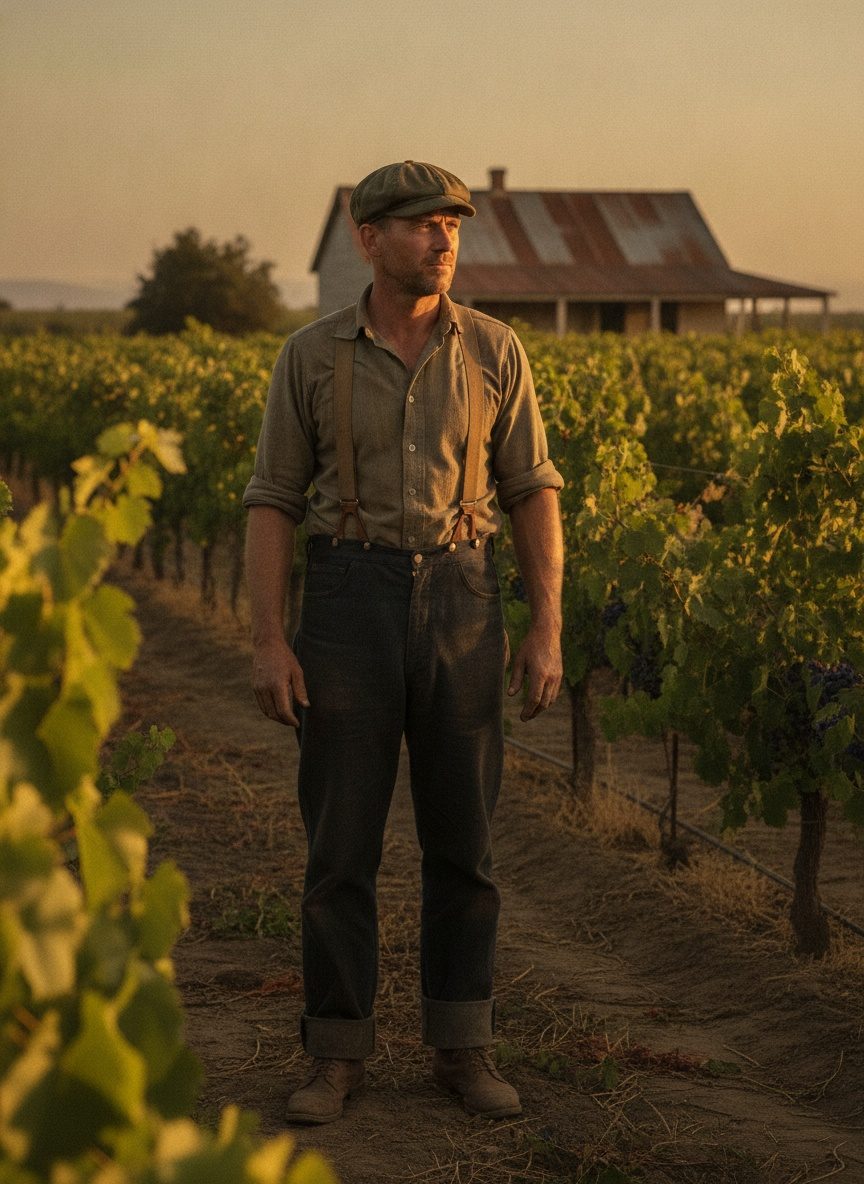
May 15, 1942. The soil in Florin, California was cracked and dry, a silent witness to the unfolding tragedy. For the Japanese American families who had tilled the land for decades, cultivating lush rows of strawberries and grapes, it was a bitter and unforgiving spring—one that would mark the end of their lives as they knew it. Swept up by the tides of war and prejudice, they were sent to distant internment camps, leaving their beloved farms and livelihoods behind. In the cold language of Executive Order 9066, their possessions became obstacles—obligations they could not fulfill while locked behind barbed wire fences.
Among the fear and confusion, one man, Bob Fletcher, chose an unusual path. He was an agricultural inspector, his hands already familiar with the earth, though not tied to it by blood or heritage. Rather than witness these farms abandon their caretakers to disrepair and rightful owners swallowed by debt, Fletcher did the unthinkable. He quit his government job, turned in his badge, and picked up the tools of a farmer. It was a decision made quietly, without fanfare or the prospects of glory. But for three Japanese American families, it was an act of profound bravery and unexpected kindness.
The farms he chose didn't attract attention out of opportunity but out of necessity. They were small holdings, modest swathes of land, yet integral to the families they supported. Through Fletcher’s tireless efforts, these farms would not be lost to insurmountable taxes or the opportunism of hostile neighbors. His days were filled with hard labor under the relentless Californian sun, a solitary figure among the fields that once bustled with the activity of families.
Fletcher knew nothing about running the types of farms now left in his care. With determination, he learned the rhythms—the planting, the pruning, and finally, the harvest. He lived in a spartan bunkhouse typically reserved for migrant workers, a sparse accommodation that became his home. With no family to return to or share the burden, his nights were filled with the quiet companionship of the fields, blanketed by the silver wash of moonlight.
As months turned into years, his dedication bore fruit. Through his perseverance, he harvested crops season after season, managing to keep the farms solvent. The profits, meager though they were amidst the economic strain of wartime, were scrupulously managed. Fletcher banked every earning under the names of the owners, ensuring that they would return not to ruin, but to a legacy preserved in their absence.
The ordeal was not without its challenges. The war years were unkind, scrutinizing everything with suspicion. Those in custody cast a long shadow of doubt upon their innocence and Fletcher, by proxy, was often questioned. Yet, his reputation for integrity shielded him—his resolve and commitment became a cornerstone of the small, turbulent community. It was an environment where kindness was not without risk, and standing firm was an act of quiet defiance.
In the spring of 1945, with the war's end and the dawn of peace approaching, the interned families began to make their way back to California. For many, the return was bittersweet, finding once-familiar neighborhoods changed and friendships tested by absence and adversity. Yet when the shutters were finally raised on their forsaken farms, they found them not in the decay and disarray so many expected, but in a state of readiness. Bob Fletcher had cared for their homes and their hopes with expectations of nothing in return.
The three families returned to a life they feared lost, only to find their fields intact and their earnings waiting—as if they had never left. In a California that was at best ambivalent and, at worst, hostile towards their return, Fletcher’s actions stood as rare proof of humanity at its best, cutting through wartime hysteria with profound simplicity. What he accomplished alone and without acclaim during those tumultuous years was a testament to the enduring power of empathy nestled in the heart of an ordinary man.
This narrative serves as a reminder of a time when reason and kindness prevailed against the prevailing winds of intolerance. Bob Fletcher's story remains a powerful lesson on the potential for individual action to preserve dignity and sow seeds of reunion. At a distance, the history books may overlook such acts in favor of grand strategic overviews and geopolitical shifts, but the story of an unassuming man and the land he nurtured speaks profoundly to the quiet yet indelible mark one person can make. Here, on these fields, the lines of history blurred, and for those willing to care, every harvest reaped was testimony to the spirit of resilience and the belief that some battles are fought not with weapons but with unwavering kindness.