The clink of the iron chains echoed through the crowded square, a grim symphony underscoring the morbid anticipation of the gathered throng. William Burke, his eyes scanning the faces that had come to witness his fate, moved step by step toward the gallows. Edinburgh’s skyline stood defiantly under a sullen sky; the imposing silhouettes of its spires seemed to frame the lurid crescendo of an era’s dark tale.
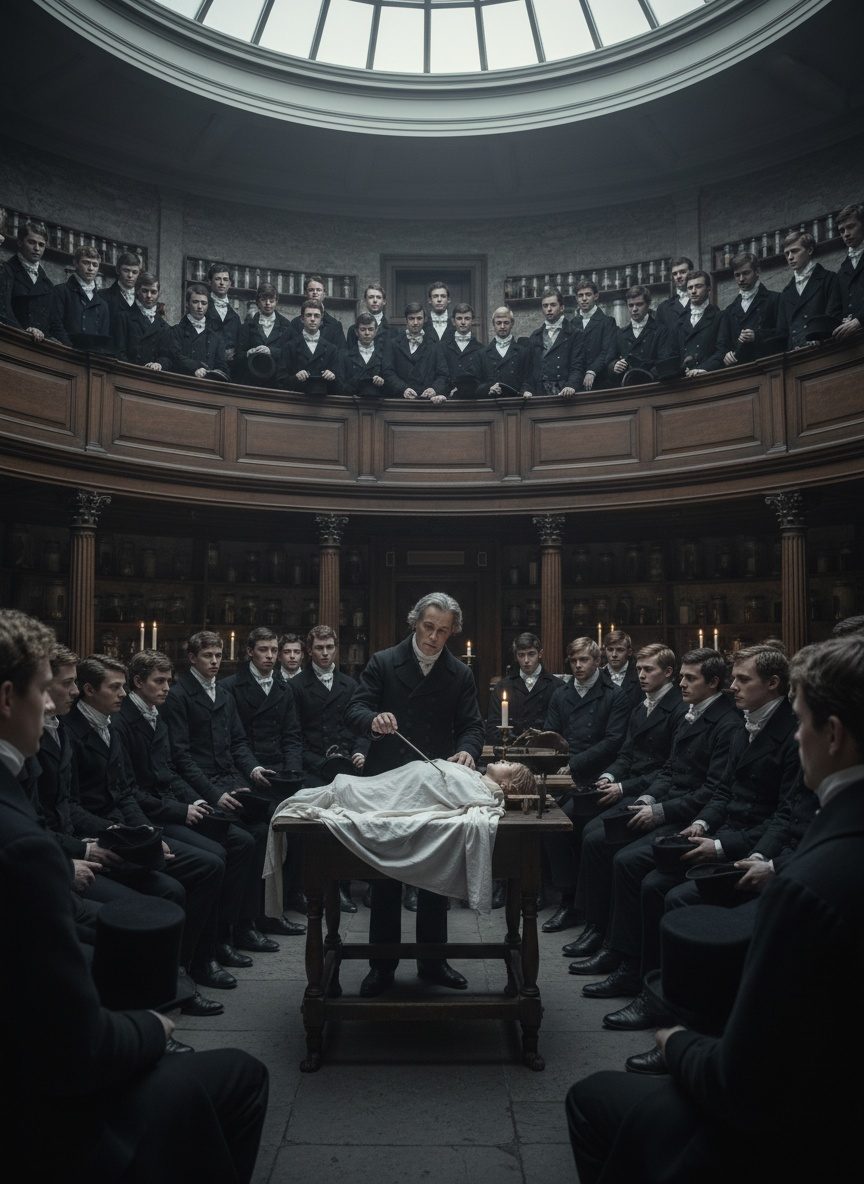
Edinburgh in 1828 was a city of profound dualities, its cobblestone streets tread by illustrious scholars and shadowy figures alike. At its heart beat the rhythm of a medical revolution, as the city's esteemed medical school cemented its reputation as the lifeblood of innovation within the British Empire. But beneath the veneer of scientific progress lay an insatiable hunger for fresh cadavers, a demand that exceeded the traditional suppliers: the executed criminals whose bodies were consigned to a posthumous purpose.
Enter the men who would rewrite the boundaries of moral depravity—William Burke and William Hare. These desperate entrepreneurs saw opportunity where others saw death, deciding to streamline the supply chain not through grave-robbing, but by simplifying the process altogether: they would manufacture the deceased themselves. As audacious as it was heinous, their scheme began with the lodgers at Tanner's Close in Edinburgh, where victims disappeared into oblivion and reemerged on dissection tables.
A flicker of recognition darted across an observer’s eyes in the crowd that day. She was Margaret Docherty, but in the pages of Burke's story, she became merely another anonymous footnote— one of the sixteen souls dispatched by Burke and Hare. Each murder bore the same cold calculation: lured with the promise of warmth and drink, before a swift suffocation, a technique chillingly dubbed "Burking," ensured the silence of the prey. The bodies were then sold under the guise of natural death, the monetary exchange made with clinical detachment.
So pervasive was their operation that it nearly outpaced suspicions. But as the grim harvest grew, so too did whispers of horror. A suspicion rooted in a tavern grew vocal enough to stir the proverbial hornet’s nest, culminating in the betrayal by none other than Hare himself. As Burke’s trial drew public fervor, the courtroom turned into a spectacle, juxtaposing the lowly visage of a barber-surgeon with the mighty tools of justice drawn with precision and purpose.
Here, in the solemn gravitas of the court, Edinburgh glimpsed its monstrous reflection. Proof and perjury melded into the annals of a macabre trial, with Burke cast as the embodiment of urban nightmares. Conviction came swiftly—the weight of his crimes exacted upon him as with finality the judge's gavel slammed down the decree of death.
The very body of William Burke, a man who thrived upon the traffic of death, was sentenced to fulfill the most ironic of restitutions. His lifeless form, limbs once animated by sinister intent, found no peace in burial. Instead, they were conscripted into the same scientific service he once clandestinely supplied. Scotland’s anatomists not only laid him bare to their incisions, but immortalized his skeleton as a testament to justice rendered.
But Edinburgh's theater of the macabre did not end there. The city’s morbid curiosity found an outlet in the souvenirs crafted from Burke’s skin—tanned and fashioned into leather pocketbooks proudly displayed and traded amongst citizens. What could be more fitting, the populace seemed to ask, than to carry with them a literal piece of the man who so epitomized society’s dark underbelly?
Time has shrouded this episode in a shroud of curiosity and horror, but its skein unfurls toward a question as relevant now as it was then: as empires expand in their relentless pursuits—of knowledge, of power, of prosperity—what becomes of the souls caught in the gears of progress? The story of William Burke, whose life played out in the ever-widening shadow of empire’s hunger, remains a stark cautionary tale on the costs exacted when ethics are sacrificed on the altar of advancement. It invites reflection on the dual nature of human achievement, reminding us that for every step forward, there must be vigilance against the darkness that might so easily slip into stride.