The Moplah Rebellion of 1921 is rarely mentioned in British history books. But the echoes of this uprising against the Raj still reverberate in the hills of Malabar.
The Malabar Flashpoint
As the sweltering heat of August 1921 descended upon the lush, undulating landscape of Malabar, a storm was brewing that the British had not anticipated. This region of Southern India, known for its spice-laden breeze and serene coasts, witnessed a smoldering discontent among the Moplah Muslims, or Mappilas as they were locally known. For far too long, these tenant farmers had been at the mercy of ruthless landlords and an equally unforgiving colonial tax regime. The tensions were palpable, like the humid air before a monsoon burst, but few realized how close the tinder was to being sparked.
The immediate catalyst was the growing influence of the Khilafat Movement, which sought to defend the Ottoman Caliphate, and Gandhi’s Non-Cooperation Movement, both sowing seeds of resistance against British rule across India. For the Moplahs, however, the grievances ran deeper. The British administration, often complicit with the landlords, had turned a blind eye to years of exploitation. The Moplahs, whose Islam was intertwined with local traditions, saw their rebellion both as a challenge against colonial oppression and a stand for their religious identity.
Fires and Furies
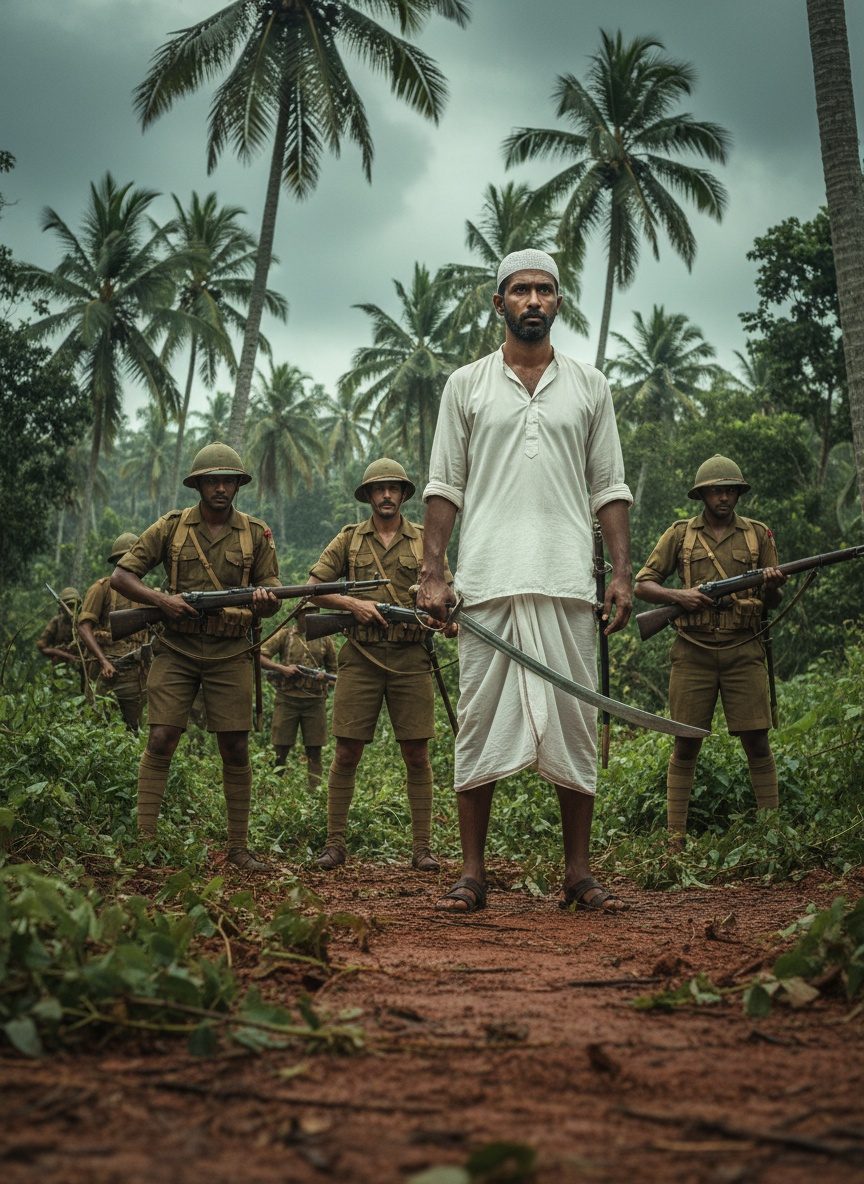
When the fires of rebellion finally broke out in August 1921, they spread swiftly through the winding paths and dense jungles of Malabar. Courts and public records were set ablaze, reducing symbols of colonial authority to mere ashes. Revenue officers and their loyalists found themselves surrounded and outmatched by the fervor of local insurgents. The jungle, dense and alive, witnessed the rise of leaders who emerged from within the villages, often unexpected and unknown outside their immediate communities, yet carrying the torch of rebellion the way only insiders could.
The British response was calculated but desperate. Local constabulary proved ineffective, overwhelmed by the Moplahs’ fury. London summoned reinforcements in the form of the Dorset Regiment, with orders to reassert control and restore ‘peace’. Yet, as the soldiers marched through the thickets and expansive paddy fields, they soon discovered that the landscape was not just a backdrop — it was an accomplice. The jungle didn’t simply hide the Moplahs; it swallowed their intentions, creating guerrilla fighters adept at moving swiftly and striking without warning.
Struggle in Shadows
The engagement with the Dorset Regiment was no simple military confrontation. What played out was guerrilla warfare at its most intense, with terrain and tactics favoring the defenders. The lush greenery of Malabar acted as both shield and sword for the rebels, allowing them to launch surprise attacks and vanish into the ethereal mist that blanketed the hills. The British, armed with modern weaponry, found themselves fighting shadows, the jungle amplifying natural sounds to sow confusion and fear.
Despite the violence and chaos, this wasn’t merely an unorganized mob uprising. There were defined targets, strategies, and a resonance with the ongoing nationalistic struggles unfolding elsewhere in British India. The Moplah Rebellion wasn’t an isolated incident but part of a larger crescendo of voices challenging colonial dominance. Yet, it retained its own unique character, shaped by the cultural and religious fervor of its participants who saw themselves as warriors in a moral and spiritual quest.
The Aftermath and Echoes
By the end of 1921, the British had quelled the Moplah rebellion, but at great cost and lingering resentment. The fallout was a mixed legacy of tragic narratives. Thousands were killed, and many more were displaced or imprisoned, their stories woven into local folklore rather than the annals of empire. While the British restored administrative order, they could not extinguish the enduring spirit of resistance that had been further cemented among the people of Malabar.
The rebellion left an indelible mark not just on the people and the place but on the broader Indian independence movement. It highlighted the potential power of local discontent and the dangers underestimated by colonial powers until it was too late. Today, the Moplah Rebellion serves as a poignant chapter in the saga of resistance against colonial exploitation, a stark reminder of the explosive intersection of socioeconomic hardship and aspiration for autonomy.
In the shadow of those lush Malabar hills lies a story less recounted but ever potent — a testament to the will of a people who, for a brief moment, dared to shake the foundations of a seemingly indomitable empire.