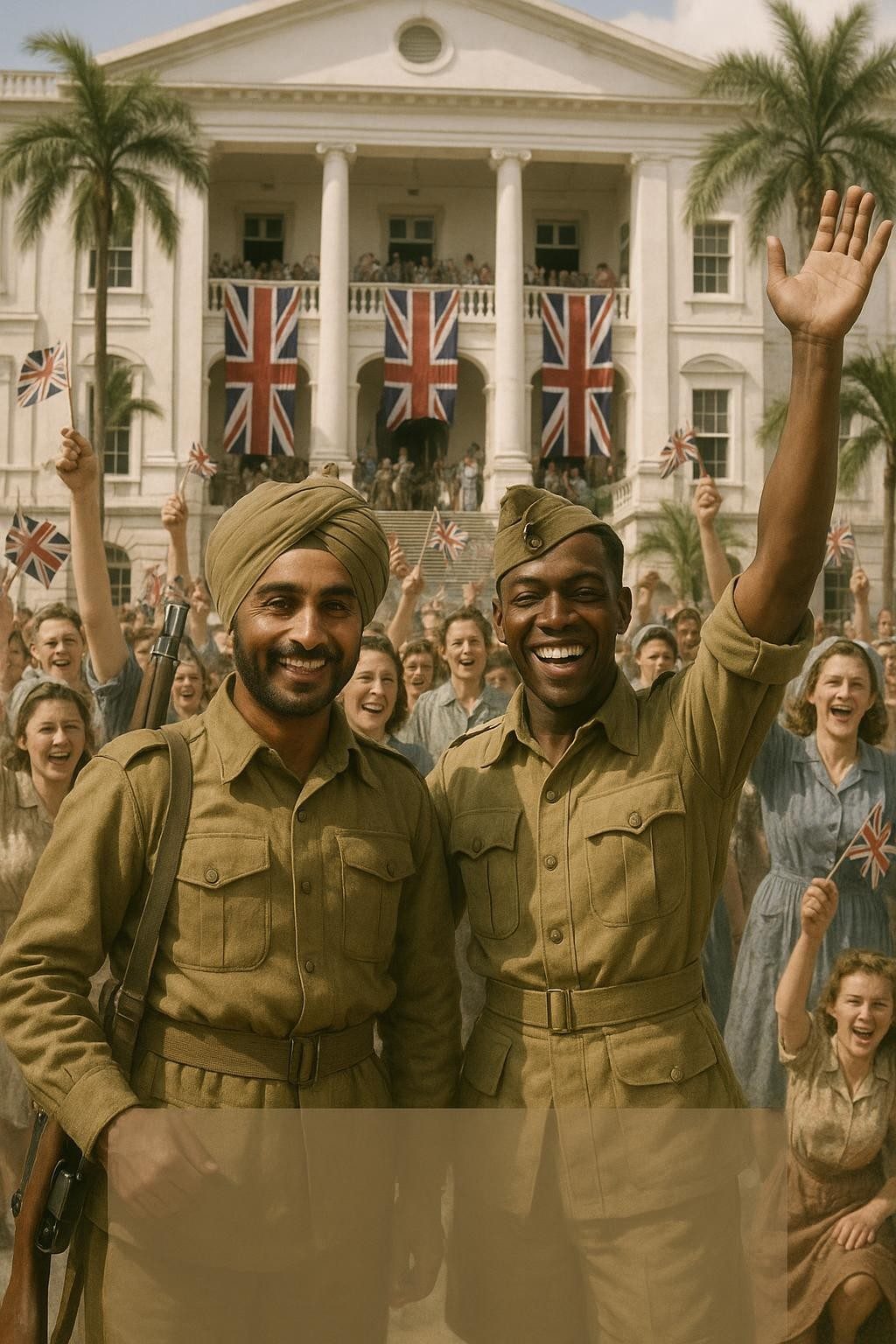
The morning of 8 May 1945 dawned in Kingston, Jamaica, with the sun casting long shadows across the city’s bustling streets. Already, the air was thick with anticipation, vibrant with the sound of radios crackling in shop fronts, broadcasting news that would soon echo around the globe: Victory in Europe. As word traveled, a tidal wave of emotion surged through the empire, from the tropical Caribbean to the bustling markets of Delhi, reminding all of the sacrifices made under the vast and diverse banner of the British Empire. This was not just London’s day; it belonged to millions across the world.
The Forgotten Allies
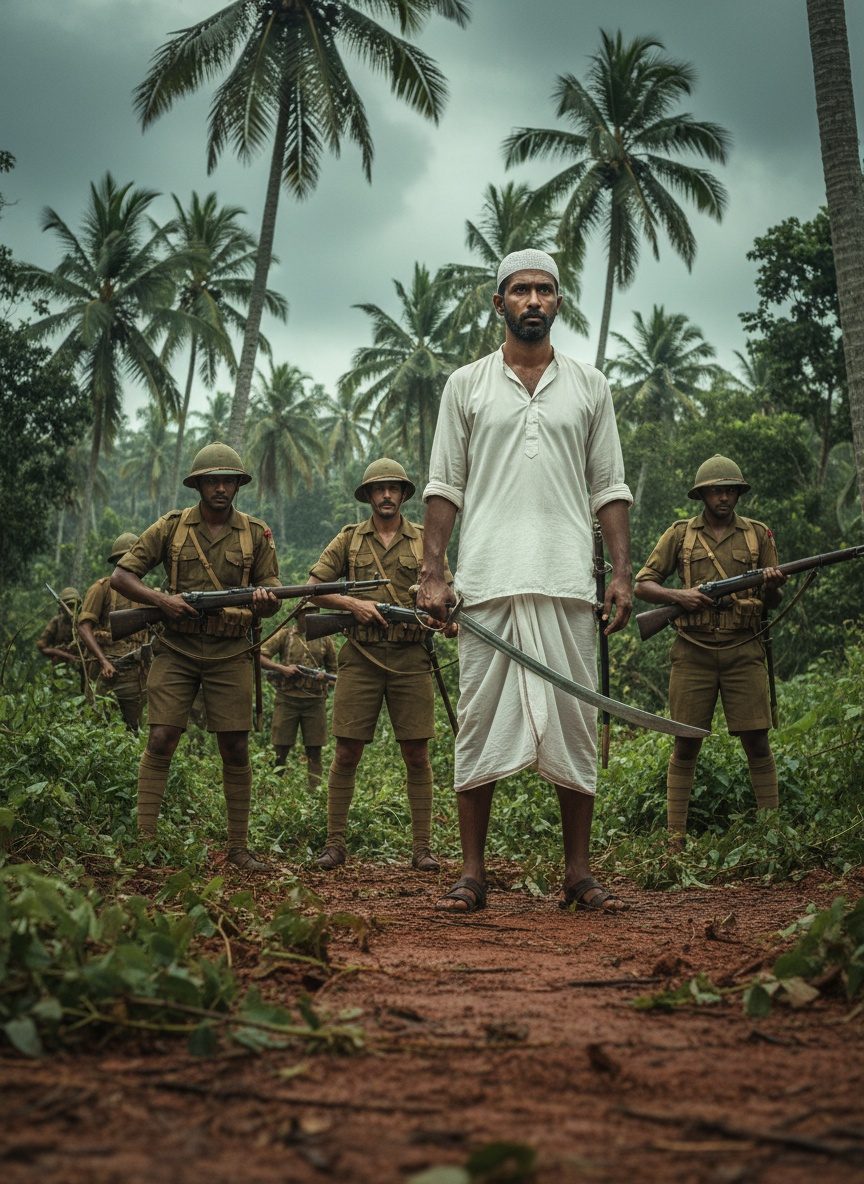
In the deserts of North Africa, thick jungles of Burma, and the unpredictable seas of the North Atlantic, men from far corners of the British Empire had fought shoulder to shoulder with their British counterparts. Yet, their stories often lay forgotten in history’s shadow. In India, young sepoys had left their villages, traversing across continents to stabilize strategic points far from home. Little known today is the monumental contribution of the Indian army, which became the largest volunteer force in history, numbering over 2.5 million by 1945.
Across Africa, hundreds of thousands of soldiers were recruited into the King's African Rifles, galvanizing efforts on multiple fronts. For many, the war was an opportunity for social mobility and personal growth, but it also came with unyielding challenges. Resources were scarce, and communication lines stretched thin. Their voices, replete with stories of valor and hardship, echoed through the celebrations, even if history books stayed silent.
A Kaleidoscope of Celebrations
In Nairobi, the mood was exuberant. Crowds gathered in open spaces, donning their best traditional attire, juxtaposed with British military uniforms. The air filled with the rhythm of drums and the laughter of children, their elders recounting tales of brave warriors who battled for the empire. The air buzzed with a mix of pride and relief, flavored with the exotic aroma of street foods that marked communal gatherings.
Meanwhile, in Delhi, the grandeur of Rashtrapati Bhavan was mirrored by the jubilation on the streets. The city, alive with the sound of burst firecrackers, reflected the collective sigh of relief as families worshiped in temples, mosques, and churches, blending prayers for peace with the hope of returning loved ones. For many Indians, the celebration was bittersweet amid the growing discourse on independence and self-rule.
The Caribbean Connection
Kingston was no different in its celebrations. The sky was painted with hues of red and gold as islanders set off fireworks to commemorate the momentous occasion. The sound of steel pans and calypso music provided a soundtrack to the festivities, honoring the countless Caribbean men who had served in the Royal Air Force. These men, like many of their Commonwealth counterparts, encountered new worlds and cultures, their experiences shaping post-war identities and igniting future waves of migration to the United Kingdom.
While the Caribbean airmen navigated hostile German skies, they also faced the adversities of racial segregation within their allied ranks. Yet, they persisted, their legacy becoming an integral and complex stitch in the larger tapestry of Britain's narrative. Their contribution, like others from across the empire, was a testament to resilience in the face of adversity.
A Shared Victory at a Turning Point
VE Day marked the end of a chapter but also imprinted a sense of shared victory among the diverse peoples of the British Empire. Market places across these lands buzzed with chatter about the future, independence conversations simmered in colonial administrations, and the collective memory of war paved the path for decolonization movements. For many, the aftermath of the war heralded the beginning of swift socio-political changes, realigning traditional colonial power structures.
The participation and contribution of the empire’s subjects in World War II opened poignant discussions about identity, citizenship, and rights. It was a turning point that eventually eroded the walls of colonialism, leading to the independence of nations across Asia, Africa, and the Caribbean. The skies cleared of warplanes, but a new horizon emerged, pregnant with the promise of self-determination.
As the bells of Big Ben tolled over a grey London that evening in 1945, they rose above the noise of cheering crowds, reaching across the oceans to places that had also answered the call to arms. The empire was vast, its lands diverse, its people resilient. VE Day was their victory too, a shared sweet taste of freedom. Today, the memory serves not just as a note of historical triumph but as an enduring reminder of the intricate weave of human stories that form our world’s history.