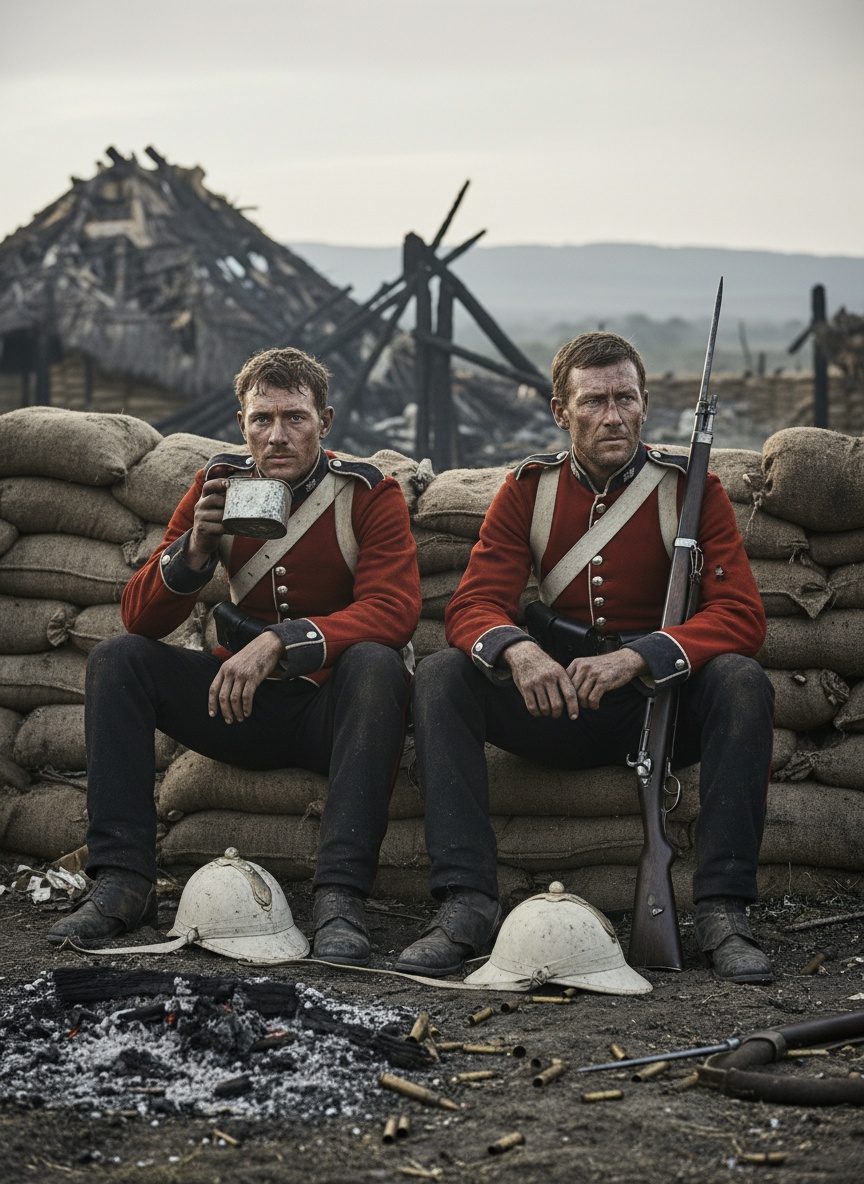
The morning air was tinged with the bittersweet scent of gunpowder, a ghost clinging stubbornly to the battlefield. Rorke's Drift lay beneath the vast African sky, gripped in the silent aftermath of a battle that had transformed an outpost into a legend. The sun began its slow ascent, casting long shadows over the once vibrant mission station now reduced to rubble. A gentle breeze rustled through the parched grasses, whispering tales of valor and desperation. As the first light broke the horizon, the stillness revealed the magnitude of the stakes — a testament to human endurance and the costly dance of empire. Yet, in this moment of fragile peace, two soldiers, weary and battle-worn, found solace in the simplest of acts: sharing a meal of cold rations.
The Silence After the Storm
As the firing ceased before dawn, what remained of B Company, 2nd Battalion, 24th Foot, gathered in the remnants of the mission station. The men, who had stood shoulder to shoulder against overwhelming odds, now found themselves in the strange and muted world that exists only in the aftermath of such encounters. The chaos had fled, leaving only silence to reign. Among the debris — shattered wagons, smoldering barricades, and the haunting presence of their fallen comrades — a pair of privates sought a moment's reprieve.
The air hummed with the echoes of bravery and loss, a battlefield transformed into a sanctuary for reflection. Amidst the ruin, these two soldiers, barely past adolescence, represented the quiet aftermath of the storied defense. Though history would immortalize those hours of fierce defiance, here they sat, no fanfare, no glory, and little sense of triumph. Their hands, stained with soot and blood, fumbled with the tinned provisions they had salvaged — mere sustenance, yet a lifeline to normalcy in the dissonance left by war.
Their meal was humble, an assembly of hardtack and preserved meat. Yet in their eyes, it was a banquet fit for kings. Each bite served as a reminder of survival, a bridge between the horrors witnessed and the uncertain future ahead. This solitary act of eating, amidst a landscape painted with their comrades' sacrifice, was a defiant whisper against the clamor that had preceded it. They chewed slowly, their minds ruminating on thoughts unspoken, the day's gravity holding words at bay.
The Making of a Legend
The battle of Rorke's Drift would be remembered as a saga of courage and resilience. On that fateful day, approximately 150 British soldiers held firm against an estimated 4,000 Zulu warriors. The eyes of the Victorian Empire watched eagerly, drawing inspiration from this testament to the indomitable spirit of the imperial soldier. Yet, the grand narrative of medals and military honors often overlooked the lesser tales that truly defined the struggle.
Amidst the ruins stood the solitary hospital building, the epicenter of the relentless siege where soldiers made their last stand. Walls, once a refuge, bore the scars of spear and bullet, inviting the imagination to rebuild the vivid scenes of combat. Inside, the charred remnants of cots lay scattered, each a storied witness to the desperation of those hours. The Zulus, fierce and resolute, had been held at bay by a thin line of defenders, each man a jigsaw piece in the puzzle of survival.
In the quiet, the ordinary lives of these soldiers emerged in soft focus. They were sons, brothers, and fathers thrust into roles writ large by history’s pen. Sitting in the cool dawn light, with cold rations in hand, these privates connected to a reality far removed from the exalted tales spun by time. The scene at Rorke's Drift implored chroniclers to remember that before the medals jingled and ceremonies commenced, there were moments like these — raw and resolute, hidden behind the veil of martial discourse.
The Unseen Threads of Fate
As they ate, the two soldiers unknowingly became custodians of a story that would ripple through the annals of imperial history. In the collective memory of the Victorian Empire, Rorke's Drift stood as a dramatic symbol of colonial might and perceived moral superiority. Yet, the fabric of this tale was woven with threads of humility and human resilience, moments often overshadowed by the accolades of the era.
The courtyard where they sat, dust hovering in the morning light, was a mosaic of loss and survival. Each soldier had faced their own battles within the larger conflict that bound them. Their simple act of sharing rations was an unspoken declaration of solidarity, a reminder of their shared humanity amidst an encounter that emphasized division. As the sun climbed higher, no longer did the outpost echo with the sounds of warfare but rather with the profound silence of aftermath.
Though medals and honors would soon follow, they could not capture this moment of introspection. History may celebrate the valor of the night defenses, but it is in these quiet corners, these fleeting glimpses of ordinary life, that the true heart of the story lies. Rorke's Drift was not merely a tableau of warfare but of the men who battled exhaustion and uncertainty as they contemplated the choices that fate had thrust upon them.
The war would march on, along with the drumbeats of empire. Years hence, people might gather to remember the soldiers and the siege. Nevertheless, this silent repast shared by two men in the ruins of a mission station was the ephemeral heartbeat of an empire — complex, imperfect, and deeply human. Their story matters not just for its historical significance but for reminding us of the quiet dignity that perseverance in adversity can bring, an untold legend in the annals of lost times, forever echoing beyond the boundaries of textbooks.