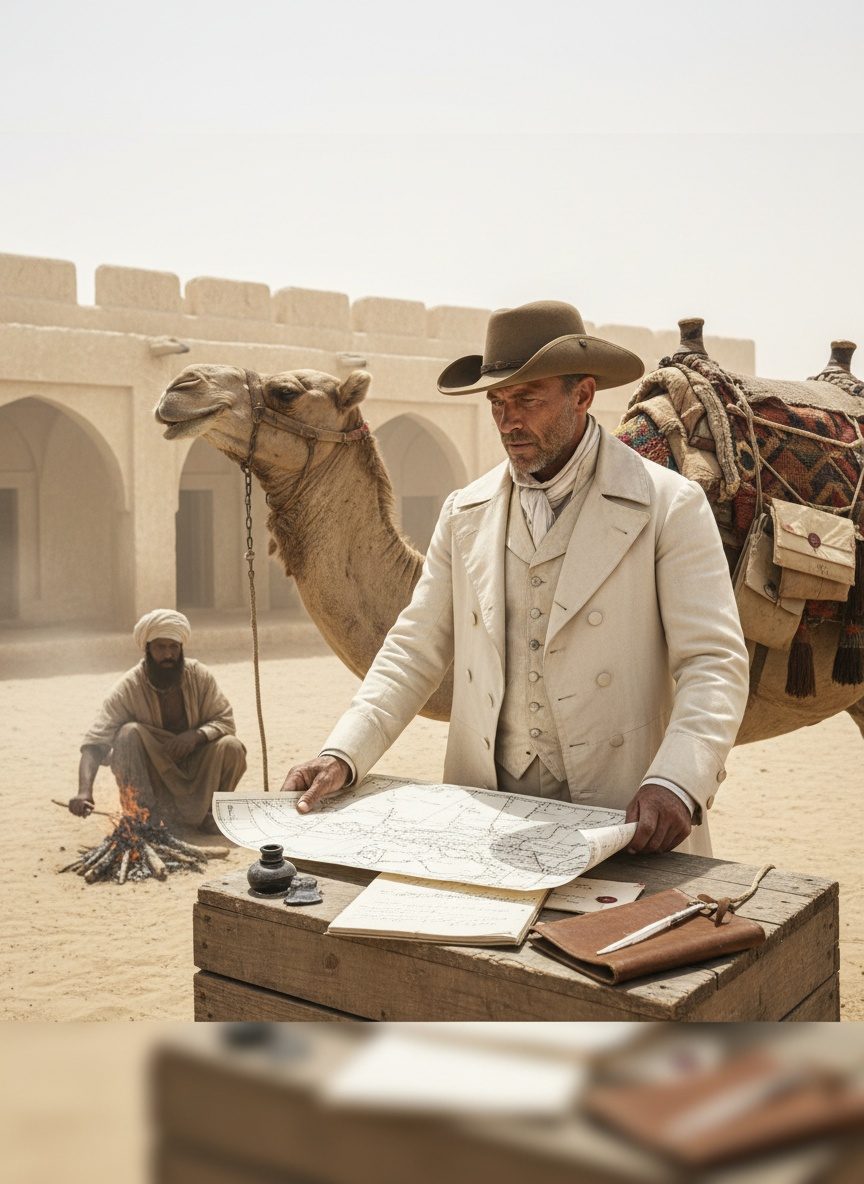
June 2, 1835. A lone camel rider traversed the scorching red sands of Egypt's western desert.
The Long and Winding Sea
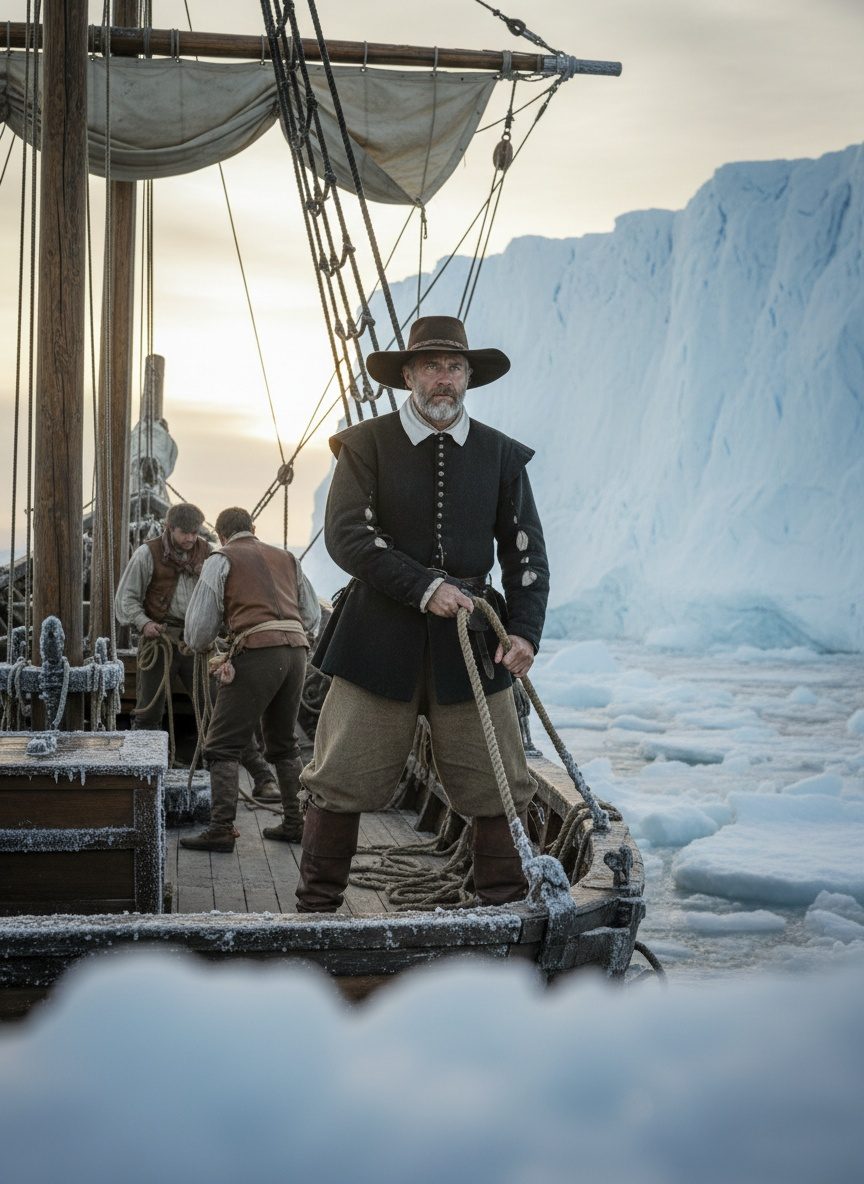
For the British Empire during the early Victorian era, communication was the lifeline of its sprawling network. Yet, this lifeline was taking an agonizingly long time to extend from London to the heart of its crown jewel, India. Traditionally, letters and dispatches journeyed from England, skirting the perilous Cape of Good Hope, before eventually reaching the bustling ports of Calcutta or Bombay. This arduous maritime route would stretch on for a grueling four months, at best. Such delays could stifle the pulsating flow of trade, diplomacy, and governance upon which the Empire thrived.
Among the many issues with this route was its vulnerability to erratic weather and piracy. Ships navigating the southern Atlantic and Indian Oceans were at the mercy of nature’s whims. Strategic minds and captains alike pondered over possible alternatives, but the most likely solution lay within a seemingly improbable journey overland — across North Africa.
The Visionary Wanderer
Enter Thomas Fletcher Waghorn, a somewhat obscure yet tenacious postal officer, whose vision was as untamed as the lands he dared to cross. Born in Chatham, Kent, Waghorn's early life saw him embrace nautical adventures across the British territories. Yet, it was his tenure in the East India Company that sculpted his ambition to dissolve the logistical nightmare binding Britain to its colonies.
Waghorn postulated an audacious plan: coupling sea routes with an overland trek through Egypt could effectively reduce the mail journey from four months to nearly half the time. Critics, though, in abundance, couldn't daunt his resolve. They viewed his plan as a romantic musing rather than a tangible strategy. With the spirit of a trailblazer and a less-than-bulging purse, Waghorn embarked on his audacious experiment with little more than a thirst for adventure and a conviction that his vision would prevail.
Crossing the Sands
Egypt, with its historic Nile and monumental relics, now doubled as a crucial link between east and west. Yet, 1835 Egypt was no orderly realm but a confluence of cultures, languages, and terrain. From the Mediterranean shore in Alexandria to Suez on the Red Sea, a camel, and foot seemed the only viable avenues of transit.
For Waghorn, the initial steps of his journey were as challenging as the sweltering heat of the desert itself. Persuading local allies and navigating bureaucratic mazes required deft diplomacy. An intense July sun beat down mercilessly as he continuously adjusted his routes, adapting to obstacles that sprang up in the shifting sands of the Egyptian wilderness. His team, a modest assembly of camels, guides, and survival supplies, proved invaluable more than once as their leader plotted each hesitant, echoing footfall upon the parched earth.
Despite adversities, Waghorn carved through the heart of Egypt. In doing so, the overland segment of his visionary mail route was realized, cutting directly through the historical Suez. Triumphantly, he saw in his mind's eye an intricate patchwork of global pathways on the verge of transformation.
An Idea Fulfilled
Completing this bold odyssey marked a turning of tides for British commerce. As evidence of his success spread, the murmurs among doubters turned into a chorus of accolades. By harnessing what was indeed the fastest connection, Waghorn had not only presented an alternative but a revolution – hastening communication and, thereby, synchronizing the tempo of empire.
Policymakers and traders quickly embraced Waghorn’s hybrid route, and he became an unsung hero amidst connectivity. Yet it was undoubtedly not just about travel efficiency. This pathway, named "The Overland Route," passed through strategic regions, weaving a tighter fabric of imperial infrastructure. The ground had been set for future ventures — not least, the construction of the iconic Suez Canal, further bridging continents.
The New Dawn
Today, Waghorn's endeavor often drifts ashore unseen by the waves of time. Yet, his vision echoes enduringly in the hyper-connected world of international trade. The boundaries he crossed reflect on humanity’s inherent drive to connect, communicate, and share stories across divides.
Waghorn saw beyond deserts and ports; he saw into the very pulse of imperial evolution. As empires threaded into nations and horizons opened, the significance of speedy and reliable communication increased thereafter without relent. Even now, as satellites and fiber optics transmit data at unthought-of speeds, it is men like Thomas Waghorn who remind us of the relentless rhythm of innovation that characterizes human progress.
In revisiting the tale of a lone postal officer armed with tenacity and the undying will to knit the world together, we glean a renewed understanding that, to change history, sometimes all it takes is one determined step across a barren stretch, with only dreams to hold aloft.