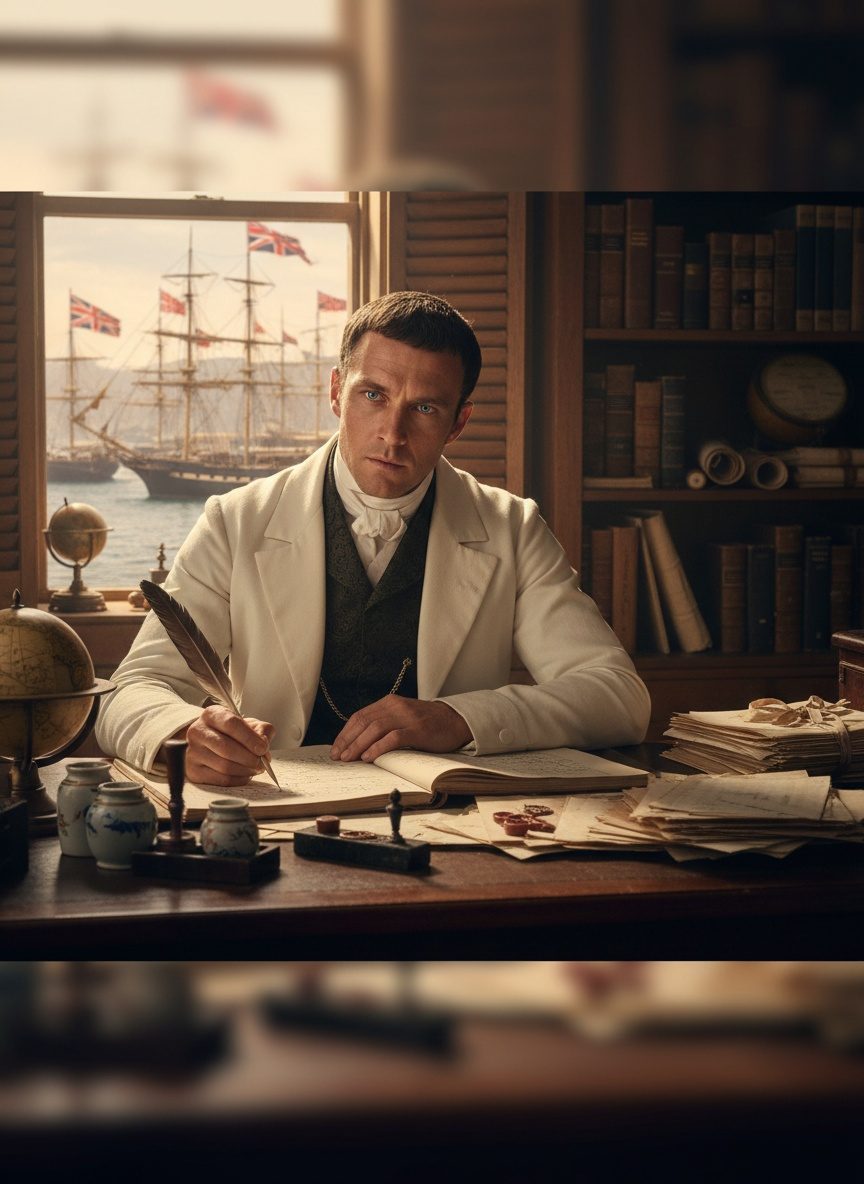
He was not a seasoned banker. He was a Scottish shipping clerk thousands of miles from home, and yet he transformed global financial systems with a pen and a risk most would never take. In 1865, Thomas Sutherland bet an empire on one letter, and in doing so, laid the foundation for one of the world’s most formidable banking institutions.
A Colony Stranded in Silk and Silver
To understand Thomas Sutherland's daring feat, we must first step into the bustling alleys of British Hong Kong in 1865. The air buzzed with opportunity and tension. The colony had become an essential node in the web of commerce that saw silk, tea, and silver flow between China, Europe, and America. London may have recognized this economic potential, yet it offered little in terms of practical support.
The need for a dedicated banking institution was glaringly obvious to anyone willing to look. Existing banks could not sufficiently serve the constantly burgeoning trade needs. However, the idea of establishing a new bank had already been dismissed by financiers in London. The British capital, secure in its established financial mechanisms, saw little purpose in the investment risk a new bank represented.
Into this void walked Thomas Sutherland, a young, ambitious superintendent for P&O, then stationed in Hong Kong. Though only thirty-one, Sutherland had an uncanny grasp of the economic machinations around him. He recognized that without a local banking establishment, capable of underwriting and financing trade initiatives directly in Asia, the colony’s—and the empire’s—growth opportunities would remain stunted and vulnerable to competition from burgeoning American enterprises.
One Man's Gamble: A Pen and Promise
In an era when the flow of information moved at the speed of a steamship, Sutherland's decision to act boldly and autonomously might well have been his greatest strategic coup. He did not wait for fiat from his home country. Instead, he penned a prospectus—a simple invitation to invest in the future as he envisioned it.
Compelled by necessity and the thrill of opportunity, Sutherland wrote out detailed plans for the Hongkong and Shanghai Bank. The institution was boldly heralded as a bank that would cater specifically to the international trade requirements of Hong Kong, Shanghai, and beyond.
Time was not his ally. The British administration gave him a mere forty-eight hours to gather the necessary pledges before the proposed banking framework would fall apart. Moving with tenacity, Sutherland rallied support from local merchants, foreign traders, and even Chinese entrepreneurs who understood that their prosperity was interlinked with the colony's financial infrastructure.
It was an audacious endeavor, executed with the key stroke of a pen. On the morning shareholders convened, the room was filled with palpable excitement. Within a single morning, shares and pledges poured in, and the fledgling venture metamorphosed from idea to reality. The Hongkong and Shanghai Bank was poised to open its doors.
Steering the Waters, Bridging Worlds
The success of the Hongkong and Shanghai Banking Corporation (now known broadly as HSBC) was no mere product of chance. It mirrored Sutherland's calculated risks and knitted the strands of two worlds into a robust tapestry of commerce. The bank opened officially in March 1865, with its first offices situated on premises provided by the Hong Kong and Whampoa Dock Company, of which Sutherland was the chairman.
As vice-chairman of this nascent bank, Sutherland did not immediately rest upon his laurels. He envisioned the institution not as a mere supporter of colonial British interests but as a bridge between East and West. It facilitated the burgeoning silk and tea trade, safeguarded the exchange of currencies, and aided in the creation of global trade standards.
His venture grew roots and expanded its footprint to other key Asian ports, each new branch symbolizing a new connection in an intricate, imperial tapestry. His risk became an unforeseen avenue for cultural and economic exchange, one that inevitably drew the attention of both competitors and collaborators eager to leverage this newly minted financial machine.
A Legacy Inked in Innovation
The story of Thomas Sutherland is not merely about founding a bank; it's about resilience in the face of refutation and the courage to redefine what is possible. He didn't just transform Hong Kong’s commercial landscape; he kick-started a financial revolution. At a time when empires hungered for dominion, Sutherland understood that true power lay not in territorial possession, but in economic influence.
His story serves as a historical reminder that sometimes the most profound changes come not from armies or laws, but from the insights and actions of those who dare to tread beyond the edges of convention. The pen with which Sutherland wrote that original banking prospectus was as mighty as any Royal Navy ship—a tool that crafted a new course for global finance and trade.
Thomas Sutherland’s gamble did more than just set the course for a banking giant. It offered a timeless lesson: that opportunity often hides in the shadows of doubt, awaiting the light of insight and the courage of visionaries to bring it into the world.