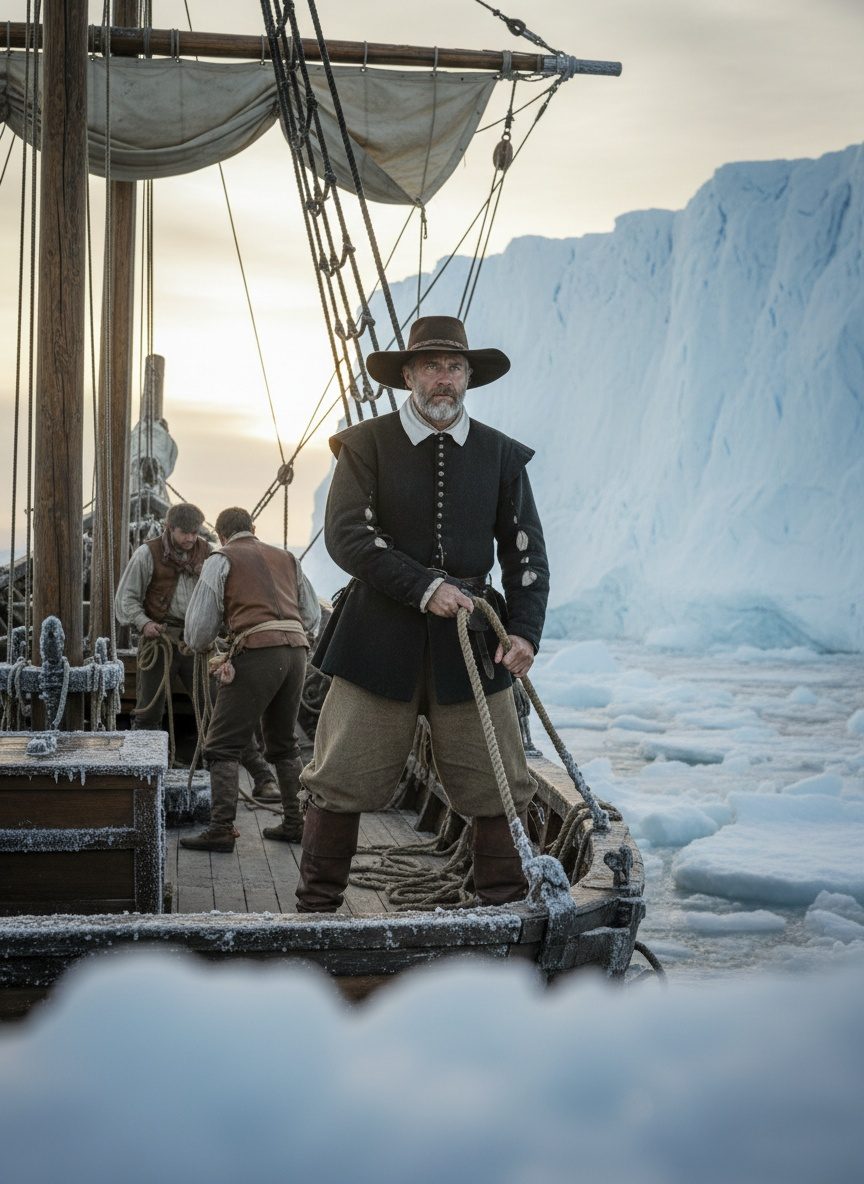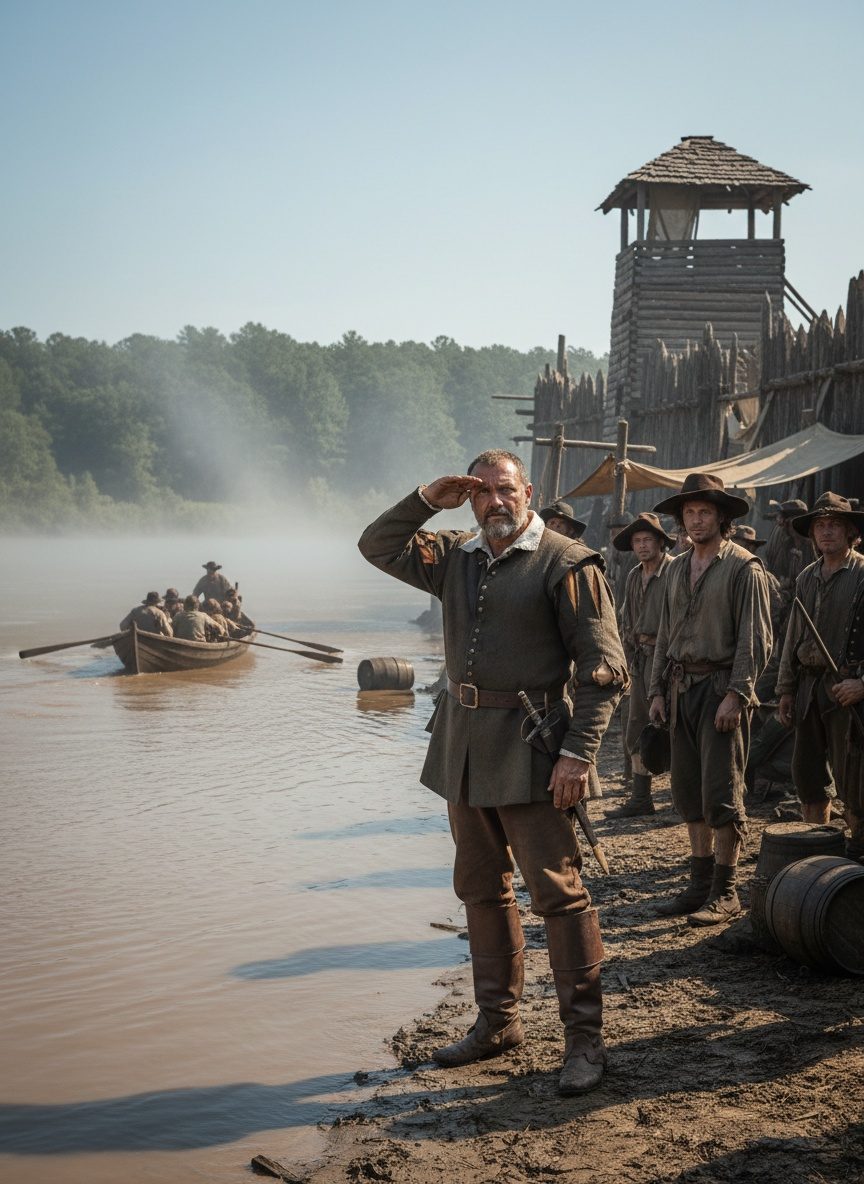
The salty breeze clawed at the faces of men who stood clustered on the deck, their eyes sunken and cheeks pallid beneath the grimy veil of survival. Each man silently bore the weight of hearts heavy with defeat, the sharp sting of salt air a harsh reminder of their plight. As the Elizabeth River's currents cradled the creaking ship, their despair whispered tales of fevered nights and hollowing hunger. However, just as hope seemed a phantom they could only chase upon the lapping waves, a pale sail emerged across the water like an apparition.
The Fading Echoes of the 'Starving Time'
To comprehend the gravity of this moment, one must turn back the pages to the winter of 1609-1610, a period etched in the annals of Jamestown's tumultuous history. Postcards of prosperity had lured hundreds to this brave new world, promising a rich paradise ripe for English conquest and cultivations. Yet, as winter's breath grew harsher, Jamestown transformed into a harrowing theater of starvation and disease.
The 'Starving Time,' as it came to be known, saw the settlement's population dwindle from five hundred to a mere sixty skeletal figures, staggering remnants of a once-hopeful crowd. The hostile Powhatan Confederacy had intensified their stranglehold, curtailing vital trade and trapping settlers within their defensive walls. Supplies dwindled to nothing more than shoe leather and vermin, snatched from shadows in desperate fists.
So when Sir Thomas Gates, appointed governor by the Virginia Company, arrived to this grim spectacle, he faced a brutal truth: the Anglo dream was withering. Gates, pragmatic and resolute, chose compassion over conquest. With deep sorrow countering the call of duty, he loaded the colony's remains onto ships, resigning to abandon Jamestown and retreat to England's shores, leaving behind barren lands and broken dreams.
The Longboat That Turned the Tide
As hope drained from Jamestown's people, fresh winds of fortune filled their sails. The sudden appearance of that longboat, cutting through the river like a furious messenger, sowed the seeds of disbelief and then elation. Within it, by a combination of fate and timing, was the pivot necessary for Gates to reconsider the desolate path.
The longboat carried Lord De la Warr, who had recently arrived in the Chesapeake Bay with a fleet of new provisions, settlers, and a mandate to carry the torch of survival for England's fledgling outpost. Lord De la Warr, with the providential backing of a restocked fleet, carried not just material salvation but an authoritative decree to reclaim and restore Jamestown's failing lifeblood.
Given the determined leadership of De la Warr and the influx of supplies, Gates made a consequential choice — one that would forever alter the trajectory of the American colonies. With renewed vigour alongside necessary resources, he reversed his course. Jamestown was not to be discarded, but rather reborn.
A Decision Rooted in Hope and Necessity
Upon his return to Jamestown, Gates faced the monumental task of bridging the chasm between despair and revival. Authorized by De la Warr, he oversaw the essential reordering of the settlement's governance and defensive strategies, reinforcing the wavering morale. Gone was the promise of a fantastical realm; in its stead, a fortification against failure, a bulwark of resilience.
The Virginia Company's vision was renewed with pragmatic strategies to encourage agricultural self-reliance. Gates focused on establishing more stable relationships with the native Powhatan, negotiating and redefining the metrics of success from quick riches to enduring survival — a shift that defined the colonial legacy of not just Jamestown but all Virginian soil.
Daily life now wove between hope and labor. Settlers tilled the unforgiving land, implementing experimental farming techniques that echoed their English rural heritage, and embraced new, sustainable food and working securities. The arrival of more settlers, stirred by promises of equitable land policies, bolstered the settlement's numbers and girded the community against future trials.
The Underscored Importance of Staying the Course
The events of June 1610 were not merely a rescue; they underscored the critical importance of resolve and adaptation in the face of despair. Gates’ decision to turn back was a linchpin moment, transforming Jamestown into a beacon of endurance, illustrating the tenacity required to survive, thrive, and establish what was to become a bastion of English settlers in the New World. Without that pivotal choice, one of the seeds of British America might well have withered before taking root.
This oft-overlooked episode offers a potent reminder of resilience in the narratives of colonization. It did not feature grand conquests or glittering treasures but rather revealed the stopping power of human hope and cooperation against inevitable adversities. Jamestown survived because a collective will refused to allow defeat.
Today, as one reflects on the early colonial strife, Gates' stand for those sixty survivors contradicts the imagery of imperial triumph often drawn in historical retellings. It calls us to recognize the quieter, steadfast victories shaping societies — moments when bold decisions under duress navigated history's turbulent waters and charted courses for futures then untold.