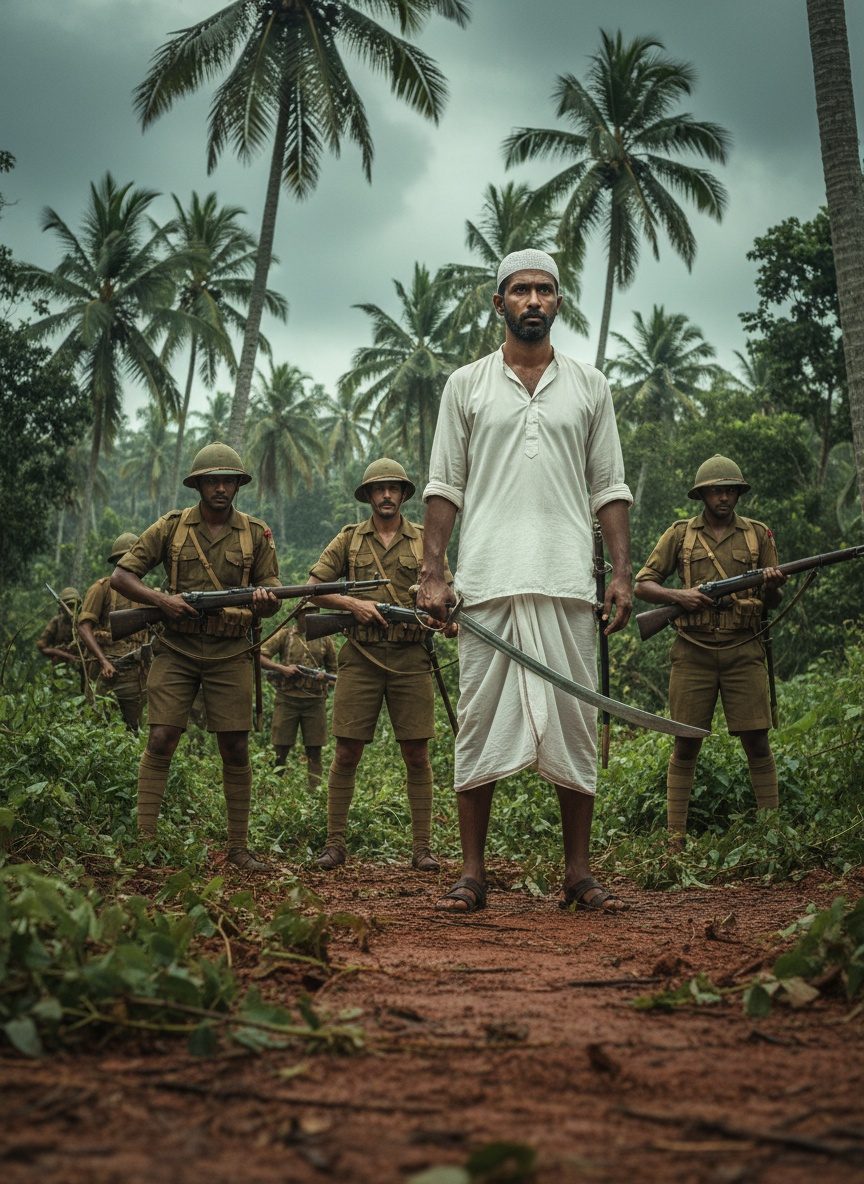
The Bengal Native Infantry was renowned for its loyalty to the British Empire. Yet in May 1857, it stood poised to defy it with loaded muskets.
The Powder Keg Ignites
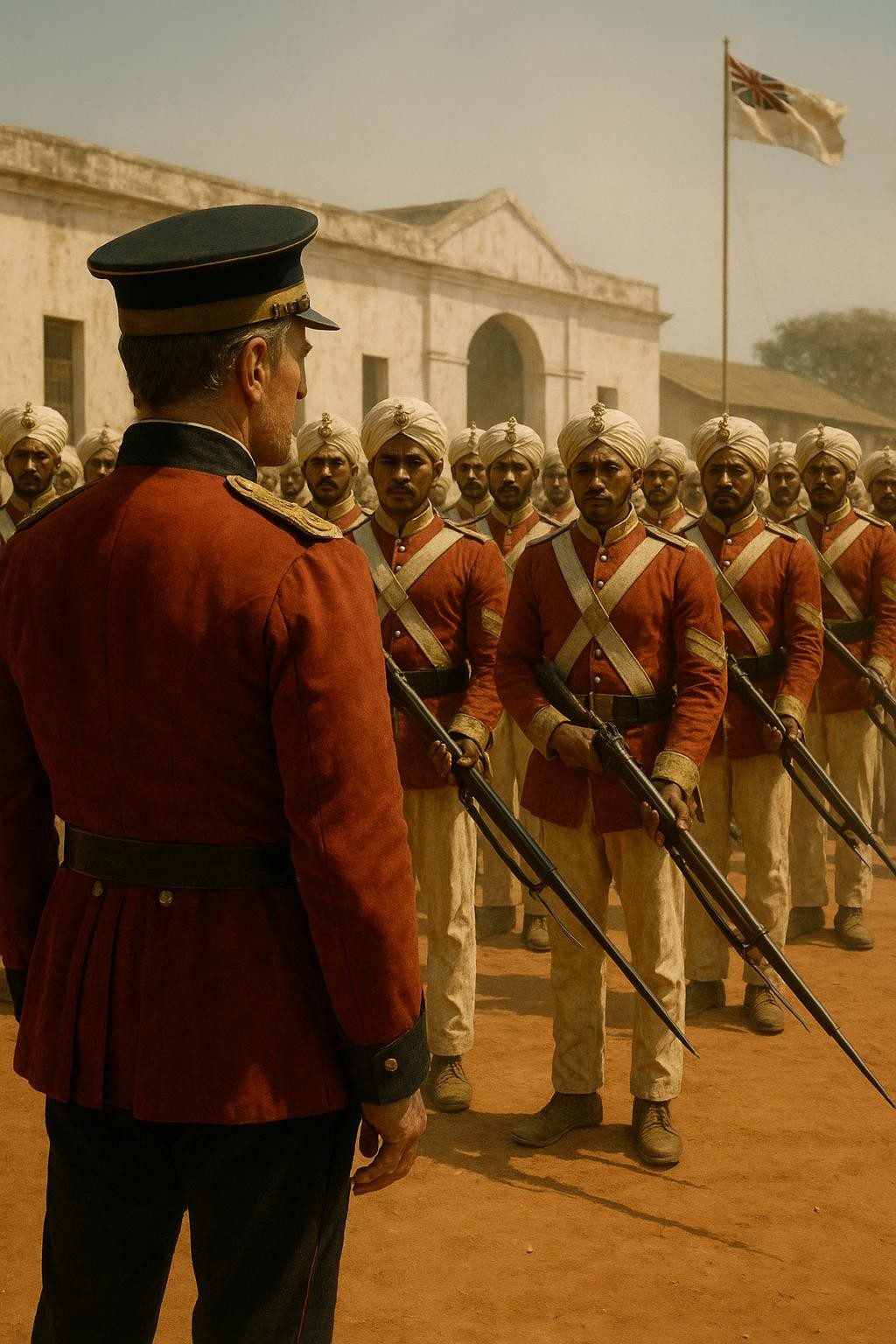
On the sun-baked expanse of Berhampore's parade ground, soldiers of the 19th Bengal Native Infantry lined up with bayonets sharp, uniforms pristine, and muskets shouldered. It was a scene of martial precision that was becoming increasingly familiar in British-ruled India. Yet beneath the disciplined veneer, discontent simmered. The spark? A seemingly innocuous piece of military equipment: the new Enfield rifle cartridge.
This unassuming cartridge was rumored to be greased with cow and pig fat, substances deeply offensive to both Hindu and Muslim soldiers. The prospect of biting into the greased paper to load their rifles, as required, posed not just a breach of religious beliefs but an affront to their very identities. When ordered to handle these cartridges, the sepoys refused en masse, a defiance that had the power of a symbol far greater than the act itself.
Defiance Without Bloodshed
Standing at attention, faces set with a mixture of determination and quiet fear, the sepoys faced their British officers, who were themselves caught in a dangerous position. The officers were alone amidst hundreds of armed men, aware that any rash move could unleash a massacre. Yet, remarkably, there was no violence. Words were exchanged, orders repeated, but the sepoys held their ground in a rare display of organized, disciplined dissent.
As tensions mounted, the British officers recognized the powder keg upon which they stood and chose a path of pragmatic retreat. The refusal of the sepoys was a silent rebellion, a loud defiance without the crack of a single shot. The officers withdrew to ponder their next move, well aware that the news of this standoff would jolt cantonments across the subcontinent.
The Imperceptible Cracks Spread
Like ripples from a stone cast into a pond, the sepoys' defiance at Berhampore sent waves through the fabric of British authority in India. For soldiers to stand against orders without punishment was previously unthinkable, yet this unpunished insubordination now loomed ominously in the minds of other regiments. What else might be forced upon them under British rule, they wondered? The incident threw into sharp relief the widening chasm between the colonial rulers and those they sought to command.
As news of the refusal spread, it fueled a burgeoning sense of unrest. It became a rallying point around which disparate grievances of exploitation and disrespect could coalesce. The sepoys' silence on the parade ground screamed louder than any argument, underscoring the disconnect between the British military machine and the men it relied upon to function.
The Indelible Marks of History
While no blood was shed at Berhampore, the symbol of resistance it represented became a pivotal point in history, laying bare the fragility of colonial control. The news of the defiance spread like a monsoon swell, gathering storm clouds that would soon unleash the full force of the Great Indian Mutiny. Just weeks later, emboldened by this incident, regiments across India would rise in one of the most significant challenges to British rule of the era, a tragic and fierce struggle that changed the face of the Indian subcontinent forever.
The events at Berhampore serve as a reminder that change often begins with small acts of courage and defiance. In resisting the bite of a cartridge, the sepoys at Berhampore took the first steps on a road that would eventually lead to India's long and tumultuous path to independence. What happened on that dusty parade ground in May 1857 was more than mere military rebellion; it was a turning point that challenged the very foundation of empire.