August 31, 1957. The city of Kuala Lumpur was alive with the soft flutter of thousands of flags waving gently in the midnight breeze.
The End of an Era
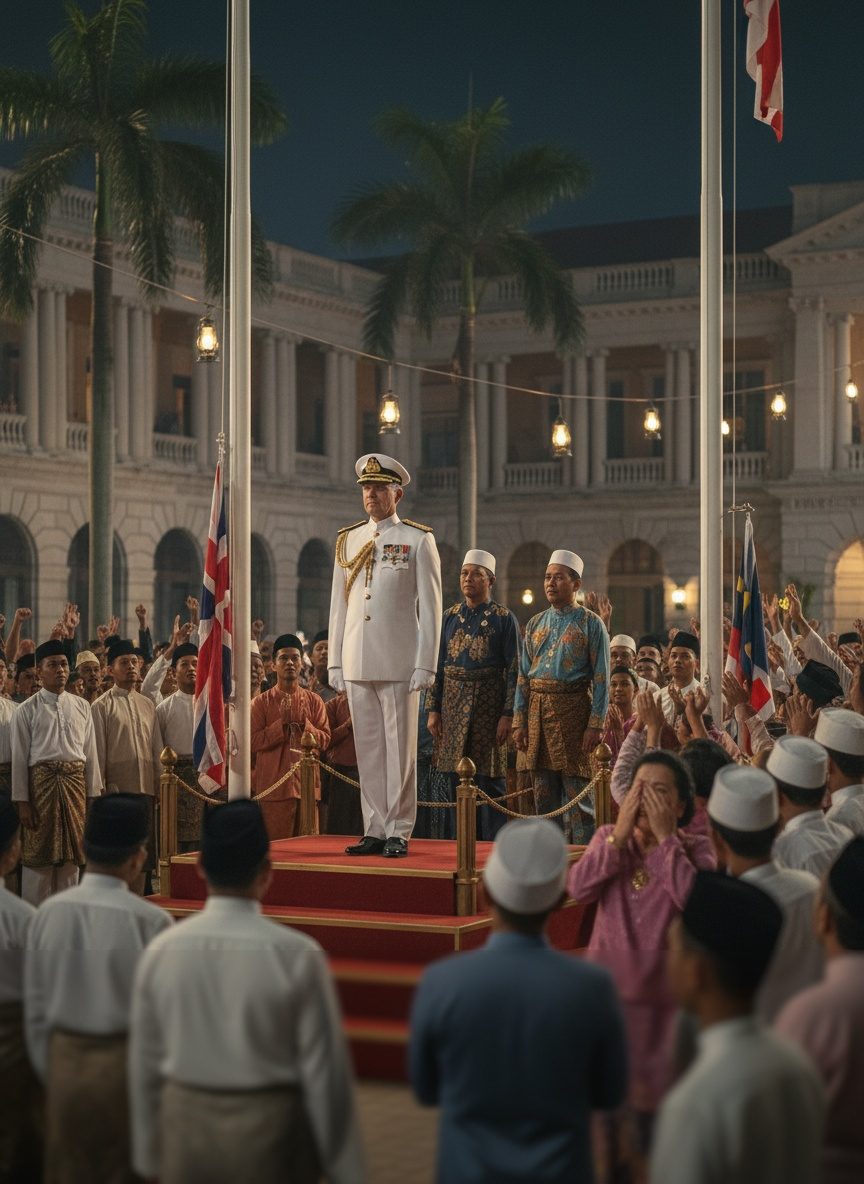
As the clock struck midnight, an air of palpable anticipation settled over the gathering crowd. The scene was set at Merdeka Stadium, a place now etched indelibly into the annals of history. On this humid night, under a canopy of stars, the era of British colonial rule in Malaya was coming to an end. The Union Jack, a symbol of British dominance that had flown for over a century, was about to be lowered for the final time in this land.
The air was thick with emotion, a potent mix of excitement and solemnity. Thousands gathered under the cloak of night, witnessing history in the making. Among them was the last British Governor of Malaya, Donald MacGillivray, a man tasked with performing a deed that was as significant as it was surreal. On this night, the transition of power was not coerced through revolution or conflict. Instead, it was a calculated and dignified act, a final bow to the imperial theater.
Donald MacGillivray: The Man at the Center
Sir Donald MacGillivray was no stranger to the complexities of colonial administration. His service in the colonies spanned numerous territories, a journey that culminated in his appointment as the last Governor of Malaya in 1954. Known for his diplomatic acumen and an astute sense of responsibility, MacGillivray embraced the delicate task of transitioning Malaya towards self-governance.
MacGillivray's tenure was marked by a determined effort to ensure the passage to independence was as seamless as possible. He played a pivotal role in coordinating between the British government and the local leaders, including the prominent figure of Tunku Abdul Rahman, who would soon become Malaya's first Prime Minister. The foundation laid by years of patient negotiation and compromise ultimately led to this historic handover ceremony.
On this night, standing at the podium, MacGillivray embodied the quiet dignity of an empire in retreat. Clad in the ceremonial uniform of a British Governor, he prepared to relinquish the authority vested in him. His speech, delivered in articulate tones, resonated with sentiments of goodwill and hope for the nascent nation.
The Ceremony of Transition
The ceremony unfolded with meticulously choreographed precision. As the midnight hour approached, the Union Jack began its final descent. It was a moment charged with symbolism; the flag that had once represented imperial strength now descended gracefully, its journey to the ground mirroring the larger withdrawal of British colonial power.
In its place, the flag of the Federation of Malaya ascended, vibrant and new against the darkened sky. A collective hush enveloped the stadium, the silence only broken by the jubilant strains of the national anthem, “Negaraku,” echoing through the expectant crowd. Each note played was a declaration of sovereignty, a new chapter being written with every lyrical stanza.
The assembled masses, a tapestry of Malaya’s diverse ethnic blend, erupted in celebration. Cheers reverberated through the night air, accompanied by the spontaneous dance of fireworks illuminating the heavens. It was a visual symphony of independence, a sight to relish for those present and a gesture that promised a united future for a land long divided.
The Road to Independence
The peaceful transition of power in Malaya is a landmark event that stands in stark contrast to the tumult and violence experienced in other decolonizing regions across Asia and Africa. It was a testament to the diplomatic efforts and strategic foresight exercised by leaders on both sides. The meticulous planning that underlined Malaya’s path to independence was a demonstration that change need not always be forged in the furnace of conflict.
Negotiations for Malaya’s self-rule took place in the aftermath of World War II, during which the world order witnessed significant shifts. The winds of change were blowing, and the British, though initially reluctant, recognized the inevitability of decolonization. Through a series of constitutional discussions and political agreements, the stage was set for a peaceful transfer of authority.
Key to this successful transition was the ability to address and manage the ethnic tensions within Malaya itself. The composition of its society, a blend of Malay, Chinese, Indian, and indigenous groups, required astute governance and the building of a common national identity based on shared aspirations and mutual respect.
Beyond the Midnight Hour
As Malaya stepped forth into the world as an independent entity, the legacy of its peaceful transition resonated beyond its borders. It marked a blueprint for other nations seeking freedom through dialogue and negotiation, rather than confrontation. The significance lay not only in what was achieved but in how it was achieved — with humanity, grace, and an enduring hope for the future.
The handover of power to the citizens of Malaya captured the complexity of imperial retreat, encapsulating a moment where the empire displayed its most human side. It showcased a departure from the classic narrative of colonial departure steeped in turmoil, leaving behind a lesson that resonates across time and geography.
This remarkable chapter in history invites reflection on the nature of power and independence. It serves as a poignant reminder that, even in the vast sweep of geopolitical change, the values of diplomacy, mutual respect, and peaceful resolution can pave the way for new beginnings. Malaya’s quiet journey to nationhood exemplifies a promising vision of the end of empire — one where the past’s shadows give way to a dawn of peace and possibility.