February 23, 1878. A sharp wind cut through the plains near Peshawar.
The Thunderous Silence
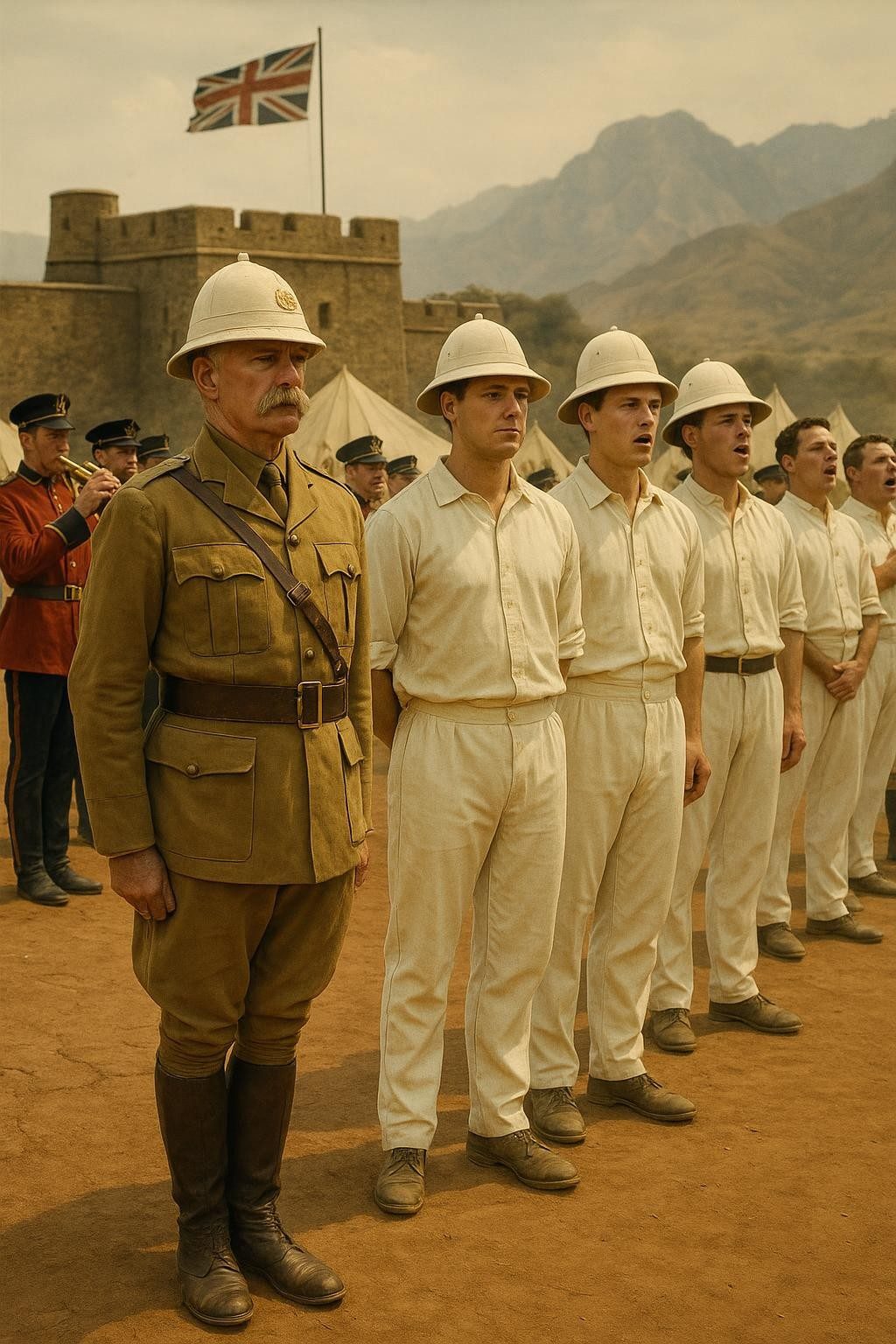
It was late winter at the British military grounds shadowed by the towering mountains of the Khyber Pass. The scene vibrated with tension as the British cricket XI from the regiment prepared to play a match against a local garrison side. Amongst the sounds of sharpening spikes and the rustle of crisp cricket whites, a band struck up the first solemn notes of "God Save the Queen." What should have been a chorus of voices affirming loyalty turned into a conspicuous silence. Half of the players, eyes fixed stubbornly ahead, chose not to join their mouths with Her Majesty's anthem. The band's music was unyielding, yet for those watching closely, the silence from some ranks was the loudest sound on the field.
The decision by these players to remain silent was a daring choice, almost sacrilegious in its context. The anthem was a standard rallying point, a clutch of words designed to unify men under the shared banner of empire. But here, with a war brewing on the horizon, the silence echoed more ominously than a shouted protest. For some men, this was not just mutiny of voice but a silent statement against duty and command, a representation of rifts both personal and political, hinted at but never fully aired under the sputtering gas lamps of imperial barracks before night snuffed them out.
The Rising Tensions
These rifts had been fermenting long before the muted rebellion at the cricket ground. The British Empire, in all its grandeur, was a reach across distances beset with divide-and-rule strategies. The Second Anglo-Afghan War was leaning ominously over the horizon, a backdrop that sought to engulf the Indian subcontinent and beyond into Britain's geopolitical entanglements. For soldiers stationed in the relative isolation fringes of the frontier, thoughts of home in Britain were often countered with the sea of challenges lying just over the hills.
The officers' quarters buzzed in conversations burdened with muted anxiety about the coming conflict. News of diplomatic tensions and military preparations seeped slowly into the lives of these soldiers, bespoke letters and sealed orders carrying with them threats of high-stakes maneuvering. Yet, beside the official dispatches flowed the informal torrents of rumors among the men — tales of truculent native princes, shadowed ambushes, and musings on the intelligence of a colonial venture at odds with a fast-fragmenting front.
It was amidst this atmosphere, as tensions dragged at the edges of an empire's furrowed brow, that the colonel found himself caught between tradition and pragmatism. The sight of his players neglecting their duty to Her Majesty's anthem troubled not just the immediate order of things, but signaled a deeper malaise within the ranks. His decision to never select three of these players again was a calculated move, rooted less in punitive disdain and more in maintaining the semblance of control in an uncertain theatre of war.
The Spirit of the Game
The choice of a cricket match as a farewell to neutrality before the drumbeats of war spoke volumes to the peculiarities of British imperialism. Cricket, in its regulation and calm, embodied the British spirit more sedately than any war whoop. For the regiment, it was an escape, a slice of home transposed onto foreign soil. Players engaged with both bat and ball under the wistful eyes of officials and locals alike, carving arcs of triumph and defeat that didn't necessarily align with the battlefield's grim arithmetic.
The mere act of lining up for cricket amid such days was a declaration that life, the regular, steadfast march of time, continued despite the foreboding. In the crease of a well-worn pitch, there was respite from the sword's edge. Yet the muted anthem stirred in others the fear that discord within the group could destabilize even this contour of comfort.
Few noticed the declining sun's chill in the wake of the match, the calculated deliverance of runs and wickets countered by sidelong glances and mouth-twisted whispers. These players had engaged not just opponents across a boundary rope, but an unseen adversary within themselves—the forked path of allegiance questioned under a veil of colonial service.
A Legacy of Discord
The game drifted back into history as the year wore on, a less-celebrated prologue to the greater conflict to come. By the late weeks of the year, Peshawar and its outposts were bracing for the Second Anglo-Afghan War. The cricket match, whose silent protest had at first caused a ripple of consternation, dissolved into the broader narrative of empire and war, its dissenters brushed away by the tyranny of military discipline and strategic command.
Yet, the hushed anthem remained a whispered footnote, a testament to the discord simmering just beneath the surface of Britain's imperial might. It represents a humbling moment not found in public archives, not requited in official speeches. Instead, it was remembered through quiet conversations in smoky officers’ clubs and reflectively inked letters home to England. As one experienced captain put it in a rare candid revelation: “The shadow of the anthem’s absence loomed larger than any ordered drill.”
Such stories, though consigned to obscurity in textbooks, are vital reminders of the complexities of loyalty and discontent within imperial machinery. They silently challenge the monolithic arc of history often praised in public forums, offering instead a nuanced vignette of human frailty during one of Britain's many global undertakings. In the decisiveness of empire, amid the upcoming cturmoil at Kabul's gateways, it is moments like these that tell tales of unity and division, the silences between verses speaking louder over time than any resounding chorus.