Halifax was a sleepy port on December 6, 1917. By day's end, it was a name etched in infamy. In the blink of an eye, tranquil waters turned to chaos, shaping the destiny of a city and leaving scars on a world deep in the throes of war.
Amid the churning fog of World War I, the heart of Halifax pulsed with the comings and goings of vital wartime shipments. Yet, the collision that fateful morning between the Norwegian vessel SS Imo and the French munitions ship SS Mont-Blanc brought about an unstoppable catastrophe. The harbour, once a bastion of the empire's maritime strength, transformed into a cataclysmic epicentre as the lethal cargo aboard Mont-Blanc — featuring TNT, picric acid, and benzol — ignited into an explosion so powerful it was heard over 200 miles away.
Picture this: as the harried crew of Mont-Blanc desperately abandoned ship as it burned, they inadvertently set into motion a series of events that even their most fevered imaginations could not have predicted. As the vessel drifted toward the Pier 6 area, it became a beacon of impending doom, drawing unwitting onlookers to their windows in morbid curiosity. Just minutes later, the detonation laid waste to the north end of Halifax, flattening buildings, splintering trees, and carving the waterside into oblivion.
The raw power of the blast addressed the city like the wrath of an ancient god. Windows shattered miles away. A firestorm ensued, buildings ignited by the searing heat, and secondary explosions from stored munitions rocked the city further. With over 2,000 lives claimed instantly, and another 9,000 people sustaining injuries, the local hospital services were inundated. The medical staff, accustomed to the grim grind of wartime injuries, were unprepared for the overwhelming scale of this peacetime calamity.
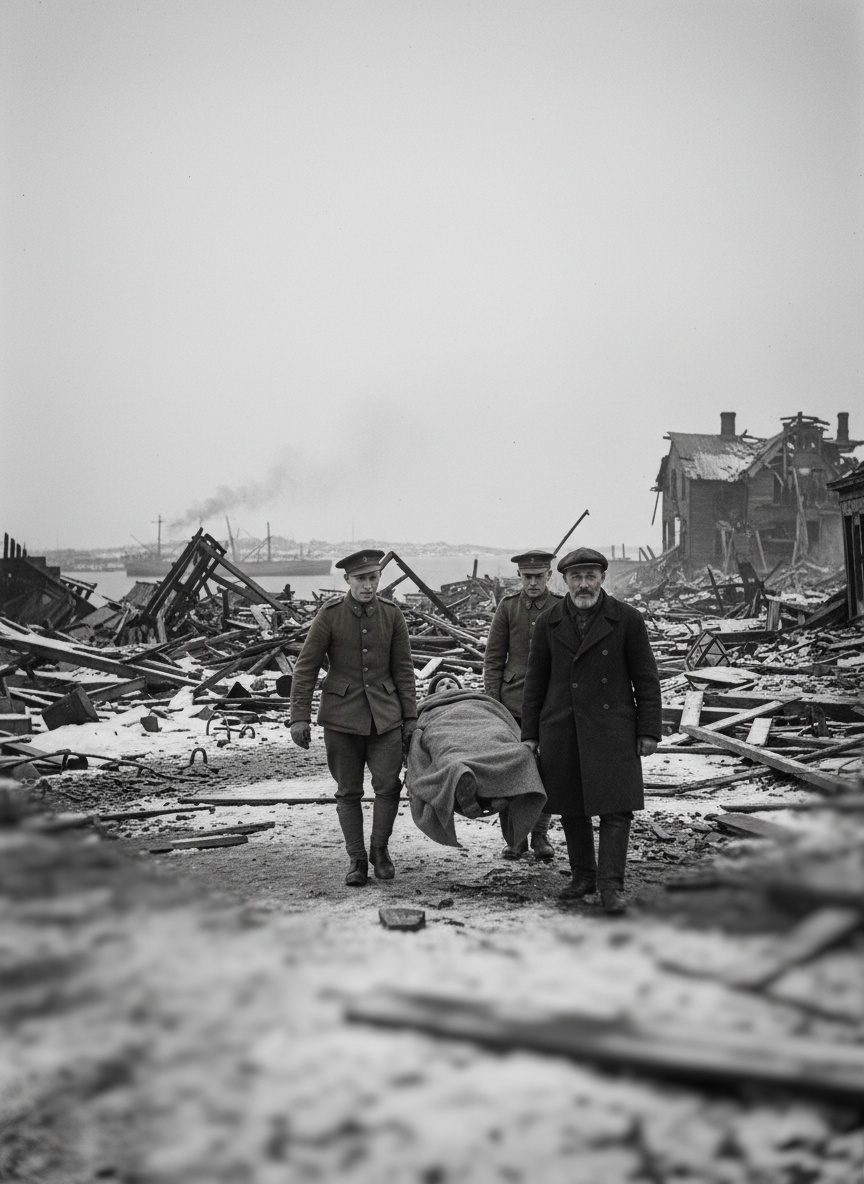
As debris settled and dust clouded the winter sky, hollowed cries and the sobering stillness marked Halifax's transformation. An entire district vanished; what remained was now an unrecognizable wasteland strewn with the shrapnel of both war materials and human lives. In the aftermath, civic and military response teams embarked on a race against time to recover, rescue, and reassure. Makeshift morgues appeared in dock warehouses; emergency shelters cropped up amidst ruin, and stoic survivors wandered through remnants of their homes, grappling with loss and searching for loved ones.
Halifax, traditionally a link to Britain's vast imperial network, suddenly became a prominent wartime lesson. The might of a blast of this magnitude called into question the transport and storage of volatile cargoes in populous urban ports. The British Empire had relied on Halifax for strategic logistics, yet here, the very heart of its dependable supply line revealed a dormant Achilles' heel. As reports reached Parliament, the reverberations of the explosion transcended borders, compelling a rethink of maritime safety procedures and the governance of hazardous shipping practices in wartime.
Amidst the monumental devastation, tales of extraordinary human resilience and sacrifice materialized, punctuating a narrative otherwise rife with despair. Accounts recall Vincent Coleman, a train dispatcher who, knowing the impending explosion, stayed at his post long enough to send a telegraph warning an inbound train to halt, sparing countless lives. In the ruined streets, makeshift canteens, and relief centers sprang up, staffed by volunteers who provided whatever aid they could muster, embodying a spirit of solidarity amidst tragedy.
The impact of the Halifax Explosion extended its reach well beyond the immediate devastation. The incident underscored the delicate balance of safety and efficiency in an era when the empire's momentum seemed inexorable. The reactions, reparations, and revolutionary ideas forged in the aftermath served as a haunting reminder of man's technological hubris and the dire cost it exacts when mishandled.
To this day, the footprint of 1917 in Halifax remains visible in the city's rebirth from ruin. Buildings from this era, constructed with reinforced structures, echo lessons of resilience. Yet, beyond the physical reconstruction, it's the enduring legacy of unity and humanitarian assistance that remains the most powerful story. From reaching out to allies for aid to neighbors opening doors to those made homeless, the immense swell of empathy stood in stark contrast to the destructive force of war.
This conflagration of misfortune and mercy echoes a timely message to the modern world: the scars of the past are lessons etched in time, urging us toward caution and better foresight. Halifax’s place in a once-mighty empire reveals how even the most well-laid plans can falter, leaving a refrain that lingers through history: the greatest strength lies not in the treacherous waters of conflict, but in the collective heart of human compassion. This forgotten chapter reminds us that while textbooks may ignore certain events, the people who lived them carry the stories we must perpetually remember.