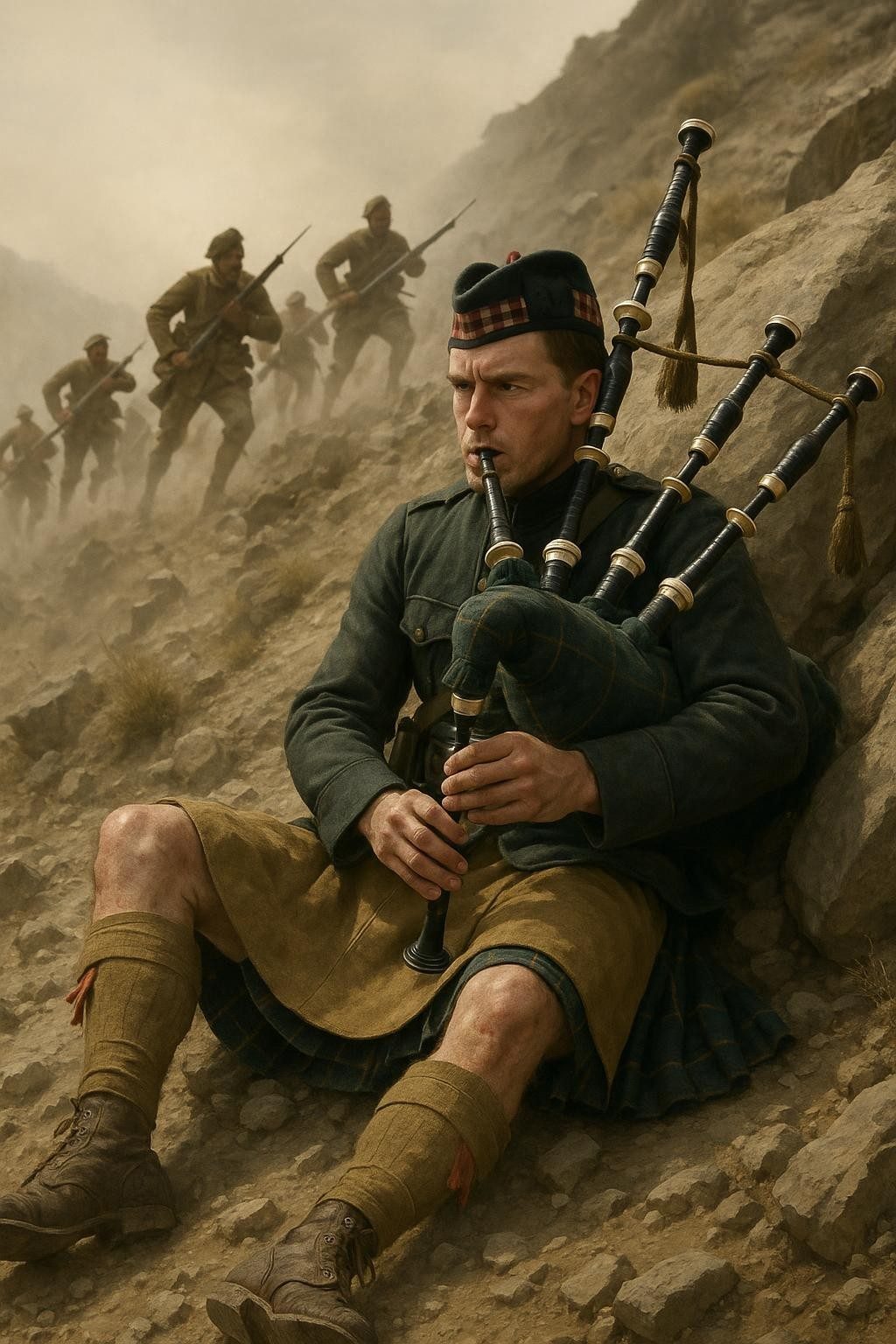
The crack of rifles echoed off the steep escarpments as the Gordon Highlanders took the first step of their desperate ascent up Dargai Heights. Piper Findlater, kilt and all, began to play the skirling notes of "Cock o' the North," rallying his brothers-in-arms even as bullets whipped past. The air was charged with the sharp tang of gunpowder and the screams of the wounded. Above them, a wall of enemy fire awaited. Still, step by defiant step, they pressed on toward what seemed an impossible summit.
The Unyielding Heights
The difficult terrain of the Dargai Heights had turned into a crucible of British resolve. Situated on the volatile North-West Frontier, these hills were strategic high ground, commanding the passes below. For three days, British soldiers had clashed with fierce tribal fighters, struggling to seize control at any cost. With each failed attempt, the stakes had become higher, the task more daunting.
The previous assaults had faltered against the uphill path, a deathtrap laid bare to volleys of precise enemy gunfire. The hills were not just vertical challenges; they were natural fortresses carved into the landscape. In the piercing light of a relentless sun, the stones underfoot offered treacherous footing, betraying the unwary to slide back down into the valley below.
Yet, amongst whispers of defeat, the Gordon Highlanders stood ready. Known for their discipline and fearlessness, they were called upon to achieve what others could not. This was more than a battle; it was a test of spirit, a dance with glory on the edge of annihilation. With bayonets fixed, they hurled themselves into the fire, clad in the tartan of Scottish ancestry.
The Gauntlet of Fire
The order was clear, and resistance seemed futile. Yet, the heart of a Gordon Highlander beats differently. As they advanced, Piper Findlater’s music became the pulse of a living entity, synchronizing the movements of men who had shared campfires and battled together. But then, almost at once, he staggered as two bullets shattered both his ankles.
The instinct for self-preservation clawed at every rational thought, yet Findlater remained rooted to his spot. He refused the embrace of safety, choosing instead to inspire, to lead—not by command but by example. He played, steadfast, as if each note possessed the power to shield his comrades from the carnage erupting around them. His pipes shrieked defiantly against the thunder of rifles. The lullabies of war melded into a single melody that spoke of home, honor, and camaraderie.
In this moment of epitomic courage, the ground seemed to tilt in their favor. Under a canopy of heat and flying lead, they pushed upward, some injured, some fallen, but none willingly yielding ground. Those who witnessed the scene would later speak of it with reverence, their recollections steeped in awe and disbelief. Words alone struggled to capture the blend of terror and triumph etched into the day.
The Pinnacle of Valor
Reaching the heights claimed the breath of the exhausted Highlanders, yet it was a sweet culmination of fierce determination. Their advance transformed the perilous climb into the cornerstone of legend, a display of raw courage that elevated the Gordon Highlanders as something more than just a fighting force—they became a symbol of British resolve on the frontier.
With the Dargai Heights finally subdued, Piper Findlater, filled with the satisfaction of a job done magnanimously, was borne off the field. His sacrifice and the audacity of his comrades went on to inspire generations. This wasn’t merely an account of warfare; it was a testament to the age-old human capacity for courage in the face of impossible odds.
The bravery displayed at Dargai has echoed through time—a clarion call reminding us of the virtues entwined with military endeavor and the sacrifices of those who march steadily into the breech. The Gordon Highlanders, with their iconic charge and the steadfast strains of Findlater’s pipes, remind us that physical prowess alone does not forge legends; it is the spirit, the unyielding heart beating amidst chaos, that transforms an act of duty into the fabric of history.