The Gold Coast was a British territory. But it was Ghana that danced, sang, and celebrated as dawn broke on March 6, 1957.
The Gathering Storm
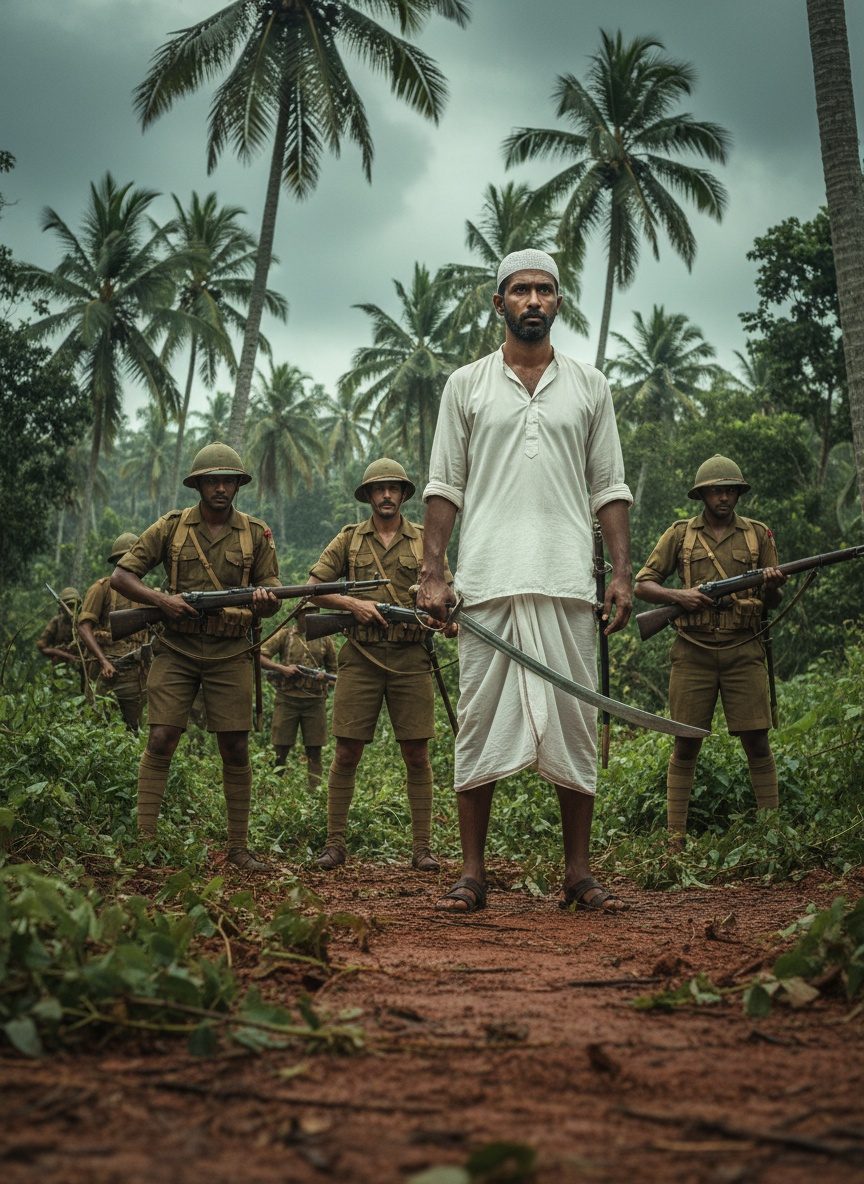
March 5th, 1957 saw Accra shiver with anticipation. A humid buzz of excitement hung in the air, as people from villages, towns, and the bustling capital moved toward the Old Polo Grounds, eager to witness history. Footsteps, both rushed and measured, converged upon a single point — all eyes fixed forward, awaiting the moment that would end more than a century of colonial rule. The colonial shadows that lingered over the Gold Coast were thick with the exploitation and alienation characteristic of the British Empire's worldwide ventures. People of the Gold Coast had long felt the invisible chains of an administration seated oceans away, dictating their destiny and identity.
Yet these chains showed signs of wear. The bustling cocoa farms and mineral-rich grounds of the region had always attracted foreign interest, but at a cost borne by the indigenous peoples. By the mid-20th century, nationalist sentiments had ignited a roaring blaze that demanded freedom and recognition. And at the vanguard of this movement stood Kwame Nkrumah, a man whose vision extended beyond mere political independence. He sought to reclaim the dignity of a people and inspire a continent.
The Man of the Hour
To many, Kwame Nkrumah seemed to materialize suddenly on the political stage, embodying the hope and aspirations of those he represented. But his was a journey paved with challenges, learning, and an unyielding dedication to the cause. Educated in the United States and influenced by visionary leaders like Marcus Garvey and W.E.B. Du Bois, Nkrumah returned to the Gold Coast with a fire kindled for self-governance.
As the dawn of March 6 approached, Nkrumah's steely resolve was apparent to all who witnessed him. His charisma was magnetic, sparking a fervent movement that united farmers, laborers, and intellectuals alike. The midnight hour approached with the promise of change, and as Nkrumah prepared to announce the birth of Ghana, the world watched — captivated.
Triumph Under the Stars
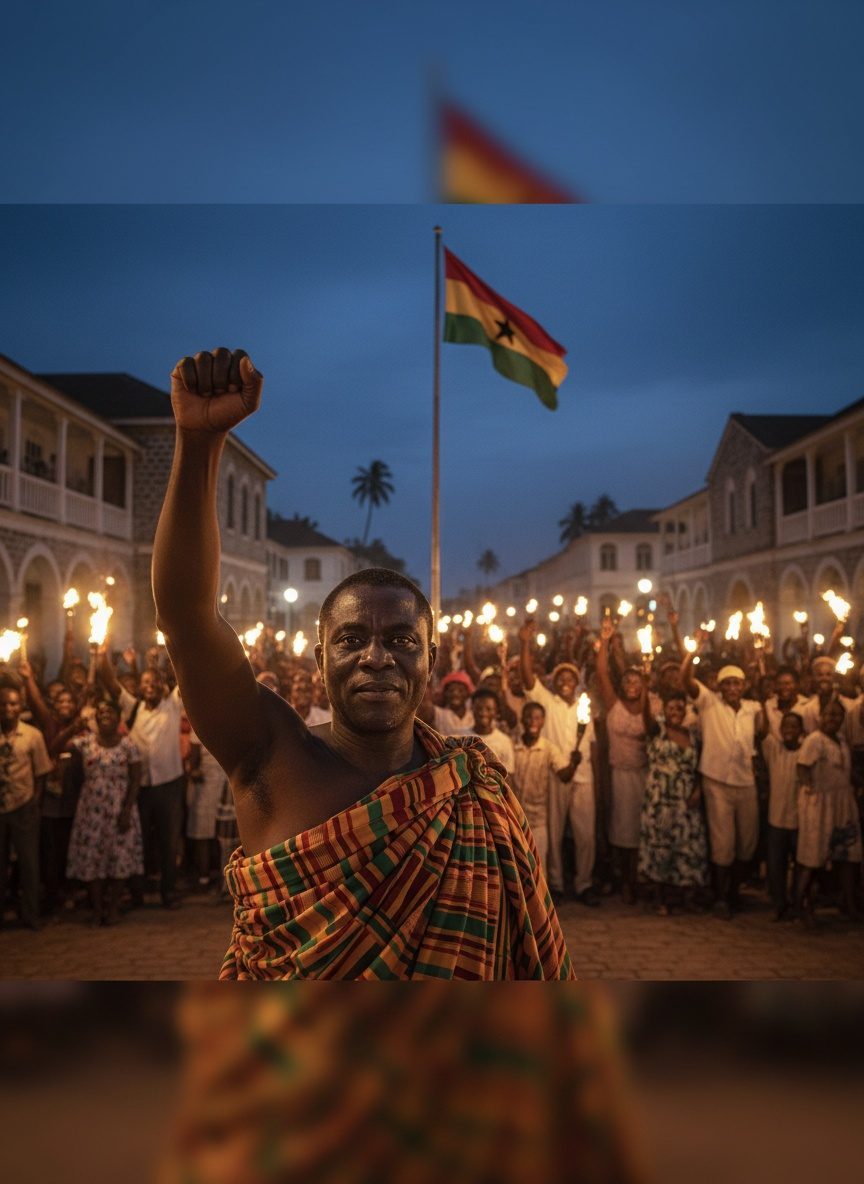
Under a sky studded with stars, which seemed to twinkle in conspiratorial jubilation, the new flag of Ghana rose over Accra. It was discussed that the symbolism ran deep: the red representing the blood of those who fought for independence, the gold reflecting the wealth of the land, the green symbolizing the rich forests, and the black star at its center heralding hope for Africa's future. As the flag climbed higher, emotions surged through the gathered crowd, transforming the Polo Grounds into a living entity, pulsating with joy and relief.
Nkrumah's voice projected through the night air, resonating with a blend of anger, hope, and promise. "We are no longer a British colony but a free and independent Ghana," he declared, his words echoing across the continent. The roar that followed was an involuntary outpouring, a collective exhale after years of conflict and struggle. People embraced, children clapped their hands, and drums beat a rhythm of independence. This was not just a political transition; it felt like a rebirth.
A Collective Euphoria
Even from afar, Ghana's independence resounded back across the Atlantic, reaching the ears of those fighting similar battles. Leaders and citizens in colonies across Africa saw Ghana’s liberation as a beacon, a possibility for their own futures. The ripple effects traveled quickly, promising that the destiny of the African continent was reclaiming center stage, ready to pen a new narrative.
From the fields where cocoa beans lay drying to the bustling streets of Accra, the atmosphere was charged with excitement and hope. Celebrations ran deep throughout the night, spilling over to the following weeks, as once bystanders placed themselves firmly in their newly claimed nation. For the first time, speeches, stories, and songs were conducted in a tone underscored by the newest addition to the global community — one delivered through African voices and for African ears.
A Legacy of Hope
Ghana's declaration of independence was more than the conclusion of one chapter and the commencement of another. It signified a monumental shift, serving as both hope and thesis for the burgeoning concept of pan-African unity. Nkrumah's rhetoric would ring in the ears of people long after that fateful March dawn, as he continued to advocate for African solidarity and emphasize the importance of African nations defining their destinies devoid of imperial influence.
Today, the echoes of the Gold Coast's transformation into Ghana linger on, reminding the world that the march toward independence is not restricted to political realms but stretches deeply into cultural and spiritual renewal. Revolution may have been the spark, but it was the unflagging determination and unity of a people that brought a nation awake to its own potential. This story reminds us that against chains of oppression, it is the human spirit, unbroken and resilient, that ultimately wins the day. It is a story of implacable willpower, of unleashing unspoken potential, and of joyful triumph under a canopy of stars — a story that they certainly don't put in the textbooks, but one that shines unrivaled in the annals of history.