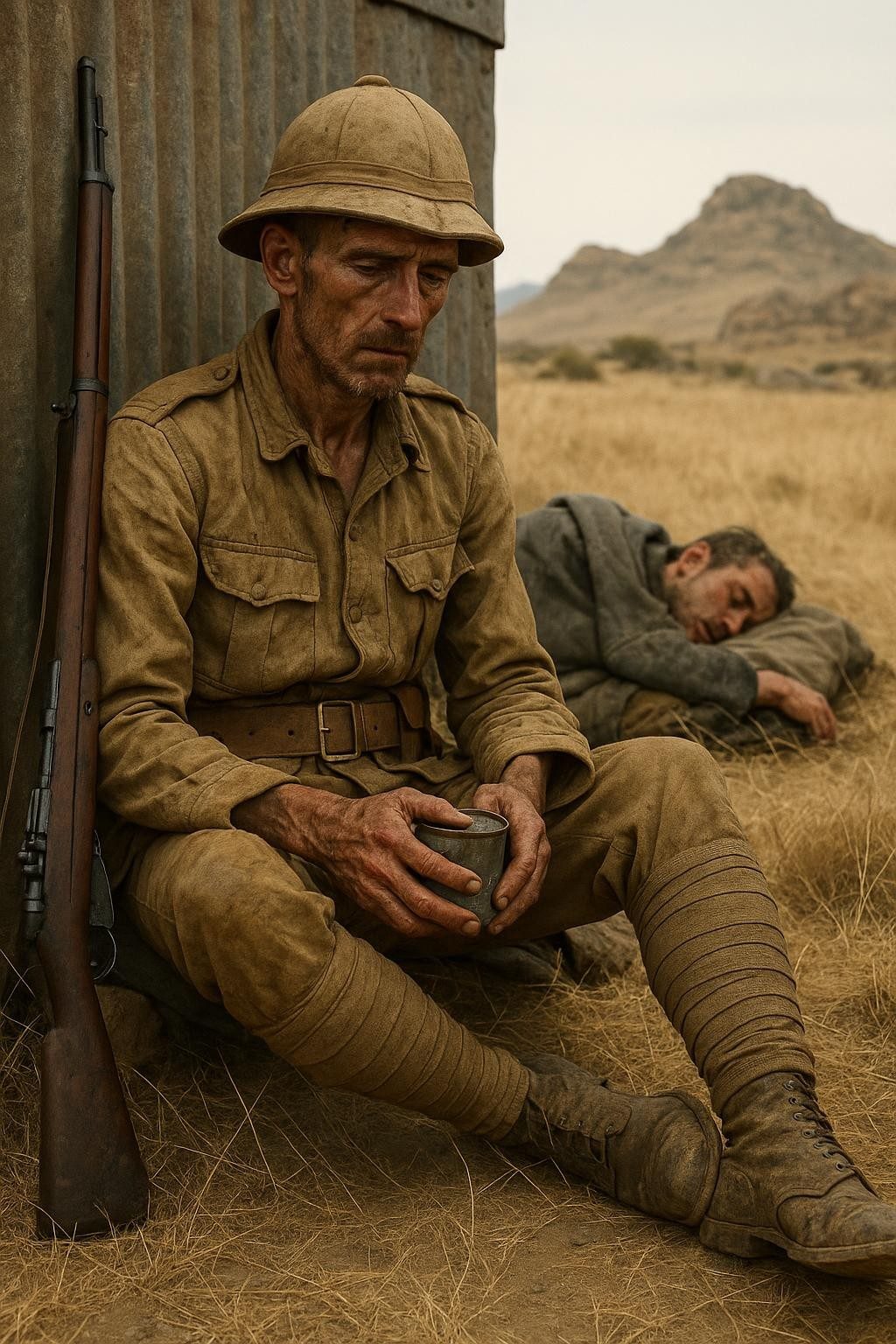
The veldt of South Africa stretches endlessly beneath the fierce sun, its golden grasslands shimmering like a sea of amber. The dry air crackles with the distant calls of birds, and the ground is hard underfoot, whispering tales of a land both beautiful and unforgiving. In the early years of the 20th century, this landscape bore witness to a conflict not in the rolling exchanges of gunfire, but in the silent suffering of soldiers victimized by an unexpected foe: their own rations.
The Invisible Battlefront
As the dust settled around the encampments of British soldiers during the Boer War, a more insidious enemy took hold. The British Empire, armed with the confidence of its robust military machine, sent 450,000 men to outnumber and overpower the far fewer Boer fighters—a daunting farmer militia determined to defend their homeland. While they expected resistance from their human adversaries, it was the quality of their provisions that became a daily skirmish.
Soldiers faced off against tins of meat labeled as sustenance but seen as anything but. The preserved rations, intended to nourish and sustain them in this harsh land, often arrived spoiled or were barely palatable. The biscuit, a rusk hard enough to challenge even the most robust molars, offered no relief or variety to complement their meals. Water, a vital element for health, was largely contaminated, introducing a new lineup of miseries: enteric fever and scurvy. Amidst the calls and commands of military life, the silence of deteriorating health crept unopposed, laying low thousands more than bullets ever could.
The Anatomy of a Ration
Behind the logistics of feeding an army lay a web of complications stretching back to the docks of Britain. The meat, so crucial yet treacherous, was often canned months before ever reaching the troops. Escaping the keen eyes of quality control due to both negligence and distance, these tins occasionally hid meat far past its prime. Stories filtered back of men daring to open their rations only to be greeted by the stench of decay rather than an aroma of nourishment.
Hardtack, the infamous biscuit of the battlefield, was meant to be a durable form of carbohydrate. However, its toughness wasn’t the only challenging aspect; devoid of vital vitamins, it offered little defense against scurvy. Issues surrounding food supply were further compounded by tight budgets and mismanagement, problems well-documented but often conveniently ignored in the push to maintain Britain’s global dominance.
The Cost of Ignorance
Medical staff soon found themselves engaged in an unanticipated war. Desperation grew among the troops as they realized their enemy was double-faced: the Boers wielded their rifles and guerrilla tactics, while within the camps, soldiers battled joint pain, fatigue, and diarrhea caused by their degraded diet. Enteric fever—swift, deadly—became a regular specter among them. It’s estimated that over 13,000 soldiers succumbed to these conditions during the campaign, a sobering realization that death was more likely a bedfellow due to the necessity for sustenance than the battlefront.
Adequate medical intervention was hampered by a lack of resources and a slow response from command structures. The logistics chains that should have adapted learned lessons on the ground remained stubbornly unchanged. Those stories, while dramatic, rarely broke through to the Victorian public consciousness, overshadowed by tales of military glory and heroic standoffs.
The Echoes of Men’s Cries
The miseries inflicted by inadequate nutrition were not just personal tragedies but carried through the ranks, sowing discontent and sapping morale. Soldiers began to record their frustrations in letters, journals, and post-war accounts. These writings reveal a soldier’s daily life haunted by aching fatigue, enduring an enemy outside and an enemy within. The echoing of men's cries of pain and desperation, muffling even the sounds of gunfire, illustrated a major systemic flaw in the well-oiled machine of empire-building.
As combat numbers diminished and the lists of the sick expanded, it became untenably apparent that sheer manpower was never enough. The British learned, albeit harshly, that the sustenance and health of their soldiers were keys as vital to warfare as rifles and ammunition. By addressing these shortages and adapting procurement and supply strategies, future campaigns would eventually overcome this critical oversight.
A Harrowing Tale for Reflection
In the pages of history, the Boer War stands as a complicated chapter where heroes and harrow meet, where a vast empire’s lessons were shaped not only on the field of battle but by the sustenance provided to the men who fought. It compels today’s observers to realize the human cost of administrative neglect and the strategic short-sightedness of ignoring the core needs of those tasked with carrying out national ambition.
This story, of how diets disastrously undermined a military campaign, remains a cautionary tale about the true cost of oversight. As we reflect upon history, the suffering silenced by time must serve not just as a narrative of past oversight but as a fundamental understanding that those seemingly mundane aspects, like food and health, are inextricably woven into the fabric of success or failure—both then and now.