The Crimean War was a chapter defined by tactical blunders and harrowing displays of courage. Yet, the victory at Balaclava was sealed with neither cannons nor cavalry.
The Thin Red Line Defies the Charge
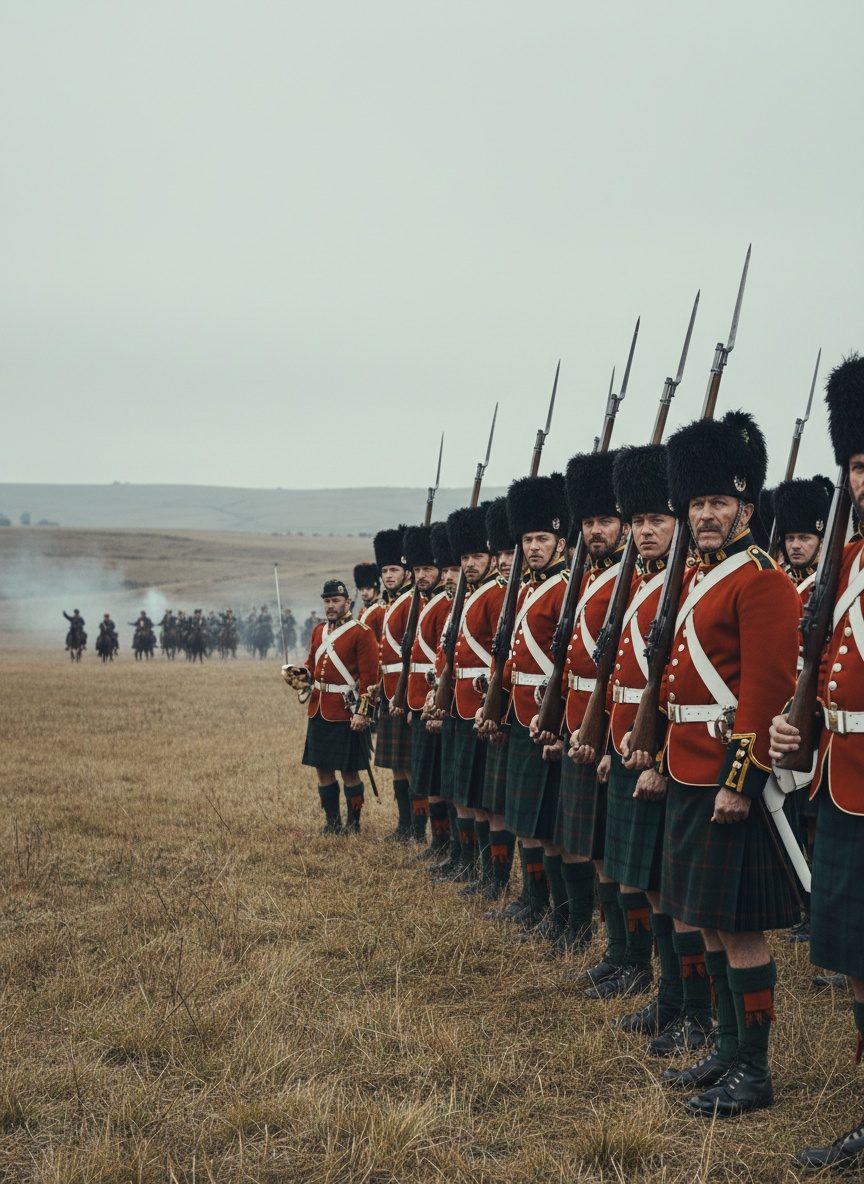
On a chilling November morning in 1854, Sir Colin Campbell's steady gaze pierced through the smoke of war as 600 men of the 93rd Highlanders stood like a scarlet ribbon against the Russian tide. The very ground they occupied was naked and exposed—no ditches, no ramparts. Before them, thundering across the open plain, came the Russian cavalry. Unlike the swirling chaos that would later befall the Light Brigade, there was a serene, almost eerie quiet in this corner of the battlefield. The Highlanders stood in two ranks, a formation so deceptively fragile that observers likened it to a “thin red line.”
Sir Campbell, clad in his distinct bonnet, had already told his men, "There is no retreat from here, men; you must die where you stand." His words were not mere bravado but a somber invocation of duty. Roughly 2,500 Russian horsemen bore down upon them, and yet the 93rd stood firm. They held their fire until the enemy came within range. "Remember your country and your duty," Campbell barked. The shots rang out in a synchronized blaze, a measured discipline that saw the first wave of cavalry staggering.
Stand Fast: Zero Options, Maximum Resolve
There was a specific kind of nerve required to face such ferocity—and it was the stuff legends were born of. When the first Russian cavalry charge faltered and drew back, it wasn’t luck that saved the Highlanders. Rather, it was their unwavering discipline and their instinctive grasp of a soldier's creed: hold the line at all costs.
The 93rd wasn’t just a military unit; it was a tightly knit tapestry of men, many of whom hailed from the same Scottish glens and villages. Their leader, Sir Colin Campbell, knew this and wielded the Highlanders' fierce kinship and long-storied martial tradition as his most potent weapon. This was a regiment that didn't just don the scarlet tunic as a uniform but wore it as a badge of honor, emblematic of centuries of service to the Crown.
Sir Campbell, a veteran of conflicts far from Crimea, trusted his men implicitly. He didn’t waste words or disguise the peril they all knew was coming. At his command, they presented a formidable wall of bayonets, and with their muskets loaded, stood ready to meet what seemed an inevitable death.
The Clash of Steel and Spirit
As the second wave of Russians swept forward, darker clouds of gunpowder fumes hung over the battlefield like a shroud waiting to descend. The 93rd's second volley was delivered with clockwork precision. The relentless discipline of these Highland troops spoke volumes—a lesson on how standing steadfast could be the greatest offense.
What was to follow bordered on the surreal. The full-fledged charge of Russian cavalry was, in the waves of powdery smoke and echoes of musket fire, transformed almost miraculously into chaos. Commanders on the Russian side seemed unable to grasp the stalwart courage of sir Colin's “thin red line.” Struck by the unanticipated ferocity of a defensive line that refused to falter, the Russians turned tail, retreating back into the chill that had accompanied them to this fated battleground.
Above the melee, Campbell reportedly remarked, “Aye, we’re in’s ain hands noo, but they won’t get through us this day.” The truth of this simple statement would be cemented not just in battle records but etched into the annals of military folklore as a testament to the power of determined resistance.
A Legacy of Iron Wills
The audacity of the 93rd Highlanders at Balaclava is not merely an anecdote of the Crimean War but a parable of human resilience and unity. It reminds us that courage isn't just about holding a piece of ground. It’s about holding fast to something undeniably human: the shared conviction towards duty and sacrifice.
Though this episode might linger in the shadows of the infamous "Charge of the Light Brigade," its significance is perhaps more profound. It’s the story of the victory achieved not through strategic advantage or superior numbers, but through the sheer will of strong hearts and steady hands. Today, as we navigate a world often preoccupied with larger-than-life narratives, the sight of the “thin red line” stands as a vivid reminder that fortitude in the face of insurmountable odds is its own kind of triumph. In those moments of crisis, it is the unyielding line that will not break, even when time threatens to sweep it away, that uplifts the spirit of collective resolve.