The sun hung low in the African sky, casting a warm, orange glow over the vast, rolling landscape of Natal. Dust swirled gently in the air, stirred by the gentle breeze as it danced over the dry grasslands. Yet, this serene backdrop belied the tension that crackled like static in the atmosphere at Rorke's Drift on January 22, 1879. Here, at this seemingly innocuous mission station, history was poised on the edge of a knife. The fate of lives, reputations, and even an empire, lay in precarious balance as the shadows lengthened across the ground.
The Zulu War's thunder echoed through these highlands, a conflict born from the British Empire's relentless expansion across southern Africa. By January, that thunder clapped directly over the heads of the small garrison at Rorke’s Drift. News had flashed through the ranks of a crushing defeat at Isandlwana, leaving the British outpost isolated, exposed. Before long, swirling dust clouds on the horizon heralded the approach of the enemy—a staggering force of four thousand Zulu warriors advancing relentlessly upon this tiny mission station manned by just over a hundred soldiers.
Among those at Rorke's Drift was a man whose place was not on the front lines of battle but among the sick and wounded. Surgeon James Henry Reynolds, a dedicated doctor, was tasked with the heavy duty of tending to the injured. Yet, as the Zulu warriors closed in, threatening utter destruction, the siren call of duty did not remain tethered to the four walls of his makeshift hospital. Instead, it led him into the maelstrom of chaos that unfolded on that fateful day.
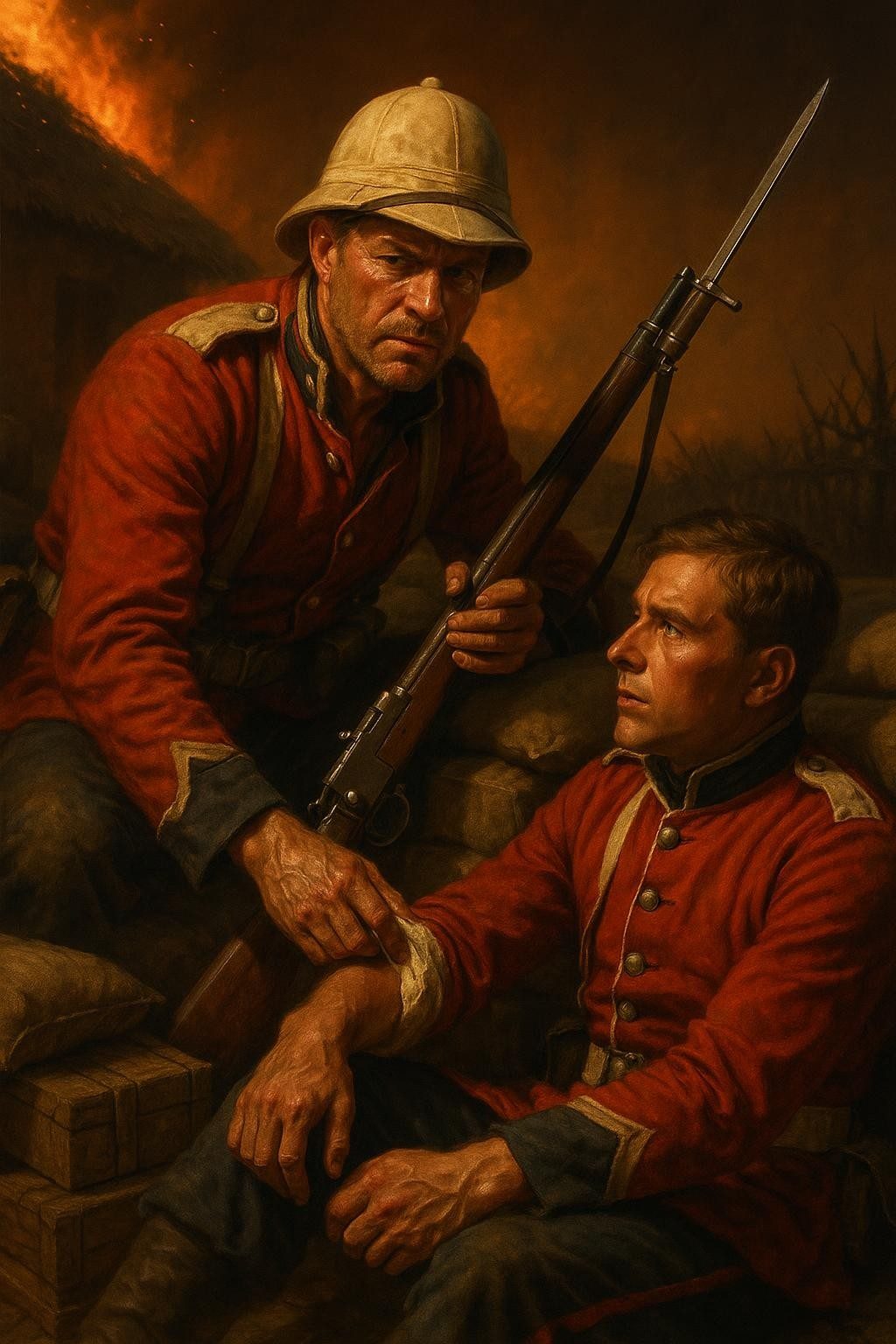
The scene inside the mission station devolved into carnage as soon as the Zulus advanced. The walls of the hospital stood against the onslaught, but only just. Within its burning confines, the cries of the wounded mingled with the crackle of flames. It was here, amidst the acrid scent of smoke and the symphony of pain, that Reynolds performed acts of heroism that would earn him a lasting place in history.
The Zulu warriors were relentless in their attack. The defenders, outnumbered and seeking any glimmer of hope, found themselves forced to fight for every inch of ground. During a battle that defied odds and orchestrated chaos, Reynolds emerged not just as a caregiver but as a warrior of necessity. With no orders to join the fight, he nonetheless seized a rifle, placing medical tools in temporary abeyance as he took up arms alongside soldiers.
For eleven hours, the deadly ballet of war continued without pause as Reynolds alternated between his duties as a surgeon and an impromptu soldier. This, in itself, was an embodiment of his commitment not just to his comrades but to his own moral compass. While gunfire raged all around, he attended swiftly and confidently to the multitude of injuries, knowing each heartbeat of delay could cost lives.
The spectacle of a hospital under siege was rare in military history, and within it, Reynolds moved like a conductor keeping time, bringing order to the apparent chaos. Even as bullets sang through the air and the stout walls shivered under the percussion of bodies, he refused to let the duty of care fall by the wayside. On one occasion, he reportedly took a bullet through his helmet, illustrating the perilous dance with death that defined his actions that day, though he refused to falter.
At the end of 11 grueling hours, as the first light of dawn began to pierce the soot-filled air and the Zulu fighters dispersed like shadows retreating before the impending light, the true costs became apparent. The human toll of this brutal engagement was heavy, yet, remarkably, the mission station endured. It had become a symbol of staunch resistance, and within its heart, Reynolds continued to labor—no longer with a rifle but with bandages and sutures, embracing the role he had never truly abandoned.
The deeds of Surgeon Reynolds, both expected and extraordinary, were acts imbued not just with duty but with a profound sense of humanity that transcends mere martial obligation. He was a doctor, yes, but also an unyielding pillar in a storm, committed to protecting and nurturing life even on the front lines. His personal symphony of skills and courage on that day encapsulates a remarkable blending of compassion and bravery.
Rorke's Drift was a solitary chapter within the sprawling epic of Victorian-era conflicts, yet its echoes reverberate even through the annals of time. The actions at this small corner of the British Empire critique the very nature of heroism and duty during war, revealing layers that often remain unexplored. In remembering James Reynolds, one cannot merely consider his role on paper; rather, his compelling story demands recognition of the spirits and principles underpinning these historical narratives.
We find, in stories like that of Surgeon Reynolds, the unexpected heroes of history. They are reminders that courage and honor are currencies spent not only on the battlefield lined with ranks, but also among the embers of a blazing hospital, bridging contrastive worlds of destruction and healing. These are the legends they left out of the textbooks, yet they are cornerstones of the human spirit that continue to inspire and provoke reflection in all who dare to recall them. As the sun set on Rorke's Drift that day, it did so not only on a battlefield, but on a tapestry of human resilience that shimmered with every thread of courage and compassion willed into existence by men like James Reynolds.