September 1857. The air carried a bitter mix of smoke and desperation for those within the crumbling fortifications of the Lucknow Residency. After enduring eighty-seven grueling days of siege, the garrison found itself at the brink of annihilation. Besieged by the relentless forces of the Sepoy Mutiny, also known as the Indian Mutiny, survival seemed a distant hope more than a guaranteed outcome. Food supplies had dwindled to alarming lows, and the frantic cries for medical aid echoed in the chaos. Amongst the beleaguered defenders was a man normally devoted to preserving life rather than taking it: Surgeon William Lowe.
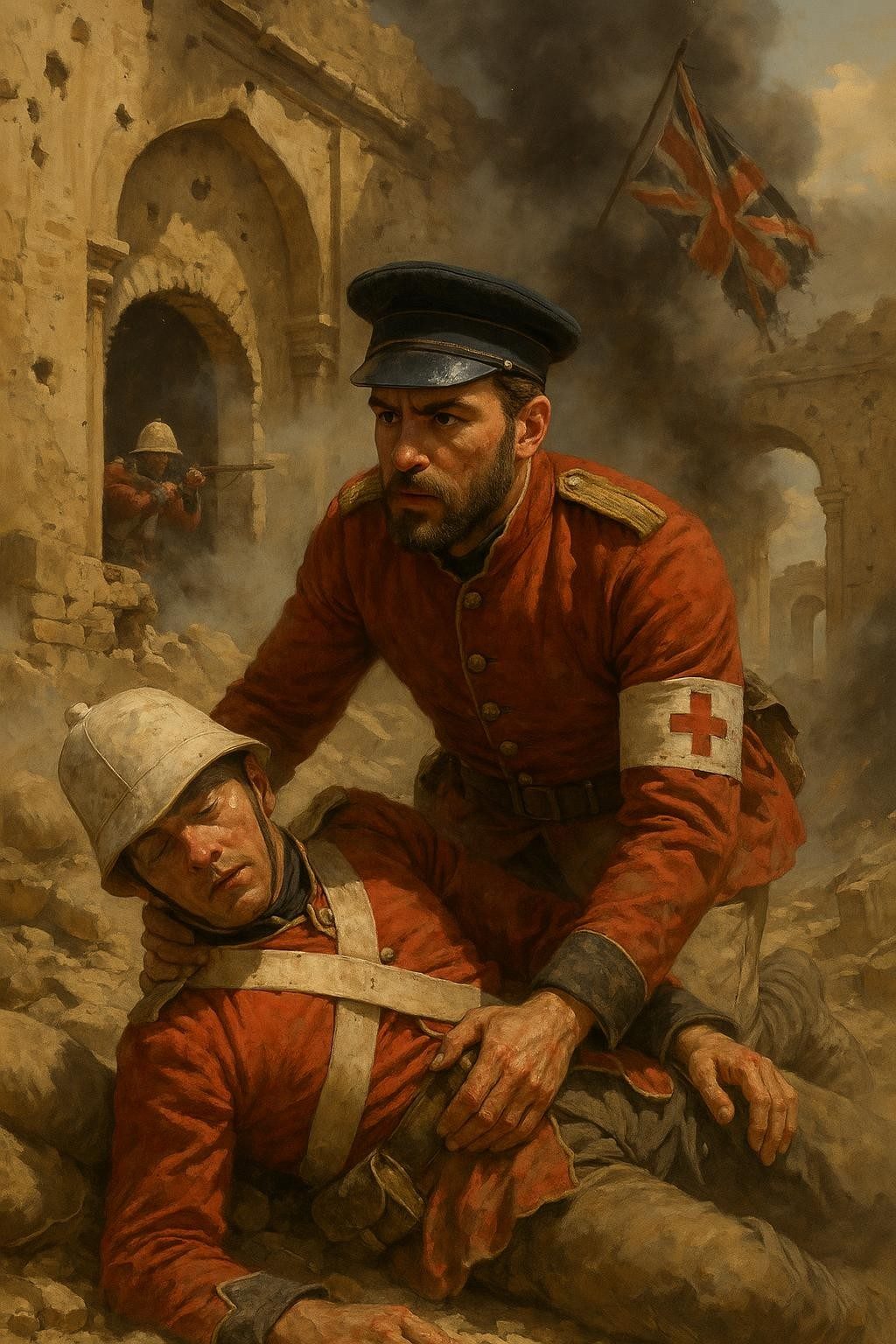
Amidst the horrors and hopelessness, Surgeon Lowe found himself thrust into the role of an unlikely stalwart. A man accustomed to scalpel and suture suddenly stood unarmed at the heart of combat during a critical moment in the siege. The wall protecting the Residency's garrison had been breached, a hole where the Sepoys poured through, threatening to annihilate all in their path. Traditional soldiers had fallen, dozens lay wounded, and panic rippled through the defenders. It was here, in the heart of pandemonium, that Surgeon Lowe placed himself.
With no firearm to defend against the assailants, Lowe faced the breach with nothing but his bare hands and an unwavering determination that belied his medical vocation. His tall frame became the last standing barrier between the attackers and the beleaguered survivors behind him. Despite their fierce onslaught, he exuded a courage that defied explanation, doing what he could to hold the line initially breached.
The Residency was more than just a defensive structure. Within its boundaries resided families, children, and civilians — all trapped in a nightmare from which they could not wake. Their lives hung in the balance, relying on men like Lowe to hold those crucial moments for relief. With limited ammunition and their numbers dwindling, tensions ran high and hope ran thin. The physical exhaustion and mental toll of continuous bombardment and skirmishes had cracked the resolve of many. Yet, it was Lowe's selfless stand that sparked a renewed spirit among those who fought alongside him.
The garrison, refused succor by the distant Queen's army, looked to its residents to perform deeds of uncommon valor. For every musket fired by a soldier, there was often a civilian aiding in reloading or carrying the wounded. It wasn't just the conflict's heat pressuring Lowe; the smothering humidity of Lucknow gnawed at him as if the city itself conspired with the attackers. Still, as bullets whizzed past, and cries pierced the heavy air, his commitment remained unshaken.
Stories of Lowe's incredible bravery spread, becoming a beacon for those holding the Residency alongside him. Where there was chaos, his presence brought a semblance of order, dragging the injured away from the flying debris even as he risked his own neck. His medical training had taught him the value of each heartbeat, of every moment fought in earnest against death's steady advance. Rescue was not immediate, yet the sheer resilience demonstrated by Lowe and his makeshift comrades kept hope flickering like a candle against the gale.
In a siege marked by an unyielding onslaught, Lowe's actions carried ripples far beyond their immediate impact. He, like the Residency itself, stood as a symbol—emblematic of the compassion and duty echoed by those who had chosen to stay. The personal accounts of terror and courage painted by survivors bore testament to the profound impact of his courage. Witnesses left behind memoirs speaking of the doctor who made his stand when it seemed least conceivable.
Surgeon William Lowe's heroism did not go unnoticed by the world outside those walls. Decorated with the Victoria Cross, the highest military honor for gallantry, his act became a story of inspiration. However, the medal served not just to honor a single individual; it elevated the collective sacrifices of every man, woman, and child caught in that harrowing theater of war.
Even as the Victoria Cross became adorned upon his chest, Lowe considered his contribution not as an accomplishment of solo valor but as part of a collective resistance—a chapter in a larger story of perseverance against the odds. The Lucknow Residency told tales of humanity pushed to its limits, surviving peril with a determination that defied physicality. Lowe’s stand, more than an act of bravery, became a lesson in the resourcefulness and tenacity that people often find within themselves amid adversity.
The siege of Lucknow, and Surgeon Lowe's pivotal role within it, is more than a mere footnote in the grand tapestry of history. It's a telling reminder that heroism comes in many forms and is found in the unlikeliest of places. The lessons learned in the dust and ruin of Lucknow continue to resonate, urging us to recognize and uphold courage in all its manifestations. In remembering Surgeon Lowe, we remember the power of human resolve when guided by the principles of duty and honor—principles that turned the tide of fate, even when the odds confirmed imminent defeat.