The First Anglo-Afghan War is shrouded in infamy. But no tale is as haunting as that of the lone figure who emerged from its devastation.
The Retreat of the Sixteen Thousand
The early days of January 1842 saw Kabul, nestled among Afghanistan’s rugged mountains, bustling with the heavy stride of retreating British forces. The landscape was a harsh labyrinth of snow and rock, offering little mercy to those worldly interlopers. Sixteen thousand souls—soldiers, camp followers, and civilians alike—marched from the city in a desperate attempt to reach the garrison at Jalalabad, their dwindling lifeline.
What followed was a portrait of chaos and tragedy. Ambushes met the retreating column at every narrow pass, orchestrated with chilling precision by Afghan tribes determined to drive out the foreign incursion. The bitterness of winter compounded the onslaught, as snow blinded and slowed the retreating force. Frostbite gnawed at the extremities of soldiers ill-prepared for such betrayal by the elements, while starvation quickened its pace amidst the dwindling supplies.
The tail of the column grew perilously vulnerable; rearguards found themselves isolated and overwhelmed. Panic fermented as the casualties mounted, bodies lining the route north like macabre milestones. Within mere days, the military group ceased being a disciplined unit and dissolved into fragments of humanity, each fighting for individual survival.
The Last Candle Flickers
William Brydon, a surgeon by title but now a soldier by fate, found himself amidst this hellish exodus. Brydon, like many, was swept up in the tumultuous downstream of survival. Caught in a swirl of violence and escape, he navigated through each perilous turn with resolute determination, but at grave cost.
His journey became a patchwork of close calls and frantic decisions. While sword and spear took lives indiscriminately around him, Brydon pressed on. However, not unscathed—his journey worsened when a fellow soldier’s misfortune became his own. Blows between rock and men resulted in a skull wound, threatening to tear apart his fragile hold on life.
The surgeon’s resourceful instinct kicked in. With no time, nor supplies for conventional treatment, Brydon turned to the pages of a magazine. In an act of desperation that would cement itself in legend, he tore a page free, crudely stuffing it into the wound as a makeshift barrier against death. The solution was as fragile as it was inventive, echoing his tenacity amidst brewing finality.
The landscape bore witness to ever-dwindling groups, each mile against them. Yet, by some haggard luck or quiet resolve, Brydon persisted. And as the shadows of countless fallen comrades stretched long behind him, he pressed ever forward towards Jalalabad—a finish line that seemed as distant as eternity.
A Lone Horseman
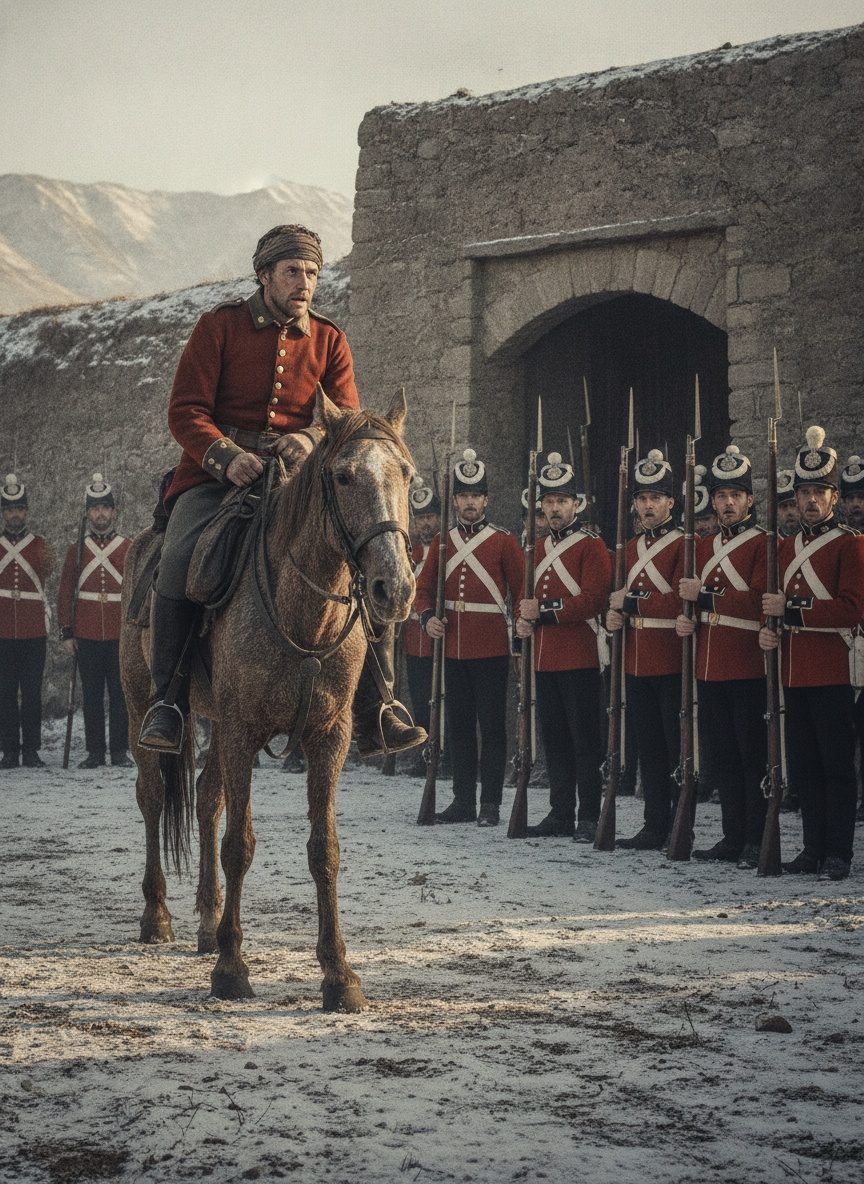
The watchers at the Jalalabad garrison had steeled themselves for the worst, their vigil as tense as the wind that swayed the grass. As a dark silhouette broke the horizon's monotony, they could scarcely believe their eyes. Out of the breadth of desolation came a lone horseman.
It was as if all breath was held, the air pregnant with disbelief. Brydon, half-conscious and slumped in the saddle, was the sole figure to break the wasteland of lost hopes. His horse, no more than a shade of its former might, carried its rider as though fate itself had appointed it shepherd of the last dream.
When pulled from his mount, the garrison soldiers might have mistaken him for a specter. His recollection of the harrowing retreat seemed to echo from the deep recesses of a troubled past rather than mere days ago. Each groan and mutter told stories of cliff-edge survival; every movement was a testament to the thin line between endurance and surrender.
In the days that followed, the lone surgeon's tale of incredible survival would become a specter to the surviving British forces, casting shadows over imperial ambitions in the region. It was a stark reminder of the unforgiving nature of imperial expansion, a poignant lesson in the futility of underestimating the challenges of foreign lands and peoples.
William Brydon's solitary emergence not only marked the end of a tragic campaign but also served as a somber mirror reflecting the complexities of conquest and the limits of human endurance. In the narratives of empires, where victories often eclipse the failures, the haunting ride of a lone figure reminds us of the human cost etched in every storied triumph and ambition gone awry.