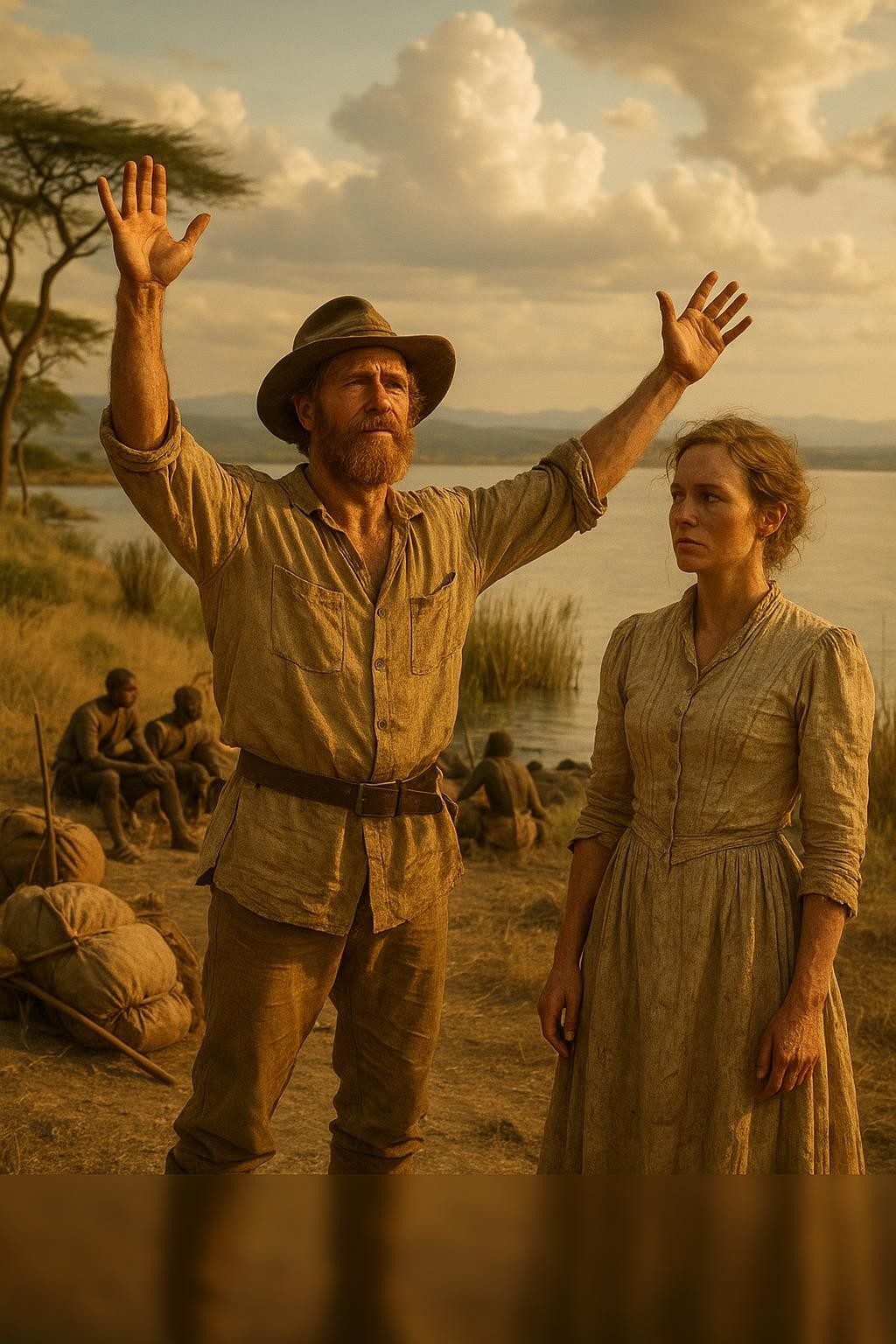
The dense jungle swirled around them, a suffocating tapestry of humidity and noise. Leaves shuddered and cracked underfoot while invisible insects droned in their ears, minds stretching towards breaking point. Samuel White Baker swiped a wet palm across his grimy forehead, eyeing the vine-choked clearing just ahead. Then it came, a shimmer of light beyond the green, revealing azure gleaming back—a sight no European had witnessed before.
The Unknown Path
By March 1864, Samuel White Baker and his wife Florence were deep into the heart of equatorial Africa, a forbidding realm of untold wonders and equal despair. The Victorian thirst for conquest and discovery had driven them to embark on an expedition laden with risk and wrought with adversity. The scramble for Africa meant carving their names into the annals of history, discovering what no hand had yet committed to parchment: the sources of the mighty Nile River.
The journey to this moment had been a relentless saga of perseverance. They had started with a small troop of porters and the heaviest burden of spirit. Supplies dwindled. Fever seized them regularly, wringing the vigor from their bones and casting shadows across their sunburned faces. Yet it was not only the rage of the elements or the famine that battered their resolve. The human burdens they bore lay fallow, their native helpers often deserting them to the wilds.
Guided by a mere compass and the burning ambition of Baker, they pressed further, propelled by a singular vision—a geographical miracle still beyond imagined realms. The Bakers had been tasked in vain with taming a torrential river, perpetually untamed in their fragile maps. Undaunted by rival theories and interests, Baker's heart held firm to the concept of "Ptolemy's Nile" as a truth waiting to unveil itself in empirical glory.
Days dragged and weeks muddled into hardship as the jungle cut and stayed their advance. Florence, steadfast and fearless, matched every weary step of her husband, often the sensate mind when his own faltered. Together, they weathered tropical deluge and the pensive drone of African nights, a testament to their iron will. Through swampy tracts and the ever-present shadow of disease, they crept ever closer to an uncertain destiny.
An Empire’s View
On the morning when Samuel Baker's gaze first fell upon the expansive waters of the unnamed lake, his senses exploded with an emotion that defied Victorian restraint. Not a mere inlet to the White Nile, this was a fount, a source greater than expectation or preconception. It was beauty unimagined until the horizon unfurled it—Lake Albert, as he would christen it, forever tied to his conquering Queen.
The sun glinted off the surface like a million gems. In that instant, amidst the overwhelming verdant shapes, European civilization was thrust forward into an age of understanding and dominion. Florence remained at his side, observing the immense sweep with keen eyes. It was her moment too, although history so often forgot the echoes of her determined footprints alongside his.
No pomp met their arrival, no internal applause. The weight of their accomplishment needed no external fanfare; the moment itself was all-consuming. In their struggle with the wild and timeless endurance, European intellect rested with reverence on the threshold of the unknown. Here was a repository of tales untold, burgeoning empires whispering their discordant histories at the peripheral of their newfound vista.
Rival explorers envied and praised Baker upon his resurrection into the tale of Empire. His journals, the very pages creased by Africa's merciless grasp, chronicled the trail to Albert Nyanza, a source to rival and affirm Lake Victoria's known majesty. Beyond London's gaslit halls, into the wilds of Africa, imperial aspirations found another cornerstone.
The Layers Beneath
Yet what feet first tread in the pursuit of knowledge can become stepping stones to deeper complexities. Baker's discovery was not an end, but a beginning—a pivot upon which history inexorably turned. This achievement fed the voracious appetites of an empire soon set to engage evermore on the African stage. As lines on maps thickened, so did the disruptions to the myriad cultures that first called this horizon home.
Samuel and Florence returned to their native land, tale in hand and legacy secured. While the Europeans saw rivers coursing towards their empires, those rivers etched the disparate paths of civilizations in stewardship of their own lands. The discovery of Lake Albert tantalized an era teetering on the brim of colonial exploration—an era zealously wrestling with the philosophical shadows of its own making.
And so the journey of the Bakers stands not merely as a tale of intrepid exploration, but as an allegory for the dual nature of human aspiration. Achievements are wrought with the gravity of unintended consequence, and the discovery of this African jewel was both an unveiling and a curtain drawn over existing worlds. In Baker's trail through unexplored territories walks the timeless echo of mystery and conquest, a narrative poised at the threshold of Victorian legacy and the unfolding script of an awakened continent's future.