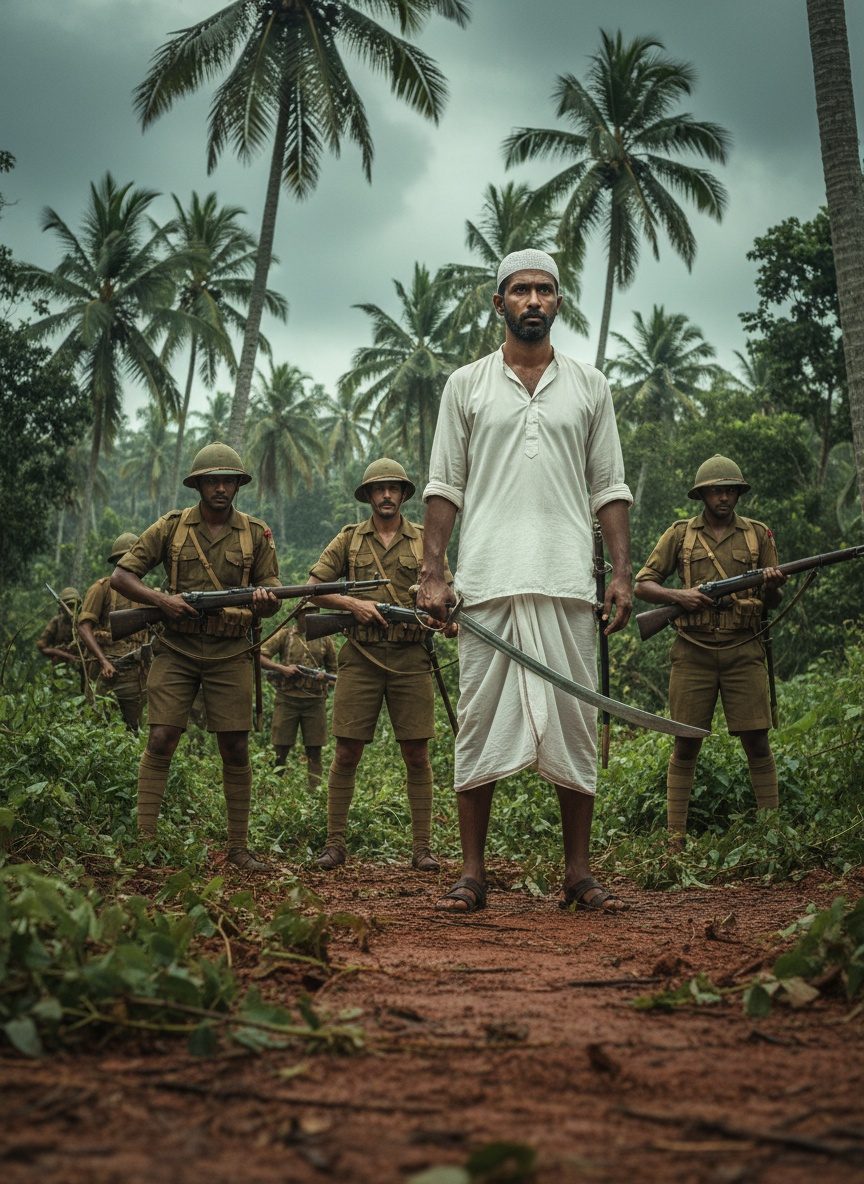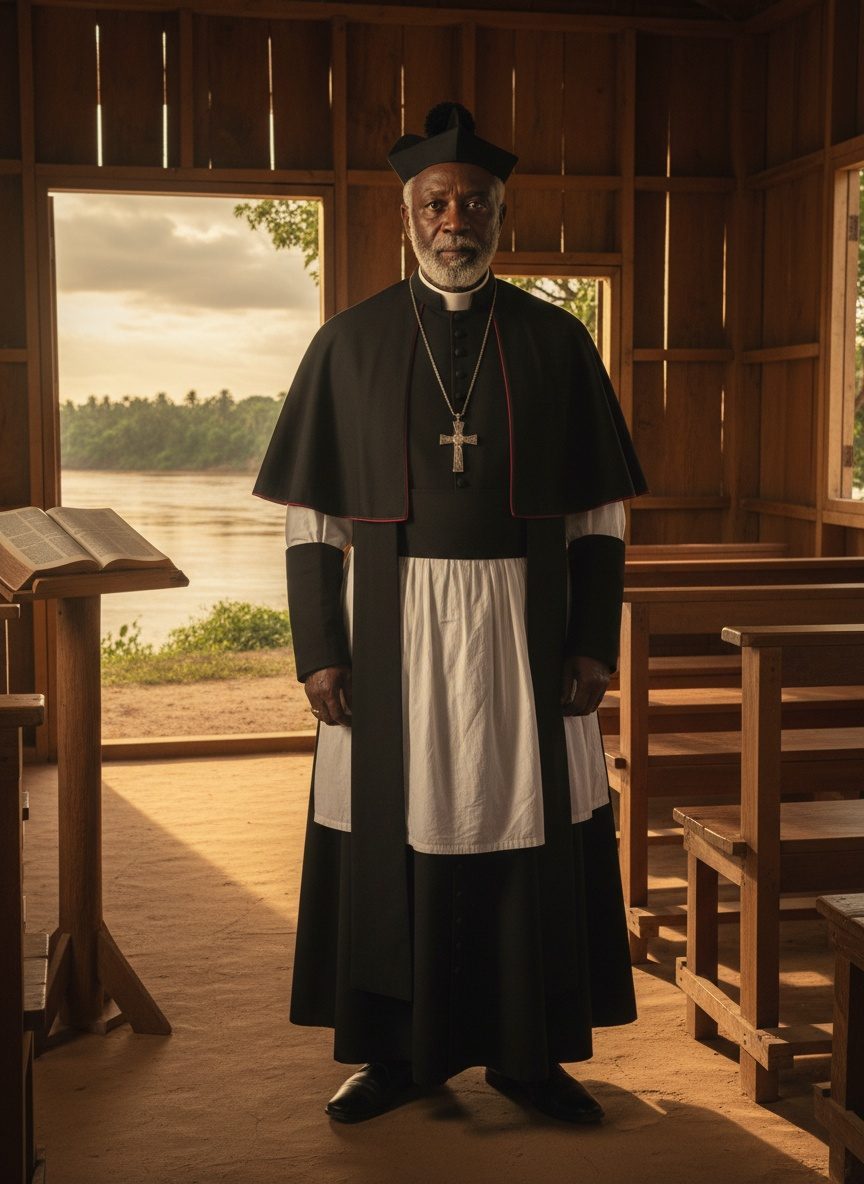
The air was thick with equatorial heat when a ripple of uneasy murmurs swelled among the crowd gathered along the Niger River. Samuel Ajayi Crowther stood before them, his towering presence matched only by the gravity of the moment. The breeze carried whispered doubts to his ears, but he remained undeterred. His eyes swept over the faces of those assembled, his voice a deep, resonant anchor amidst the encroaching storm. This was not just a battle for a bishopric; it was a fight for a legacy woven against the backdrop of chains and redemption.
The Child of Chains and the Scholar's Books
Samuel Ajayi Crowther's journey began long before this pivotal moment. Born into the Yoruba culture, Crowther's early life had been a tapestry of vibrant traditions until it was torn apart at the age of twelve. Seized from his village in a brutal raid, he was thrust into the relentless engine of the transatlantic slave trade—a fate dictated by shackles and uncertainty. Yet fortune intervened when the British Royal Navy, enforcing the abolition of the slave trade, rescued the bewildered boy from a Portuguese slave ship.
Swiftly, his life took a transformative turn. The boy who once knew only tribal tongues found himself amidst the cacophony of foreign sounds and smells. But Crowther was quick to adapt. He immersed himself in the mission school of Sierra Leone’s Freetown, his mind fertile and unstoppable. There, he mastered the English language and Latin, his thirst for knowledge an unquenchable force. However, it wasn't just scholarly ambition that drove him; an evangelical spark ignited within, propelling him towards the church's service.
In the Shadow of Empire
Crowther's meteoric rise within the church was both remarkable and viewed with skepticism by the colonial powers. His ordination in 1843 as Africa’s first Anglican bishop was a milestone not just for him but for the indigenous church leadership. He returned to the land of his capture to lay the foundations of Christianity along the Niger. What he built was a testament to cultural bridging—a mission born of African resilience and Christian hope.
The mission was more than a church; it was a symbol of reclamation. Where once had echoed the mournful clinks of slave chains, now the harmonious reverberations of hymns and the promise of salvation thrived against colonial winds. However, Crowther's mission was not without its complications. British missionaries, harboring a paternalistic view deeply entrenched in Victorian superiority, questioned his capability. They moved with bureaucratic precision, suggesting Crowther, in his age, was unfit to continue his blessed work.
Refusal to Relinquish
In the unfolding drama of 1879, Crowther faced an insidious challenge from these younger, less experienced British missionaries. Their demands for his resignation reverberated around the church corridors like portents. However, they underestimated the strength of a man who had wrestled dignity from the jaws of enslavement. The matter was less about administrative duty and more about personal sovereignty.
Crowther met the demands with composed defiance, a refusal that spoke volumes in an era when compliance was expected from those within colonies. His resistance was not loud, but it was felt. To acquiesce would mean unraveling the tapestry he had woven from his own hardships, a tapestry that included translating the Bible into Yoruba—a monumental effort to marry spiritual guidance with familiar linguistics.
Resilience Beyond Reintegration
In reflecting upon Samuel Ajayi Crowther's stance at the Niger, we discern the quiet might inherent in reclaiming one's place against the tides of historical erasure. His legacy transcends ecclesiastical accomplishments; it embodies the unyielding spirit of those who transform pain into purpose. His story is not just a footnote of missionary zeal within the Victorian era, but a lesson in perseverance, cultural synthesis, and the profound strength of identity.
When institutions dictate worthiness based only on lineage or geography, Crowther's legacy serves as a vital reminder: the soul's steadfastness knows no master. His stand in 1879, on the banks of a river that once bore him towards chains, reveals the profound truth of resilience—a barometer not just of survival but of flourishing against odds. The Niger was his pulpit, and the world remains a sanctuary awaiting the sermons of those defying reduction to labels or limitations. Samuel Ajayi Crowther never went quietly; he left an echo—a call to question hierarchies and uplift voices that demand respect where others see only role.