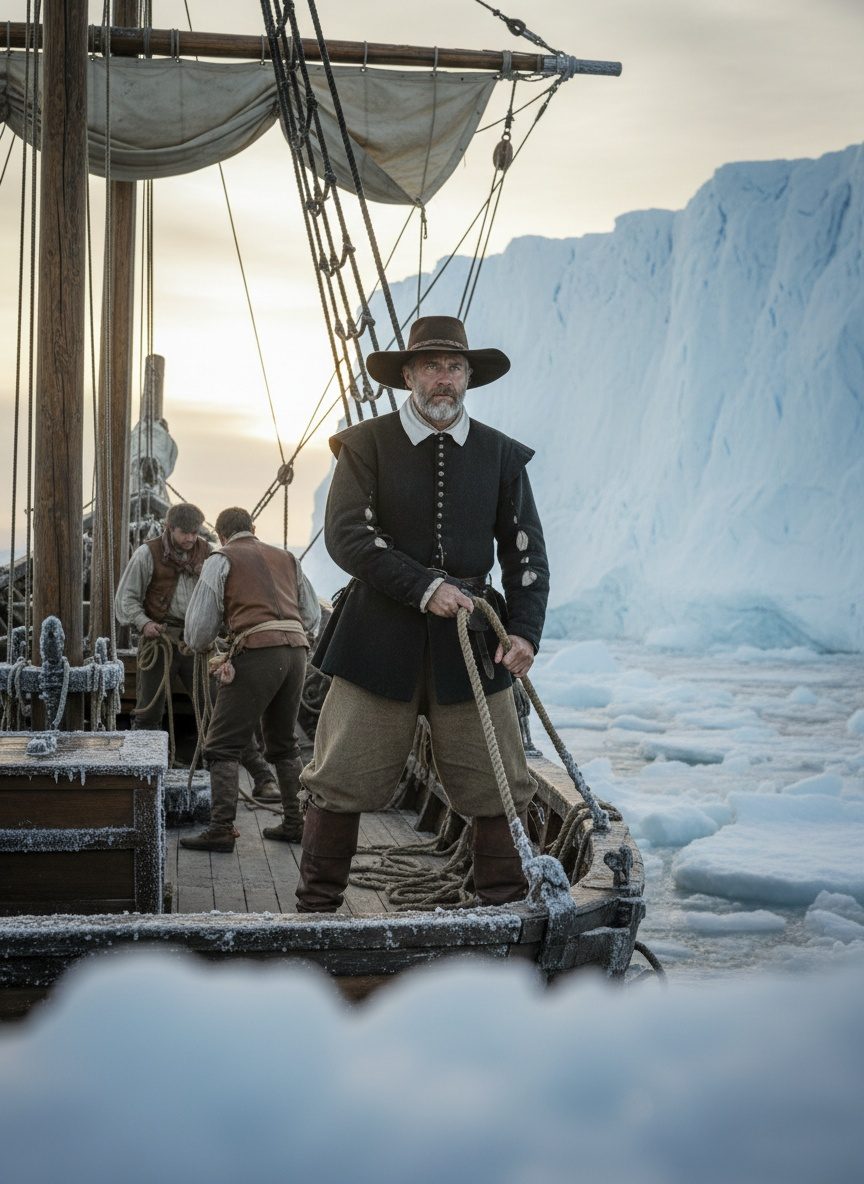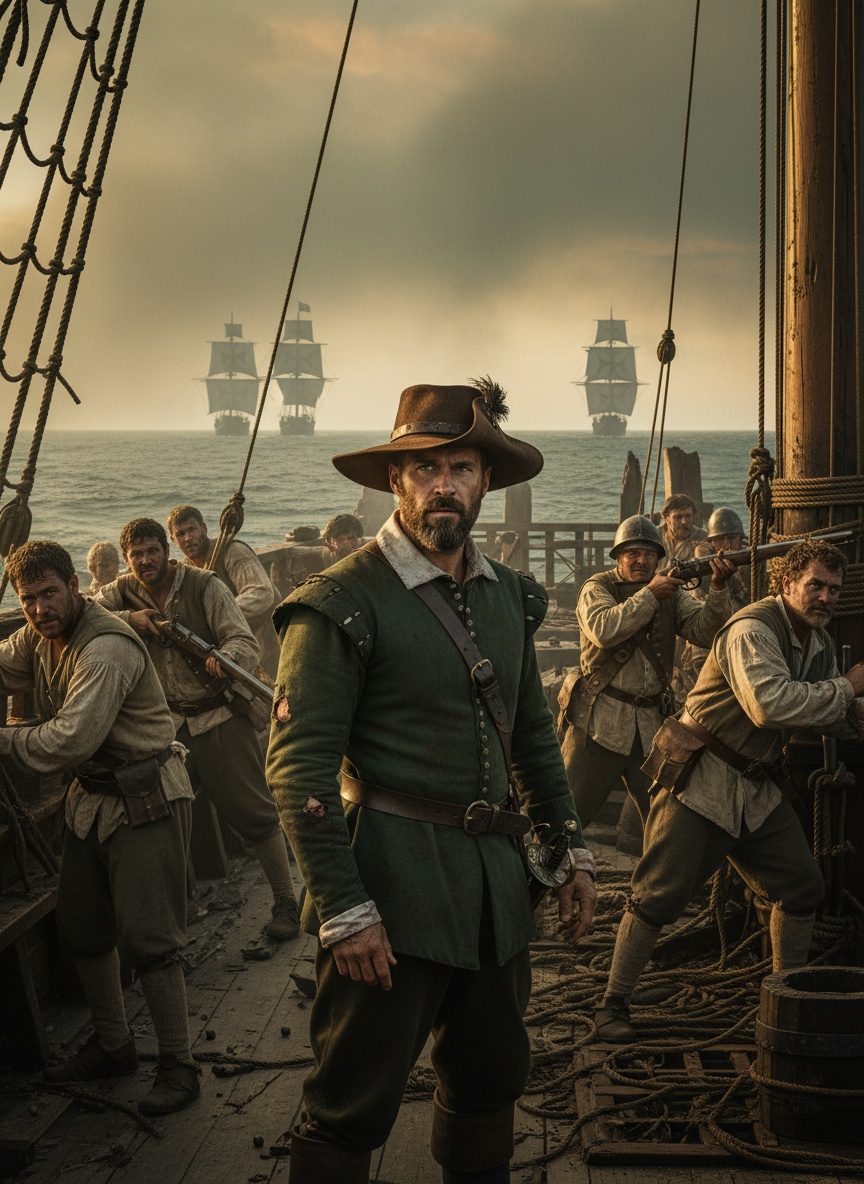
The cannonball struck the deck, splintering wood and sending a shower of deadly shards into the air, the ship shuddering with the impact. Sir Richard Hawkins, eyes narrowed against the biting sea spray, stood firm amongst the chaos that surrounded him. The Dainty, gallant but small, was caught in the vice grip of three Spanish warships off the coast of Ecuador. The wind howled through tattered sails as his men, weary but defiant, loaded iron into cannons with blistered hands. Hawkins’d commanded only seventy-five souls against an enemy whose might seemed insurmountable. Yet, even here at the ragged edge of the known world, surrender was a distant thought.
The Valor and the Trap
The Elizabethan adventurers, those daring enough to chart the furthest reaches of the globes, were the stars of an era hungry for expansion and dominion. Sir Richard Hawkins stood among them, embarking on a voyage that began with the promise of riches and glory as alluring as a siren’s call. With the Dainty setting course towards the riches of the South Seas, Hawkins’s ambition was the fuel propelling his vessel into unexplored waters, but this venture soon veered dangerously close to catastrophe.
The Pacific Ocean, vast and indifferent, had been a stage for countless battles of empires jockeying for supremacy. Spain, Elizabethan England's chief rival, jealously guarded its territories with an armada that patrolled its maritime borders. For England’s bold captains, these waters were a gauntlet, and Hawkins sailed right into its crushing grip.
The summer of 1594 found Hawkins and his crew cruising off the Ecuadorian coast, a region rich with Spanish colonies and silver-laden galleons. It was here, in these strategic waters, that three Spanish warships spotted the lone English ship. The Spanish captains, well-versed in naval combat and emboldened by their numeric advantage, moved to envelop the Dainty.
The engagement that followed was a testament to Hawkins's tenacity and tactical acumen. Though the odds were unmatched, the English sailors knew that striking colors, the gesture of surrender, would not be their way. Three days under incessant fire as grapeshot and musket balls rained down, left a scarred ship and broken bodies, but morale stood defiantly high, echoing Hawkins's own resolve.
Endurance Under Fire
Amidst the infernal noise of battle, Hawkins's leadership was a beacon for his crew. On the first day, the Spaniards sought to end the confrontation swiftly, underestimating the tenacity of their opposition. Cannons roared, filling the skies with acrid smoke and leaving the sea littered with the detritus of warfare.
In the tightest corners of their beleaguered vessel, Hawkins’s men, hunkered down, listened to the rhythmic pounding of cannonades, every crash a reminder of the stakes. The deck, once pristine, was now a landscape of struggle, slick with sea and blood alike, while the air grew thick with the scent of gunpowder and fear.
Even as the ship’s railing splintered, and the masts groaned under their punishment, Hawkins's resolve stood unshaken. The familiar Spanish order for surrender boomed across the waters, an invitation to end this torment. But there was no compromise for the seasoned captain who had braved the seas for the honor of his queen. It was only when the deck ran red, and ammunition dwindled to near-nothing, that Hawkins considered the unbearable weight of the decision before him.
This battle became a dance of desperation and brilliance. Outnumbered and outgunned, Hawkins’s refusal to capitulate was not a mere defiance but a calculated gambit — to stretch the resources and patience of his enemy. The Spanish, both impressed and infuriated by such obstinacy, continued their assault, never allowing their advantage to slip.
The Spirit of Defiance
The third day loomed, dawning with grim resolve for Hawkins and his men. Amidst the personal ruins of failed opportunity and imminent capture, Sir Richard Hawkins demonstrated a particular brand of defiance that history often overlooks, but whose impact resonates through the ages. As his diminished crew grasped their dwindling options, Hawkins convened them for one last address, acknowledging their valor and the coming twilight of their stand.
Surrender, when it came, was a word wrapped in honor. Hawkins, eloquent even in defeat, extracted terms that secured the lives of his men, acknowledging a fight well-fought. The Spanish would remember the name Dainty, and of the English captain who made them pay dearly for every yard of water.
When the echoes of muskets had faded and the sea resumed its relentless beat, the banner of defiance hoisted by Hawkins fluttered still in the hearts of his crew. His surrender was not a concession of defeat but a confluence of strategy and valor—a sharp reminder of the human spirit's potential to challenge fate at every storm-beaten opportunity.
The tale of Sir Richard Hawkins and the Dainty remains a compelling testament to the courage that forged an empire and the individuals who, even in the face of insurmountable odds, chose to rise. This forgotten story teaches us not of victory measured by tangible gains, but of resilience inscribed in the annals of an empire forever daring its reach beyond the known. Even centuries on, as the oceans witness new conflicts, Hawkins’s legacy of courage lingers, a resolute whisper carried on the sea winds.