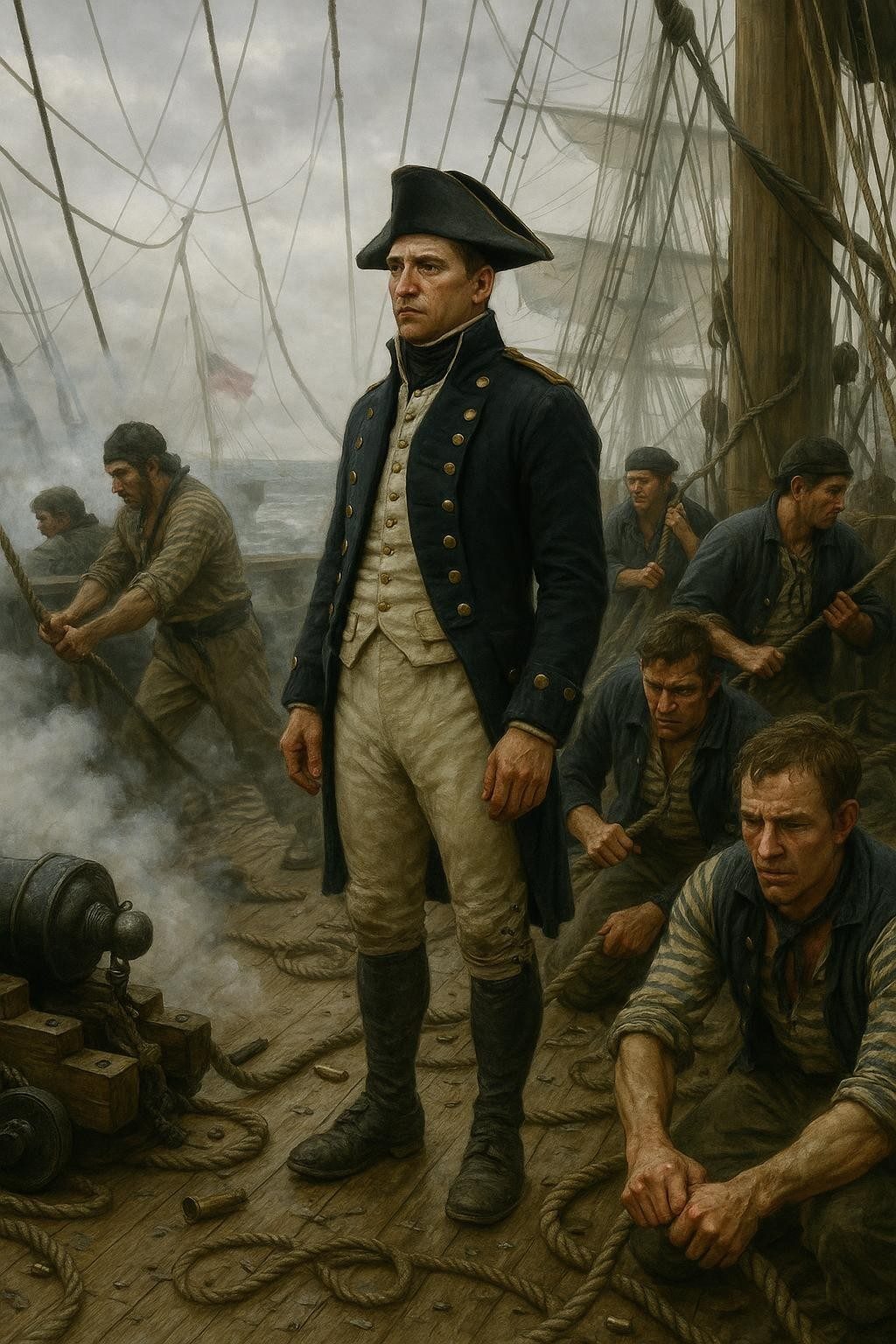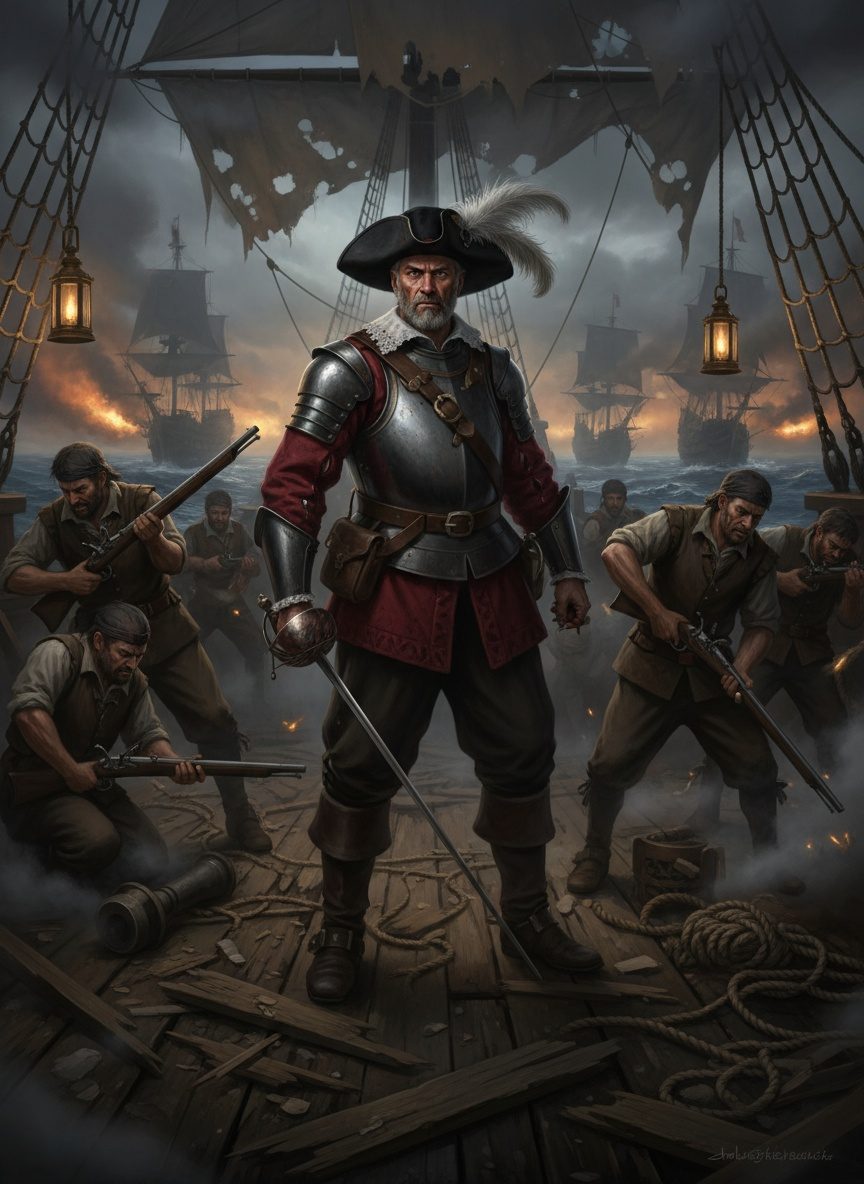
He was often clad in lavish attire, known for his love of wine and poetry. Yet Sir Richard Grenville was also a man driven by an unyielding code of honor. This code would seal his fate amidst the crashing waves off the Azores, when he chose to face overwhelming odds that others would have fled from.
A Lone Lion Among Wolves
August 1591, held a test of valor at sea that would echo through the ages. As Sir Richard Grenville's ship, The Revenge, found itself encircled by fifteen Spanish galleons, the tempest-lashed Atlantic seethed beneath the conflict. These Spanish men-of-war were not ordinary foes. They belonged to the fearsome armada that had once threatened the very shores of England. Now, here they loomed, determined to capture the English vessel that dared to stand alone.
Grenville's decision bewildered many, his refusal to retreat stark against the grim horizon. With the odds astoundingly against him, most commanders might have considered discretion the better part of valor. But Grenville was not like most commanders. His determination was as fierce as the salt spray that whipped across the deck as The Revenge prepared for its final ordeal. This was a time when tales of gallantry at sea became legends, and Grenville seemed set on carving his name into history, no matter the cost.
The Fury of Battle
The ensuing battle was more than a mere clash of fleets; it was a testament to Grenville's indomitable will. For fifteen arduous hours, The Revenge fought tooth and nail against the Spanish galleons. The air was thick with the smell of gunpowder and the cries of men spurred by desperation and resolve. Cannon blasts shattered the night, a cacophony of chaos echoing across the waves as the men of The Revenge fought fiercely, their lives hanging by the increasingly fraying thread of English tenacity.
The raging seas added to the tumult, turning battle into a dance with death itself. Grenville orchestrated his men like a maestro of martial arts, the iron heart of his resolve visible with every cannon fired and sword unsheathed. The Revenge, despite its solitary state, became a whirlwind of activity, a fortress of defiance as it withstood the merciless onslaught.
In a surprising twist, the Spanish captains offered terms of surrender mid-battle, recognizing the valor of their embattled adversary. Yet Grenville, though grievously wounded, refused. Reports suggest that his disdain for yielding was as profound as his injuries. "I have planted my feet in this damnable deck," he might have reasoned, "not to leave it by surrender, but by fate."
The Unyielding Flame
The news of The Revenge's last stand spread rapidly, transforming Grenville's solitary confrontation into legendary lore. It was said that when the Spaniards finally boarded the exhausted ship, they were met not by a submissive crew, but by decimation— the last defiant breath of men who fought because their captain demanded it, because honor demanded it.
Despite the futility of his situation, Grenville's resolve had not diminished. Even as he lay dying, the flames of his spirit illuminated the final moments of an extraordinary chapter. "Here die I, Grenville," he is purported to have declared, "with a joyful and quiet mind, for I have ended my life as a true soldier ought to do, that has fought for his country, Queen, religion, and honour." His words, whether whispered or thundered, ensured his spirit ascended not to obscurity, but to myth.
Ripples Through Time
Richard Grenville's steadfast resolve left a legacy of valor that transcended defeat. His story is not merely one of tragedy, but of inspiration—a narrative that defies the simplicity of victory and defeat. It forces us to confront the complexity of human courage, showing that sometimes, triumph is woven not into the fabric of winning, but through the threads of uncompromising integrity.
As we reflect on this unparalleled naval confrontation, it highlights a timeless truth: the true measure of heroism lies not in the absence of fear, but in the relentless drive to rise above it. Grenville's saga urges us to ponder the ideals of honor and sacrifice in an era when such notions seem antiquated. For in his refusal to abandon The Revenge, Grenville exemplified the essence of leadership, demonstrating that the human spirit is an indomitable force, even in the face of inevitable demise.