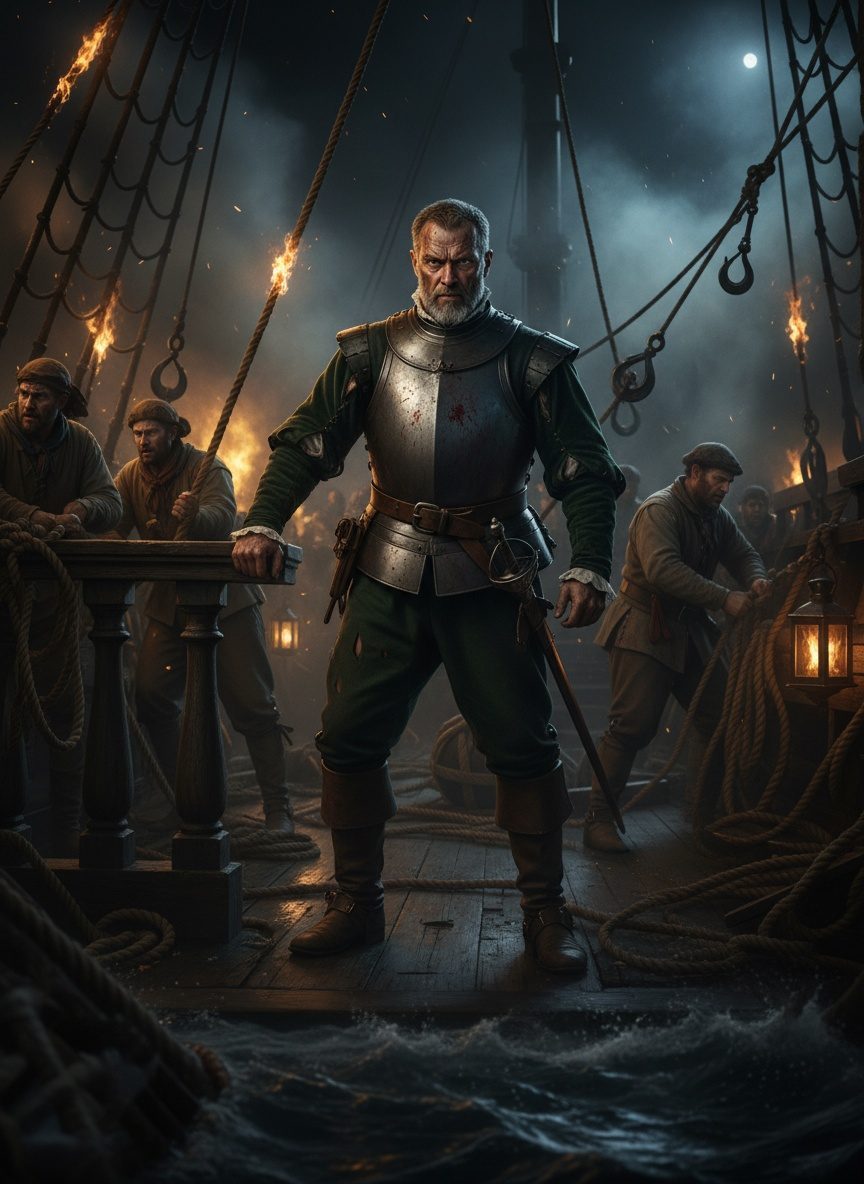
As the sun slipped below the horizon, the Atlantic waters surrounding the Azores turned into a maelstrom of frothy swells and restless currents, shimmering under the waning light of dusk. It was August 1591, and the salty breeze carried whispers of an impending clash that would echo through the annals of maritime history. Deep within these waters, the audacity of one man was about to be tested against the formidable might of the Spanish treasure fleet.
The Reckoning at Sea
Sir Richard Grenville, the fierce and unyielding English commander, gazed upon the intimidating expanse of Spanish vessels. Fifty-three ships formed an impenetrable phalanx on the horizon, their sails billowing proudly, masking the treasures they guarded jealously — riches from the New World meant to fuel the coffers of Spain. Yet there he stood, on board the HMS Revenge, a solitary shadow of defiance, faced with a reality most would deem impossible.
Grenville's ship, a testament to Elizabethan naval ingenuity, was a veritable fortress, bristling with the tools of warfare. Yet even in its sturdiness, the Revenge was but a David against Spain’s Goliath. Grenville, nevertheless, was possessed by an indomitable spirit, his resolve as formidable as the steel upon his vessel, driven by a code of honor that rendered the notion of retreat an anathema.
A Stand Against the Odds
The night air was tense with anticipation as the engagement unfolded, the clamor of drums and shouts melding with the rush of the wind through the rigging. Among the fifty-three ships of the Spanish, the flagship of their admiral, the San Christóbal, loomed with the authority of an executioner. Against overwhelming firepower and manpower, Grenville chose neither escape nor surrender.
As the first cannonballs fissured the night, the Revenge retaliated with fervor, firing broadside after broadside into the heart of the Spanish line. Fifteen relentless hours ensued, a desperate ballet of smoke, flame, and steel, the English crew fighting with a tenacity borne of sheer grit and the desire to strike fear into their adversaries. Amidst the cacophony of cannon fire and the acrid smell of gunpowder, Grenville, wounded and gasping, continued to direct his men, his commands ringing out defiantly above the chaos.
The Heart of Resistance
The battle raged on, the Revenge an inferno of warfare, a bastion of unyielding resistance against insurmountable odds. Grenville’s crew, scions of England’s grand naval tradition, fought not merely for survival but for the honor of a nation, embodying the spirit of exploration and relentless ambition that buoyed the Elizabethan era. Amidst dwindling numbers and mounting casualties, their determination never wavered.
In moments of respite, when the smoke momentarily cleared, the enormity of their stand became evident — a single ship defying the empire that once threatened to swallow Europe whole. And in this brazen act of defiance, Grenville forged a legend, a narrative etched into the consciousness of seafaring lore — that bravery can indeed eclipse numbers.
The Vessel Embraced By Flames
As dawn broke, painting the sky with hues of crimson and gold, the Revenge was battered, its structure ravaged by cannon shots, its men waning. Still, surrender was a notion repugnant to Grenville. He chose instead obliteration over capture, intending to deprive Spain of the prize they sought. In an act bordering on the fantastical, Grenville ordered his vessel set alight, the flames rendering the ship a fiery beacon of rebellion against imperial subjugation.
Yet even as the Revenge succumbed to flames, the Spanish commander, admiring Grenville’s resolve, offered terms of negotiated surrender. Grenville, by now gravely wounded, was taken aboard the Spanish admiral’s ship, where he eventually succumbed to his injuries, refusing until his final breath to capitulate to tyranny.
Why Grenville's Stand Resounds
Sir Richard Grenville’s stand in the waters off the Azores surpassed a mere naval engagement. It was an ethos exemplified, a defiance definitive of Elizabethan England's emergence onto the world stage, unwilling to bow before foes, regardless of their power. The reverberations of his stand have transcended centuries, inspiring tales of heroism and resistance against all odds, emblems of a nation forging an empire from indomitable spirit.
In Grenville’s final, fiery confrontation against Spain’s might, there lies a reminder, not bound to the confines of textbooks, that valor at sea can illuminate the vast edifice of history, burnishing the annals of time with tales of audacity and the ceaseless quest for sovereignty.