Prempeh I was made to kneel before the might of the British Empire. Yet, he stood taller than ever in the hearts of his people.
The Unyielding Heart of the Asante
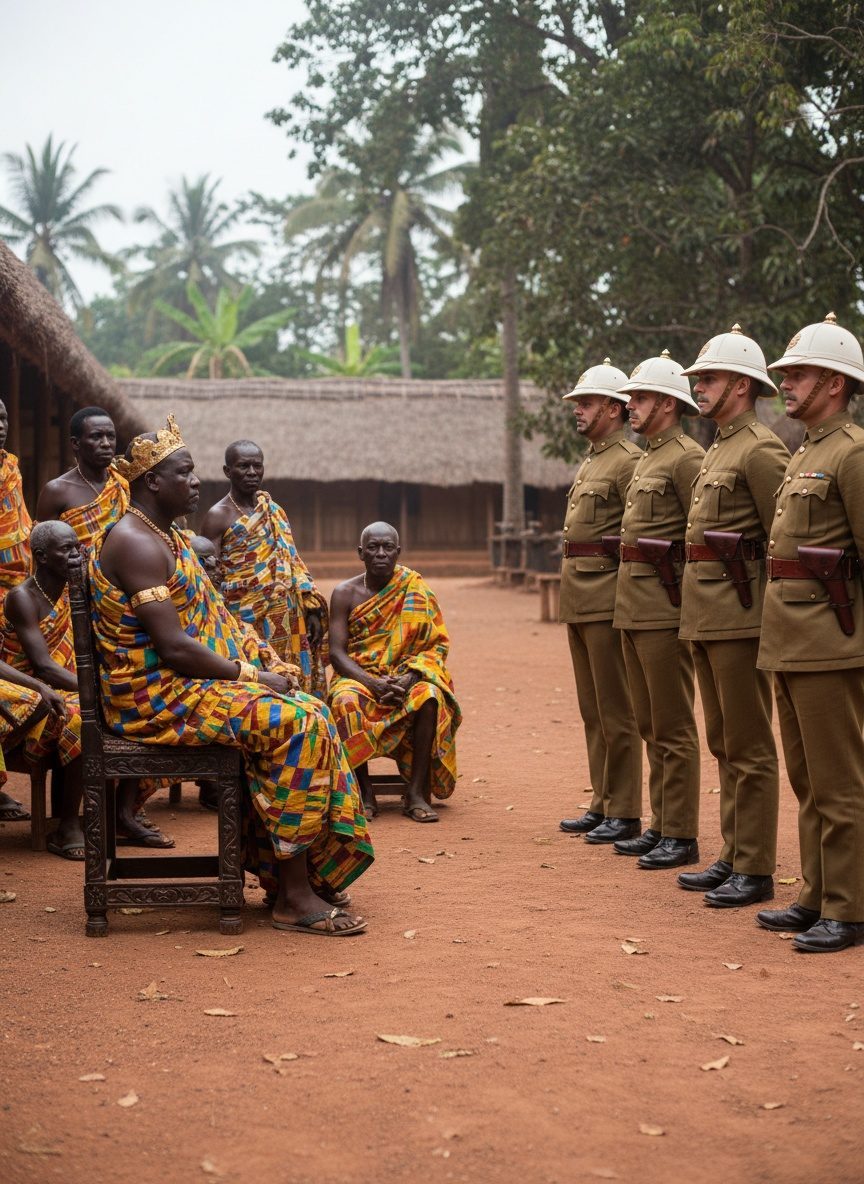
January 1896 should have marked the end of an era for the Asante kingdom nestled in what is now Ghana. British troops, relentless in their imperial ambitions, marched into Kumasi with a single intent: secure unconditional submission from King Prempeh I. The Asantehene, with the winds of history howling at his back, found himself facing the full force of the Victorian Empire, a power so vast that the sun never set on its dominions. The confrontation was as unequal as it was dramatic. Ordered to kneel, Prempeh I did so — but the gesture was one of dignity rather than defeat. His heart, unbending, remained rooted in the sovereignty of his people.
It was a sight to behold, a king humbling himself without ever having lost his crown. The British sought to break the spirit of the kingdom and erase its authority. The Asante coldly refused, their king embodying a stoic resilience that would outlast the arrogance of empire. It was only the beginning of a long and painful chapter as the British efforts culminated in the forced exile of Prempeh I, along with other members of the royal family, to the distant island of the Seychelles. Here, far from his beloved homeland, the Asantehene was incarcerated not by bars and chains, but by distance and isolation.
Exile in Paradise: The Unseen Struggle
In the Seychelles, beneath the tranquil facade of turquoise waters and swaying palms, Prempeh I faced a personal battle. Removed from his people and the lands he was born to govern, he became a prisoner of circumstance. The island's beauty was a cruel contrast to the inner turmoil he must have endured. His every sunrise was marked by a longing — not just to return home, but to restore the dignity of his rule and the sovereignty of the Asante.
The British believed that the physical removal of Prempeh I would dilute the spirit of the Asante resistance, but they underestimated the strength tethered to every word he spoke and every decision he made from afar. Correspondence between Prempeh and his advisors passed surreptitiously, threads of royal strategy woven across the vast Indian Ocean. Though five thousand miles from home, his influence lingered like the undying embers of a fire, quietly stoking the cultural identity and national pride of his people.
The Long Road Home
After 24 years, the island that had been his gilded cage awoke to a new dawn. News had arrived from the British authorities: Prempeh I was to be allowed to return to the Gold Coast. The seas that once carried him away now bore him back to Kumasi. It was 1924, and as Prempeh I approached his homeland, the horizon blurred with the jubilant cries of the Asante, their king finally home.
The return was nothing short of a hero’s welcome — a reunion orchestrated by the collective spirit of a kingdom that had never surrendered in heart, even when their sovereign had been taken from them. In the eyes of the Asante, Prempeh I returned not as a king bereft of a throne, but as a living legend reasserting his place in their storied past. Twenty-four years of exile had not only preserved his status but magnified it; the Asantehene had endured and eclipsed the passage of governors who once thought they had captured a king's will.
An Unbroken Monarch
The tale of Prempeh I's perseverance is one that bridges the gaps between history and legend. His kneeling was an act of grace rather than resignation, a masterstroke that withheld legitimacy from colonial ambitions while retaining the reverence of his people. In an age where the imperial machine devoured kingdoms, Prempeh I demonstrated that power could endure not through guns and treaties, but through the indelible bonds of cultural belonging and unrivaled resolve.
In returning, he shed any notions of defeat like snakeskin, re-emerging as a testament to the strength of identity and resistance. It serves as a reminder that empires, no matter how vast, can never truly crush the spirit of a determined people. Prempeh I, the king who knelt, rises still in every narrative that celebrates the timeless struggle for self-determination and enduring pride.