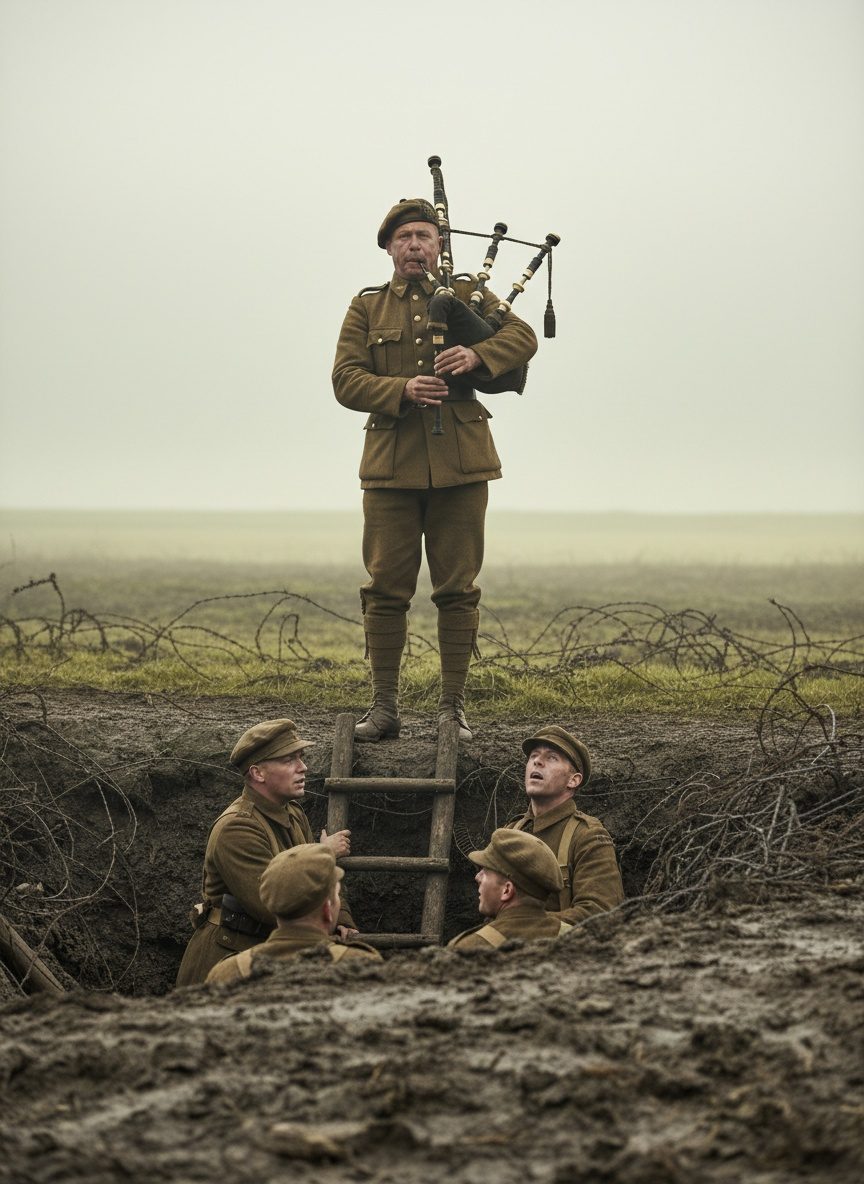
He was standing upright under heavy enemy fire. Not only was he calm, but Piper Daniel Laidlaw was also playing his bagpipes.
A Piper in an Unseen War
Amid the chaos of the trenches at Loos in September 1915, the atmosphere was thick with fear, confusion, and a suffocating cloud of gas. The Battle of Loos was one of the first times the British used gas during World War One, and its impact had been tragically underestimated. The men of the 7th King's Own Scottish Borderers (KOSB), already burdened with the weight of war, found themselves struggling to breathe, their determination wavering as the deadly mist seeped into their lungs. The order to advance across no man's land filled them with terror as the harsh realities of war clashed with the grim faces of young soldiers, none more than Daniel Laidlaw.
Laidlaw was more than just a musician; in that critical moment, he became a symbol of indomitable courage. As panic threatened to overtake the battalion, Laidlaw knew this was not just another battle—it was a test of spirit. Standing in full view of the enemy, he climbed onto the parapet, bagpipes in hand. Exposed. Vulnerable. Yet, he managed to bring what could only be described as a vision of composure to the battlefield. With the rhythm of the pipes echoing across the trenches, the sound was as timeless as the landscape itself. The pipes served as an ancient war cry, as if heralding the charge of warriors from a bygone era.
His defiance was contagious. Those who heard the pipes were inspired, not just by Laidlaw's bravery but by something deeper—a call to tradition and comradeship. The bagpipes were integral to the Scottish regiments, often playing them into battle to boost morale. Instead of dread, the pipes filled the men with an unexpected resolve. Their faltering ranks steadied. Rising as one, they moved towards the enemy, a wave propelled every beat of Laidlaw's tune. The gamble was unstoppable, like a page from history when battles were won by courage and the bravery of men like Laidlaw.
The Pipers’ Anthems
The haunting notes of Piper Laidlaw's music signaled much more than just an advance; they were a stark reminder of identity and resilience. For the ranks of the 7th KOSB, it was the resolute promise of home and the nearly mystical power of the pipers who lent these men the grit needed to face the impossible. Historically, Scottish pipers had been pivotal in warfare, their melodies harmonizing the brutalities of the battlefield with the cultural dignity of the regiments they accompanied. It was this ancestral memory that Piper Laidlaw invoked that day—a reminder of history, of the Scottish spirit characterized by resilience against all odds, much like their predecessors who had fought fiercely in other realms and other wars.
The sound of the pipes fused with the surrounding cacophony of gunfire and artillery, creating a paradoxical harmony. It cut through the dull roar of combat with its piercing clarity, a signal that the 7th KOSB grasped as though it were their last lifeline. The reminder of valor lifted them over the parapets of their fears and desperation. With each step they took, their confidence grew. Somehow, the madness of battle gave way to the steel determination of the soldiers as Laidlaw remained their focal point, a beacon of audacity under unforgiving skies.
The air was thick with gunpowder and gas mingling with earth as men dashed across the scarred landscape towards the German lines. Yet, rather than succumbing to despair, they drew strength from Laidlaw’s stubborn cheer, demonstrating that the mightiest force on the battlefield is not always weaponry or numbers but the sheer shred of a single note that rekindles a fighting spirit. What could have descended into a demoralizing rout turned into a valiant surge forward, inspired by age-old tunes that drove them to overcome their fear.
Surviving the Notes of History
Long after the battle quieted, echoes of Laidlaw’s heroic stand at Loos resonated in the regimental lore of the KOSB. Survivors of that grim day spoke not only of the horror but of the unyielding courage the piper inspired. Laidlaw’s act was a stark defiance against the dehumanization of war, an outcry against fading hope amidst devastating gas warfare that so starkly characterized the conflicts of the Great War's early phase. Many would later point to the remarkable incident as proof of courage's profound ability to triumph over trauma.
Piper Daniel Laidlaw’s story reminds us that heroism doesn’t always manifest in grand acts of strength but sometimes flows from an unfaltering belief in unity and morale. While medals can attest to bravery and volumes can be penned about strategy, the work of individuals like Laidlaw brought a human face to the horror—a face that shines through history’s sometimes impersonal retellings. History, written in the echoes of the pipes, serves to inspire future generations to find their own courage in times of despair.
The narrative from the trenches of Loos continues to live on, a testament to the human spirit’s capabilities when rallied by symbols of fortitude, be it music, camaraderie, or memory. As the sounds of war faded, the piper's legacy lived, thriving on as legends etched in the annals of history. Piper Daniel Laidlaw stood defiant among the shadows of war, and in doing so, he left a legacy that underscores the power of music, even amidst the fire, to unite, inspire, and lead.