George Findlater was not your typical war hero. He could neither stand nor march when he ignited a pivotal charge at Dargai Ridge.
The Bloody Slopes of Dargai Ridge
In late October 1897, the stony ascent of Dargai Ridge bore witness to an extraordinary battle, shrouded in both valor and despair. The British forces, particularly the renowned Gordon Highlanders, found themselves in a perilous position amid the harsh terrain of the North-West Frontier. Sheltered amongst the outcrops and boulders, the Afghan tribesmen held the high ground, a classic military advantage that translated into devastating losses for those British forces clawing their way up the ridge.
Weathering a relentless onslaught of gunfire and artfully positioned sharpshooters, the Highlanders and their comrades were harried at every turn. The harsh cries of battle echoed across the hills, mingling with the sound of distant bagpipes that once played celebratory tunes. Amongst the bedlam and bloodshed, the sporadic return fire from British rifles seemed like mere punctuation to the cries of comrades falling prey to enemy bullets.
George Findlater: A Highlander's Defiance
In the midst of this sheer chaos, a solitary figure stood in bold defiance of overwhelming odds: Piper George Findlater. He was no stranger to the brutality of warfare nor unaware of the danger that awaited those who dared the advance to Dargai. Yet, that fateful day, bravery came in unexpected shapes and sizes.
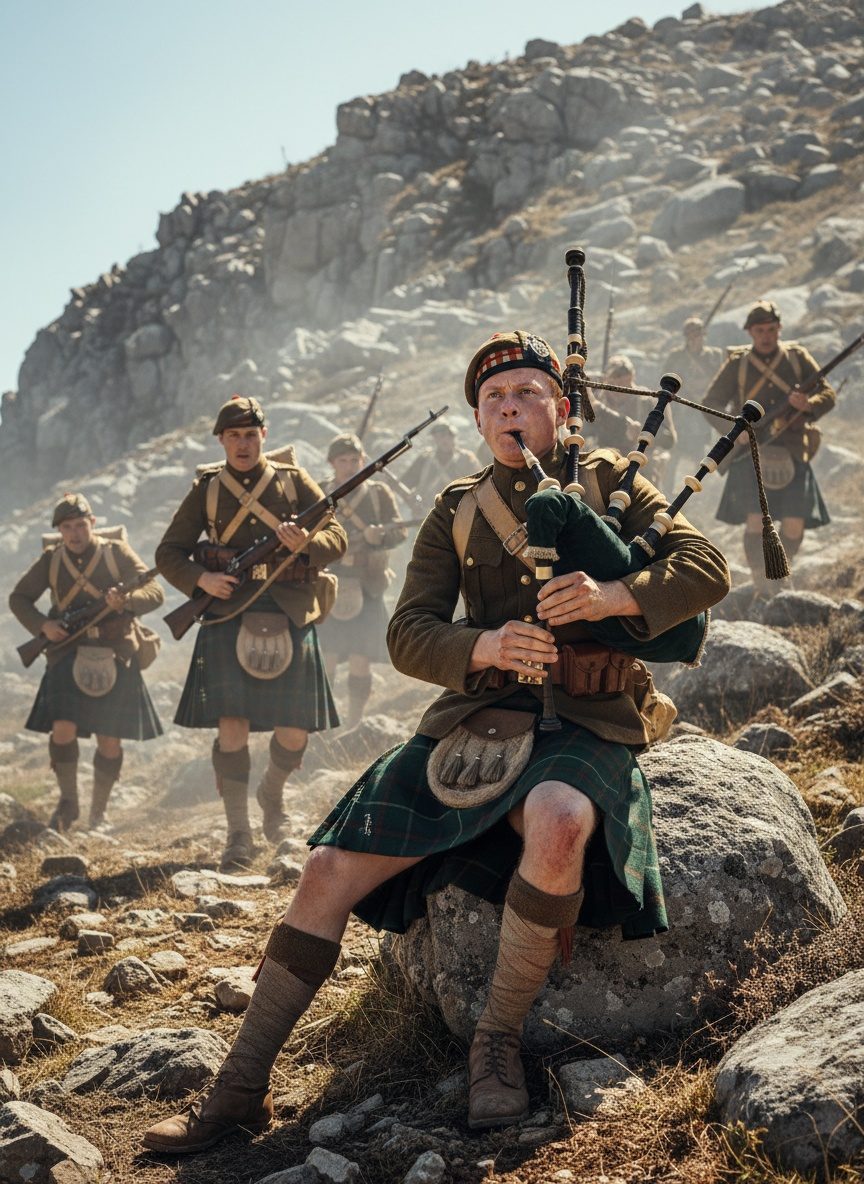
Findlater was struck down, shot through both ankles—a crippling injury in any assault, assuredly. Most would have been carried away, yet he refused evacuation. Instead, Findlater propped himself against a sun-bleached boulder, with determination suffusing every fiber of his being. The echo of pipes was silent no more. He began to play a stirring tune on the bagpipes that reverberated across the battlefield like a clarion call to action.
The strains of the pipes cut through the confusion and fear, soaring over the din of rifles and cries to rally the troops. The music transformed the atmosphere—the pulse of it driving into the hearts of the listening soldiers, galvanizing them with an irresistible urge to press forward. Findlater's anthem was more than a melody; it was an invocation, a resolute signal for the ranks to defy danger.
The Charge: Stirred by Music
The response was electrifying. Soldiers driven to shelter from the hail of bullets found a newfound courage; they rose from cover and advanced uphill. The pipes set the tempo, and the men matched it, surging forward with the sheer audacity of hope. Dargai Ridge was no longer just an impending loss; it became the stage for an unlikely resurgence.
A witnessing officer might have called it madness; others would name it sheer grit or the profound influence of music in its purest form. As the Highlanders charged, their battle cries mingled with the skirl of the pipes, forming an orchestra of defiance. And moment by moment, yard by agonizing yard, they pushed further up the enemy-held slope, testing the limits of courage and human spirit.
The journey uphill on Dargai was treacherous, as every man's breath burned with effort and determination. The assault, fueled by Findlater's music, emboldened even those who had hesitated, spurred others to rally around fallen comrades, and transformed what seemed inevitable defeat into an astounding victory snatched from the jaws of adversity.
A Lesson in Valor and the Human Spirit
The story of Piper Findlater doesn't belong solely in textbooks or military annals; it is a vivid testament to what stirs beneath the surface when soldiers find themselves facing insurmountable odds. It is about the spirit—the transcendent, intangible forces that can drive people to deeds that defy explanation. Findlater showed the world that music in battle can be both a symbol and a source of relentless courage.
The reverberating melody he brought to life on the field of Dargai has long since faded into history, but its resonant impact can still be felt. It was more than merely noise or distraction in a place of death; it was an act defying fate and a vivid reminder of human transcendence even when under unimaginable pressure.
In remembering George Findlater and his pipes that defied gravity and enemies on the slopes of Dargai Ridge, we are reminded that acts of bravery are often woven into the fabric of art, spirit, and an indomitable human will. And it serves as a poignant reminder—that even in the darkest moments of war, the spark of inspiration and resolve, fueled by an unexpected source, can illuminate the way to triumph.