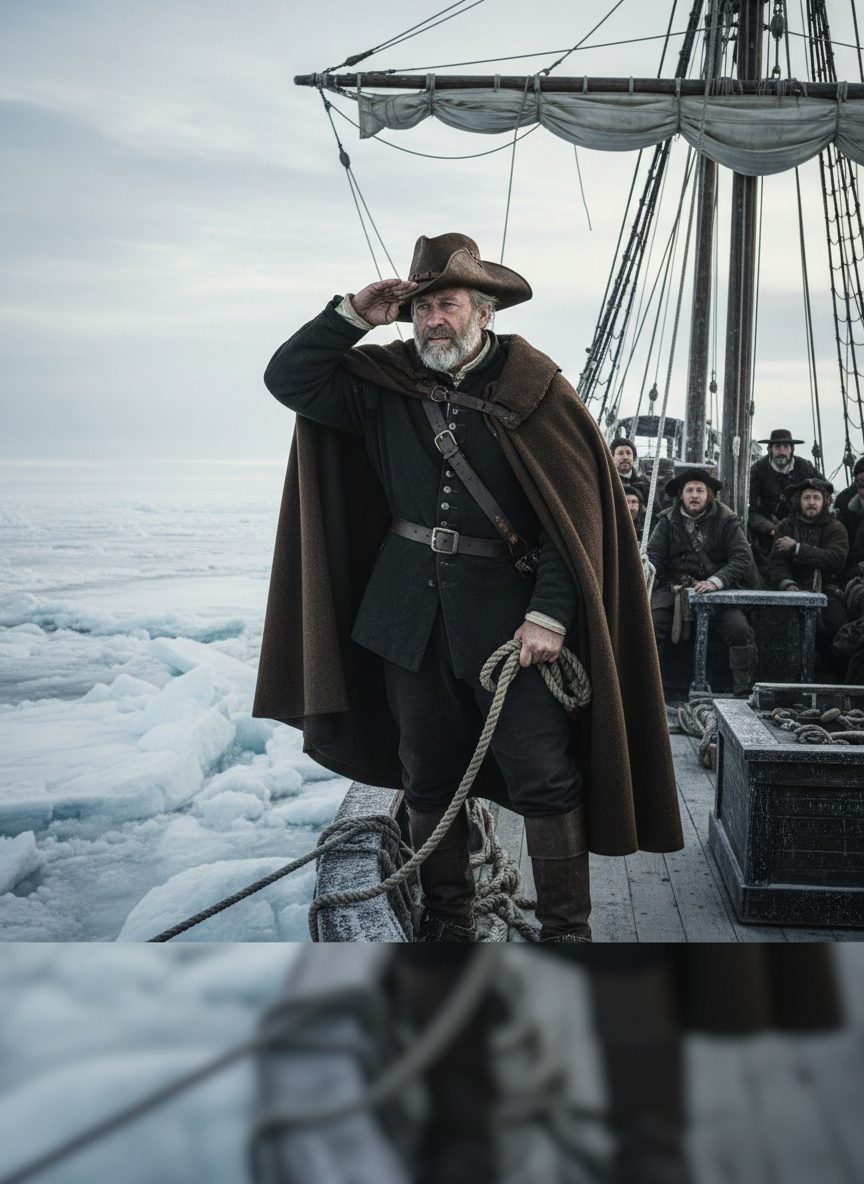
The ice groaned beneath the keel of the Discovery, sending shivers up Henry Hudson’s spine as he gripped the wheel. The relentless wind bit at his exposed skin, a chilling reminder of the merciless environment surrounding him and his crew. White expanses stretched endlessly under the pale summer sky, masking the treacherous icebergs lurking beneath. His eyes scanned the frozen horizon, searching for any sign of open water, the grail that promised success in his relentless quest for the Northwest Passage.
Into the Great Unknown
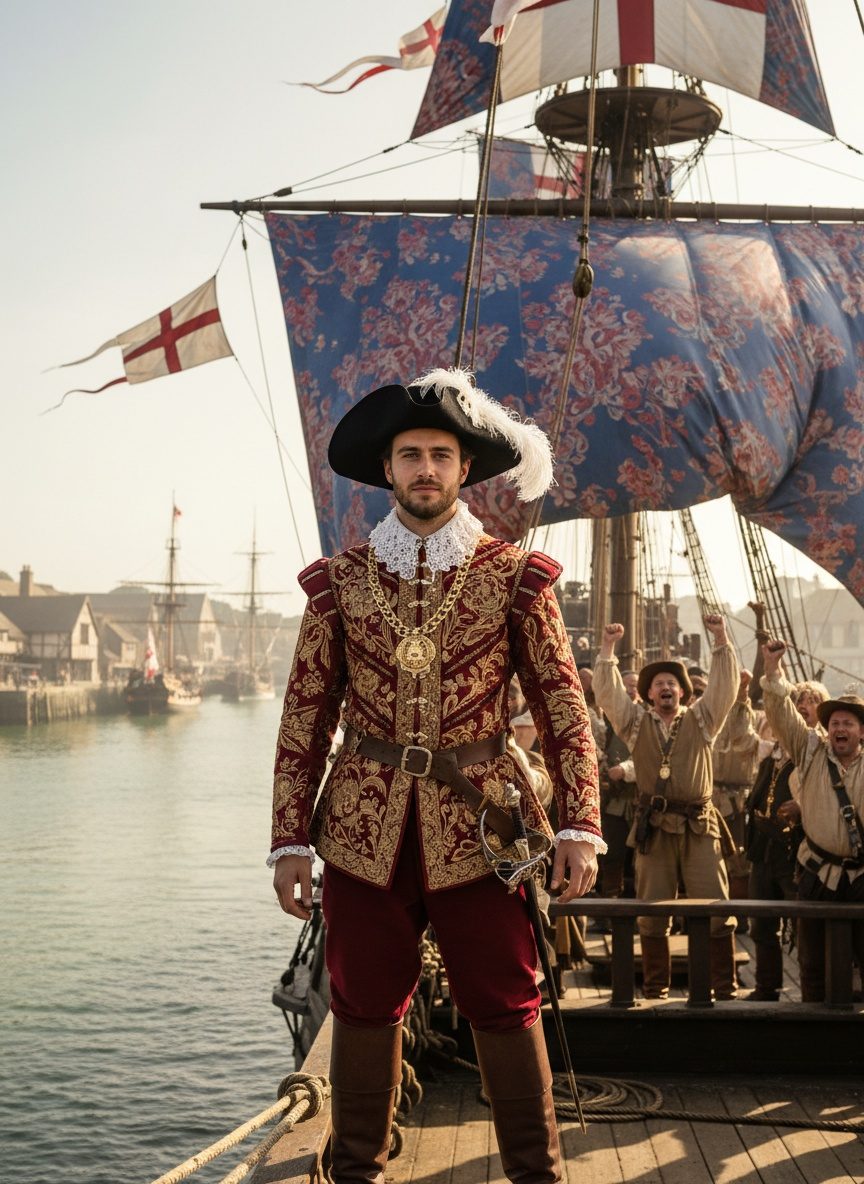
In the summer of 1610, Henry Hudson embarked on what would become his most ill-fated adventure. Known for his previous explorations that resulted in the naming of the river now synonymous with his own, Hudson was already a celebrated navigator eager to push the boundaries of known world maps. His employer, the English crown, fueled his ambition with the promise of wealth and fame. Hudson’s task was daunting: to locate the elusive Northwest Passage, the maritime shortcut promising riches for England by connecting the Atlantic and Pacific Oceans.
As Hudson's ship, the Discovery, departed, the crew remained hopeful, spurred by Hudson’s storied past and the allure of exploration. However, the voyage's excitement waned as they journeyed further northward, and the stark reality of their isolation set in. The Discovery's wooden frame creaked under the pressure of encroaching ice, and the vast bay — later known as Hudson Bay — seemed an imposing, insurmountable challenge, swallowing all hope of passage. Yet Hudson’s resolve did not falter; his drive to conquer the icy barriers was unwavering, much to the growing discontent of his weary men.
The Seeds of Mutiny
Beneath the deceptive calm of the frozen wilderness, tension simmered among the Discovery's crew. Supplies were dwindling, and the promise of a navigable passage seemed an ever-distant mirage. Most of Hudson’s men had never sailed so far north. They were seasoned seamen, yet unnerved by the hostile conditions and Hudson’s insistence to sail deeper into the icy maze. Night after night, whispered dissatisfaction grew into louder grievances echoing across the frost-laden decks.
Hudson, consumed by his task, failed to appease his men’s growing fears. To them, he seemed increasingly detached and impervious to their plight. The realization set in among the crew that their options were narrowing: abandon the mission and survive, or press on and face the abyss of the unknown. The ensuing mutiny was a convergence of frustration, fear, and desperation. Led by Henry Greene and Robert Juet, the mutineers seized the opportunity when the ice finally loosened its grip on the Discovery enough to allow for a deadly decision.
Set Adrift
Before the muted auroras of the perpetual twilight sky, Hudson was awoken by the coarse shouts of mutiny. In an icy dawn, the mutineers acted swiftly. Hudson, his son, and a few loyal crew members were unceremoniously cast into a small open boat — a lifeboat adrift in a sea of ice. As the Discovery cut a tenuous path towards open water, the abandoned boat with Hudson and his loyal followers soon vanished in the mists of time. The bay, barely charted and perilous, closed around them, leaving no trace of their fate.
Survival in these conditions was slim. With little food, no extra clothing, and frigid temperatures even in summer, the tiny vessel was a mere speck in the vast Antarctic-like wilderness. The final moments of Hudson and his son remain undocumented, lost to the brutal and unyielding environment. Yet stories linger from the survivors, suggesting a sense of betrayal mingled with regret that followed them home.
An Unyielding Legacy of Exploration
The tragic demise of Henry Hudson is not just a tale of ambition and failure but one of humankind's relentless spirit of exploration. Hudson’s disappearance embodies the allure and danger of the unknown in the Jacobean Era, when empires were built on the backs of hardy explorers seeking fortune and glory. Despite his ill-fated voyage, Hudson’s name endures, etched into the geography of Canada and celebrated in the annals of naval exploration.
Hudson's tragic end raises the age-old question of the value of exploration against human cost. Even as he was obscured by the ice, Europe’s hunger for new routes and discoveries continued unabated, driven by the narrative of potential prosperity. Hudson’s voyage and subsequent disappearance underscore the perils inherent in seeking the uncharted, offering a poignant reminder of those who ventured into the void — forgotten but for the icy waters that echo their untold stories.