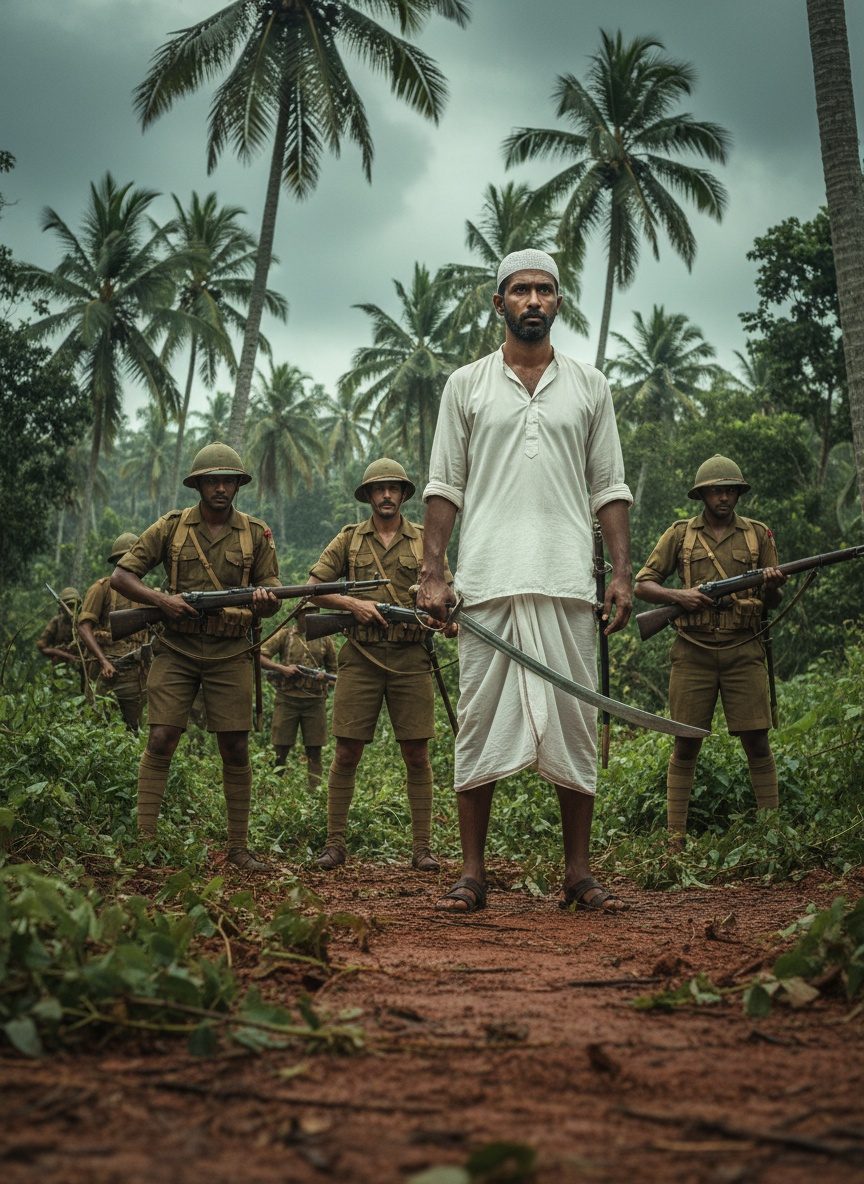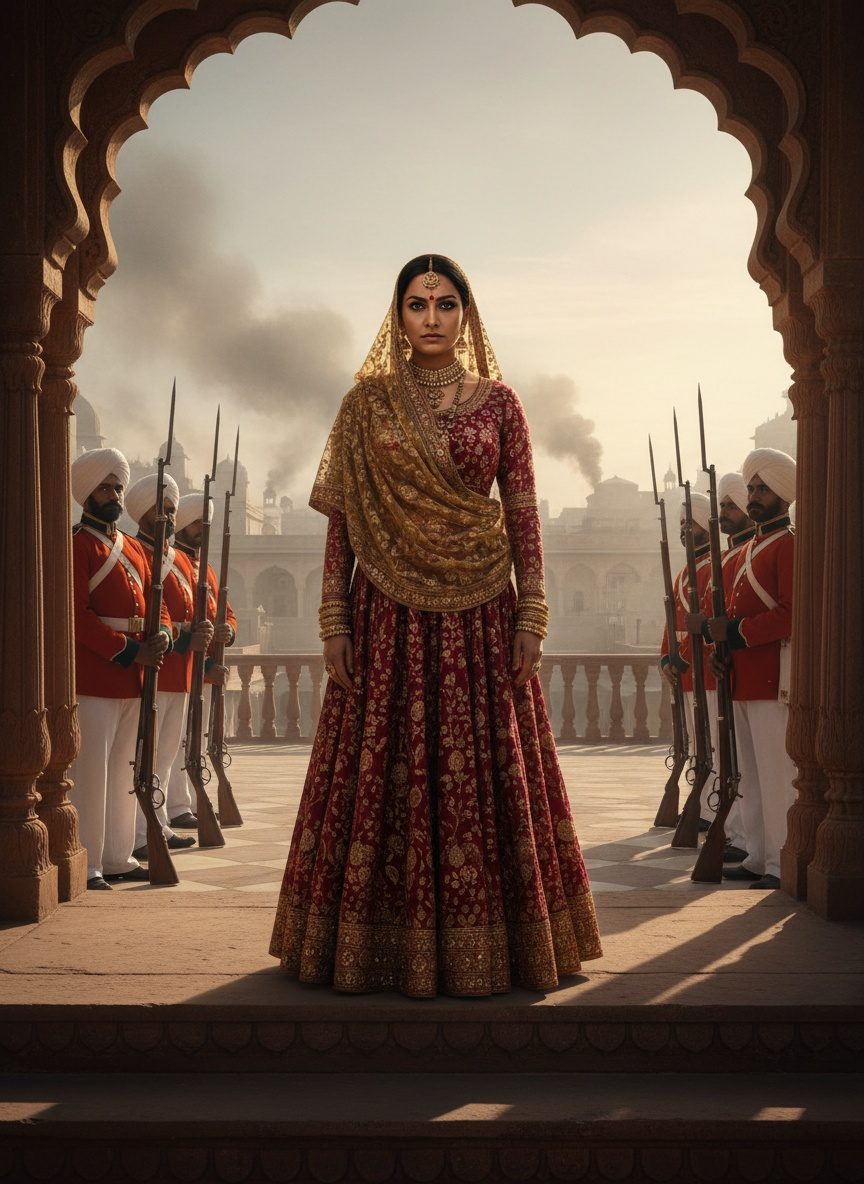
The rhythmic clatter of hooves against the dusty plains crescendoed into a battle cry as Begum Hazrat Mahal, adorned in regal attire that refused to surrender its regal luster beneath the sun-drenched sky, charged at the helm of her forces. Her silhouette, framed against the embers of Lucknow's blazing horizon, seared into the memories of those who witnessed this remarkable woman defy a mighty empire. For a moment, the world held its breath, neither the British Jack nor the rebel tri-color daring to flutter in the deafening silence.
In 1857, the Indian subcontinent was a simmering cauldron of unrest, and when the British East India Company annexed the rich kingdom of Oudh, toppling its ruler, Wajid Ali Shah, it ignited a spark among its people. Amidst this chaos arose Hazrat Mahal, a formidable woman determined not to let the British subdue the dignity of her land. With a heart burning with indignation, she crafted the first ripples of revolt by assembling an army to reclaim what was unjustly taken from her son, the deposed king.
The streets of Lucknow, once echoing with the melodies of ghazals and courtly music, now trembled under the weight of rebellion. The Mughal-inspired architecture, with its arches and sprawling gardens, bore witness to an uprising that appeared as unexpected as it was fierce. Hazrat Mahal's battle for Oudh was both strategic and passionate, encompassing not just soldiers, but entire communities galvanized by her indomitable spirit.
The British, though initially dismissive of the resistance, soon realized they faced a force unwavering in its resolve. Hazrat Mahal's leadership was fueled by an audacious belief in innate justice—an anomaly in a society where patriarchy held tight reins. Her decision to recapture Lucknow was not mere rhetoric but a meticulously orchestrated campaign. As cannonballs crumbled castle walls and the acrid smoke merged with the cries of combat, Hazrat Mahal stood unfettered, unwavering amidst the chaos.
To the soldiers she inspired, she was more than a ruler—she was a beacon of hope. Her battle cry was more than a command; it was an invocation of honor and heritage. For the British, she became emblematic of their persistence's folly, an emblem of the unpredictability of colonized lands unbending under foreign dominion. Her presence on the battlefield, both commanding and haunting, interwove reality with rebellion, a tale etched deep into the collective memory of not just Lucknow but an empire stretching its sovereignty over continents.
Despite her military successes, her arsenal lay not solely in arms but in diplomacy. Her strategic alliances extended across region and religion, embracing those marginalized by the very conflicts she sought to resolve. Her ability to bind divergent communities showcased not just instinctive leadership but an empathetic understanding of human struggle—a trait as valuable as any sword.
As she declared her son as king from the palace steps, the resonance of her voice transcended the palace walls, vibrating through time to remind the world of her steadfast refusal to yield. Here was a mother defiantly rewriting the narrative of submission forced upon her. The significance of this act was far-reaching, challenging not just British authority but societal norms that confined women's roles in the progression of history. Hazrat Mahal emerged not only as a resolute mother but as an enduring symbol of resistance against colonial rule.
Yet, like all tales of resistance, hers was not one of unyielding triumph. Eventually, the tides turned. The might of the British forces was formidable, and soon, the forces of rebellion found their grip weakening under relentless pressure. The once unfaltering hold on Lucknow began to crack, yet even in retreat, Hazrat Mahal's dignity remained untouched. Her legacy was not diminished by the eventual British recapture, but instead, rooted deeper into the soil of India's history by each step taken on her unwavering path.
Following the collapse of the mutiny, she sought refuge far from the lands she fought to free, yet the stories of her valor echoed through the annals of a nation still seeking its full liberation. As the dust of battle settled and tallies were drawn, it became clear that Hazrat Mahal's struggle extended far beyond the borders of Oudh. Her fight was not merely for a throne, but a beacon lit against the injustice borne of imperial ambition, an invocation for future generations to pursue freedom zealously yet honorably.
In the winding complexities of Victorian history, the tale of Begum Hazrat Mahal offers lessons as profound now as they were then. Her rebellion was a question posed to the empire—a challenge of its authority and a declaration that no power, however formidable, is beyond reproach from the righteous fury of those it seeks to suppress. Her story, an unvarnished narrative of courage and conviction, reminds us that history's pages are enriched by the voices that rise against silence, illustrating that the strands of rebellion are often woven by hands unheralded in textbooks but unforgettable in essence.