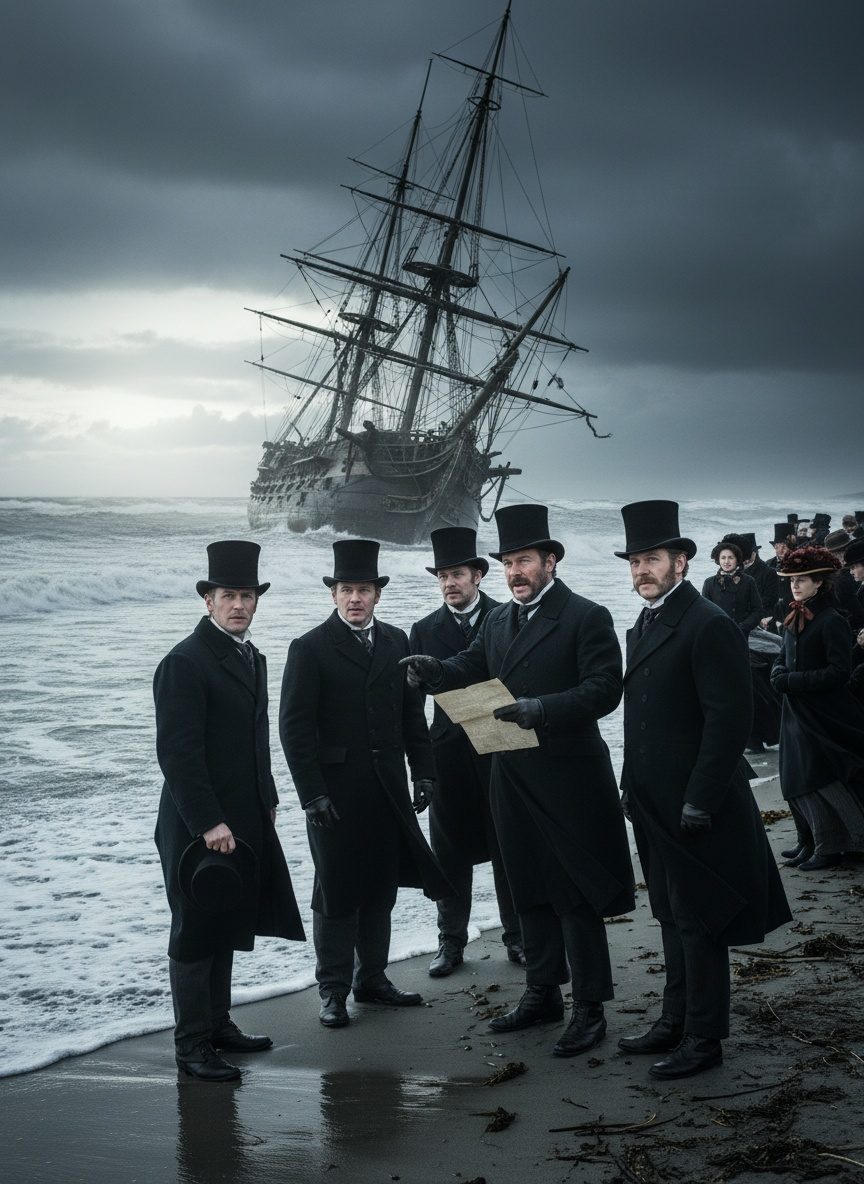
The North Sea raged with an unforgiving fury as the sands of Blackpool shifted treacherously, battering the staunch yet aging hull of HMS Foudroyant, Nelson’s proud Mediterranean flagship. Towering waves crashed over the weary vessel, each impact resonating through the battered timbers, long accustomed to the calm of the tourist gaze rather than the wrath of nature. As the relentless storm surged, it was as though the sea itself sought to reclaim the forgotten glories embedded within the ship's wooden bones.
The fate of HMS Foudroyant, once the mightiest bore under Admiral Horatio Nelson, had become an unexpected spectacle for Victorian tourism, far removed from its days of strategic maritime endeavors. For years, the vessel rested as a floating museum, her decks trodden by visitors intrigued by tales of cannon fire and naval supremacy. Yet that night, in the summer of 1897, the storied past held no sway against the indifference of the elements. Wave after wave pounded mercilessly as the ship’s timbers groaned, eventually yielding to nature’s relentless beckoning.
Dawn broke on a scene of devastation. Strewn across the coastline lay the remnants of a bygone age, timbers scattered and scarred as poignant reminders of once-held prestige and power. What remained of HMS Foudroyant loomed as mere detritus destined to fade into obscurity. Yet, where history seemed to falter, opportunity arose. Enterprising dealers from Manchester discerned more than just wreckage along the shores. They perceived an echo of history, a tangible fragment of bygone glory ripe for reinvention.
With a sum of £250, these dealers acquired the remnants, envisioning transformation rather than loss. From the embers of destruction came creation. Under the deft hands of craftsmen, the steadfast oak beams of HMS Foudroyant were reborn. Where salty winds had once whistled through the rigging, now sawdust swirled in woodshops as the liberated timbers found new form. Furniture, they decided, history imbued and legacy-laden, would emerge, allowing everyday Victorians to own a piece of maritime mythos. The oak was cut, shaped, and polished, each item a tactile testament to naval prowess.
Among these pieces, a singular bookcase captured the essence of the HMS Foudroyant’s storied past; a relic transformed, finding new life in Victorian parlors and studies. Contoured by history, it bore witness to the turn of empires — a repository, both physical and metaphorical, for volumes that might recount Nelson’s triumphs or perhaps tales far removed from naval theater. Years later, this humble bookcase would command the remarkable sum of £41,000 at auction, not merely as furniture, but as history incarnate, possessing a narrative that transcended time lost and reclaimed.
Reflecting upon HMS Foudroyant's transformation from flagship to flotsam and ultimately to a cherished heirloom draws out thoughts on the impermanence of dominance and the resilience of history's echo. For every piece turned from wreck to relic, the spirit of Nelson’s command was enshrined within household corners, a quiet testament to the impermanence of power and the indelible imprint every facet of history leaves upon us.
This story, wherein victory and ruin coalesce along Blackpool’s shore, compels us to consider the rhythms of past and present. The mighty often find themselves reduced by forces beyond comprehension and control, yet their essence persists, recreated in new forms that continue to shape the living memory. HMS Foudroyant's journey from sea to shelf speaks to the relentless evolution of history; it is not retained solely in grand endeavors or solemn tomes but within the fragments we choose to preserve, adapt, and share. As we shelter history within the everyday objects around us, these tales embed themselves, gently whispering their legacy across generations.