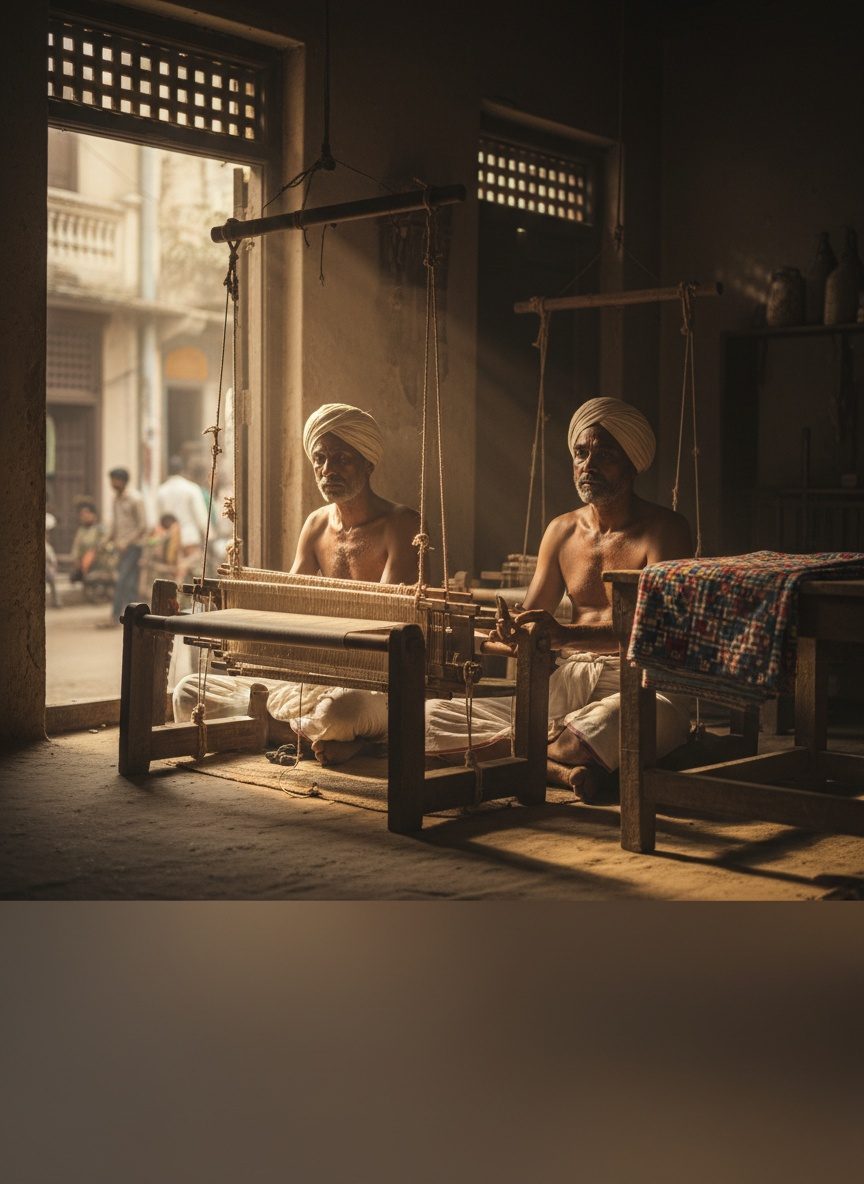
The calloused hands of Gopal, a master weaver of Dacca, lay trembling as he spread the delicate muslin across his lap. In the dim light of his workshop, he could almost discern the faces of long-departed empresses who once wore garments spun from his fingers' very skill. The sound of an English-made train whistle echoed through the night, a harbinger of change that had forever altered the landscape of his craft.
For generations, the weavers of Dacca had been the guardians of a tradition so cherished, it was whispered through the courts of Mughal emperors and sought after by the connoisseurs across Asia and Europe. The muslin they produced was not merely cloth; it was an ethereal wonder, a fabric so fine and light, it was famously called "woven air." But in the brutal economic calculus of the 19th century, such artistry became a casualty of mechanization.
As the British Empire tightened its grip on India, its industrial revolution marched relentlessly onward. The Lancashire mills were the engines behind this mercantile machine, spewing out mountains of cheap, machine-made cloth. The power looms spun not only cotton but a new world order, where price triumphed over skill, and speed outweighed beauty. The very markets that once had been havens for the delicate muslin now teemed with rolls of industrial cotton that no human hand could produce at such a relentless pace.
In villages and towns throughout East Bengal, the work of weavers like Gopal was slowly choked by the hands of machines halfway around the globe. The muslin, once worth its weight in gold, was devalued. British policies held the weavers in an iron grip, extracting India's raw cotton to feed their factories and inundating the subcontinent with the finished product. The ledger books of empire recorded profit, but on the ground, the human cost was staggering.
The faces of Dacca's master weavers, once lit by the halos of their craft's legacy, dimmed with the weight of obscurity and poverty. They lived as shadows of their forebears, the hum of looms replaced by the silence of potential unrealized. They were acutely aware of the stories of Ned Ludd and his followers, the English weavers who had smashed the very machines that now threatened their own existence. But in Dacca, the rebellion was silent, fought not with hammers or flames but with the quiet dignity of survival in the face of obsolescence.
Trade networks, once vital arteries, dried up. Muslin merchants became agents of foreign textiles, and skilled laborers slipped into destitution. The transformation was almost invisible, occurring in the spaces between numbers on a balance sheet, as devastating to the weavers as any army. The craftsman who had once woven tales into fabric now faced tales of their decline woven into silence by their economic dispossession.
The British Raj, in its quest for supremacy, had inadvertently killed the golden goose of hand-crafted textiles that had flown so proudly over the Indian subcontinent. The narrative was audible in the cry of every loony wheel, a note in the deafening crescendo of an industrial symphony that had no space for the slow, time-honored rhythm of the hand and loom.
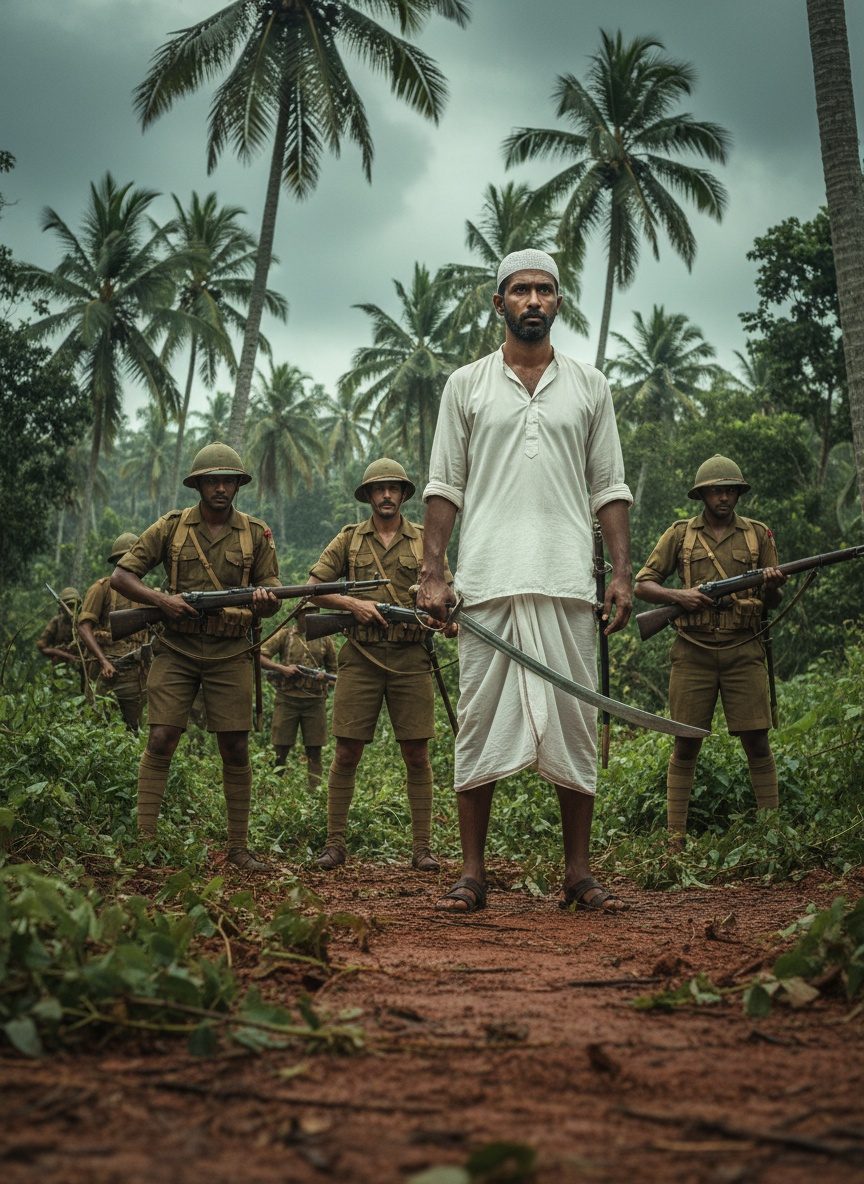
With the outbreak of the Indian Mutiny in 1857, the signs of pent-up resentment were stark, painted upon the vast canvas of rebellion that swept across the lands. While the greater story of revolt centered around soldiers, kings, and the ousting of foreign governance, it is the quiet, everyday battles of people like Gopal that illustrate the subtler contours of resistance. Their struggle was one of endurance, amid socio-economic upheaval, and cultural denudation.
The decay of the muslin weaving industry was emblematic of a larger shift, an echo of the global transition from artisanal craft to industrial output and the resultant cultural erasures that followed in its wake. The loss of "woven air" meant more than economic ruin; it was a tear in the cultural fabric of India, irrevocable and profound. Yet this was a story deliberately left out of colonial textbooks. It is a humbling reminder of how empires, in pursuit of growth, often trample that which is most exquisite and irreplaceable.
As dusk settled upon the weaver’s field, Gopal looked out across a horizon mottled with memories. Dacca had been a locus of beauty and labor intertwined. That fabric, with its delicate warp and weft, wasn't just a casualty of economic change but a testament to the enduring spirit that lies wherever craft becomes art. In the quiet rooms where looms once clattered with promises, the story of Ned Ludd's indirect war on India's weavers remains a poignant whispered lament—a cautionary tale woven into the annals of history, demanding we pause and consider the value stories hold beyond mere transactions.