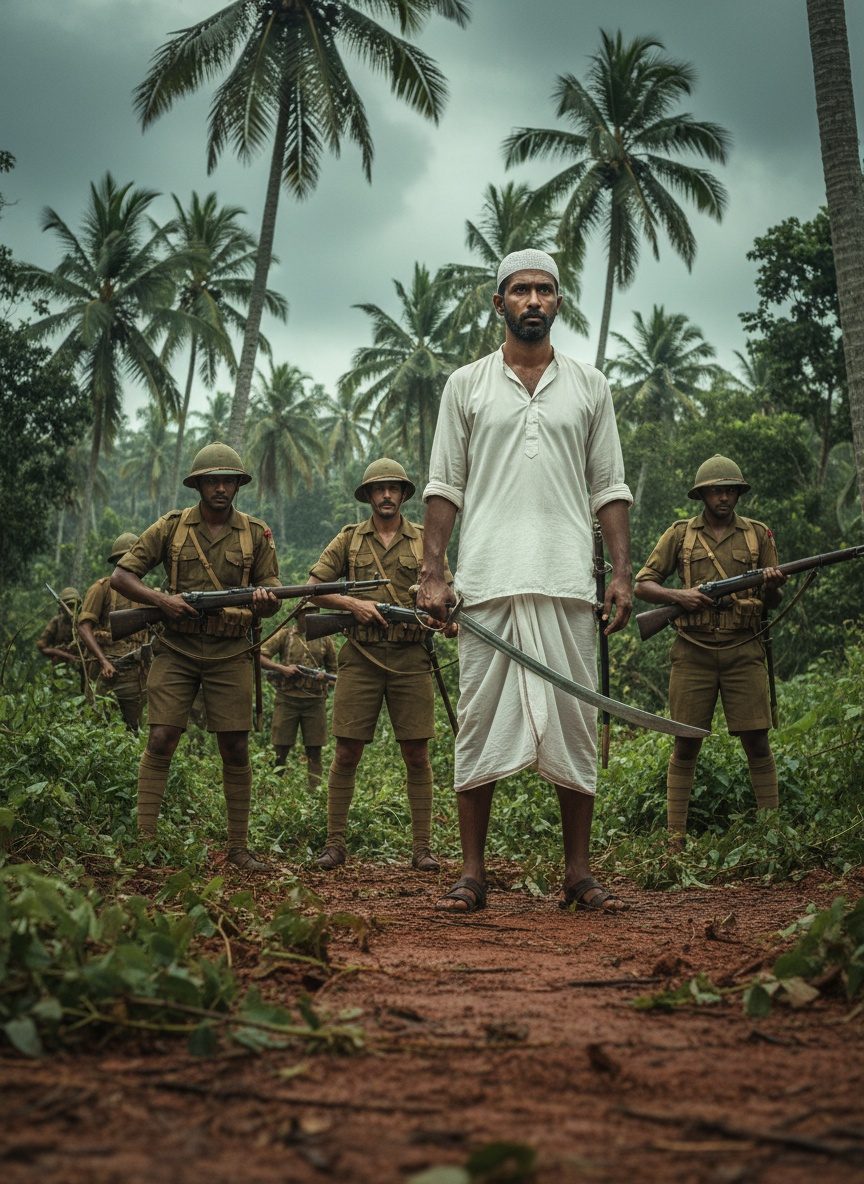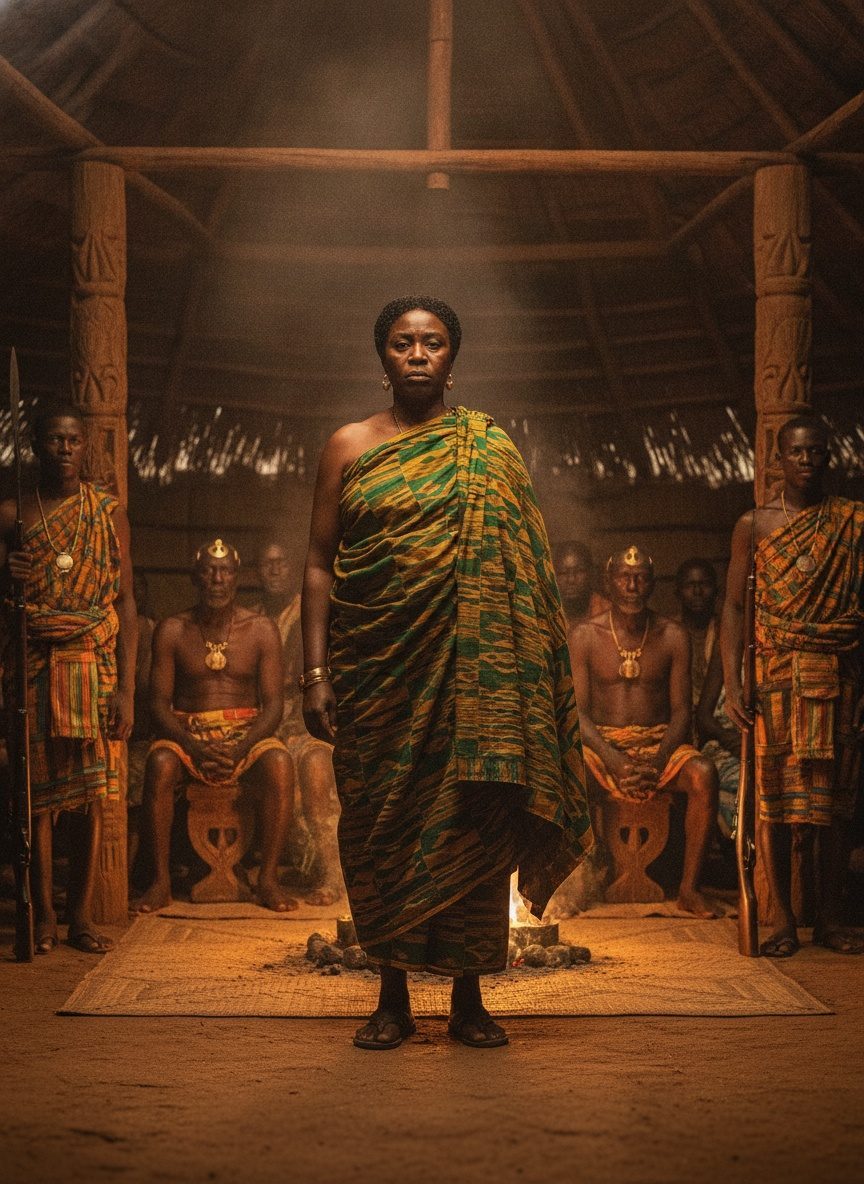
The humid air clung to the skin as dawn broke over the dense forests of the Ashanti Empire in 1900. Beneath the ethereal glow of a rising sun, the distant call of a hornbill echoed through the thick foliage, a sound both ancient and persistent. In this mist-laden land, a confrontation was brewing that would humiliate the British Empire and inspire a people. Here, surrounded by the ceaseless whispers of the trees, stood a symbol of defiance and cultural identity: the Golden Stool of the Ashanti. This sacred throne, a metaphorical heart of the nation, represented an unyielding spirit in the face of colonial oppression.
Gathering Storm: The Unthinkable Demand
The Ashanti, a people whose history and customs ran deep into the African soil, faced a grave challenge as the 20th century dawned. The British, in their relentless quest for dominion, had already made significant inroads. The Ashanti king, Prempeh I, had been exiled in 1896, a move designed to fracture the leadership and subdue any notion of defiance. Yet, the British underestimated the potency of the Ashanti's cultural solidarity, encapsulated by the Golden Stool. To ask for its surrender was to demand the very soul of their identity.
In the bustling chamber of Kumasi, high-ranking British officials sat surrounded by bewildered Ashanti chiefs. The colonial governor's voice pierced through the murmurs, etching history with a callous demand: the immediate submission of the Golden Stool. Among the men who sat in shocked silence, one voice rose — firm, resonant, and unsuppressed. Yaa Asantewaa, an elder woman of noble standing, declared the audacity of this demand as not only an insult but an instigation to fight.
Yaa Asantewaa was no ordinary woman; she was the Queen Mother of Ejisu, renowned for her wisdom, strength, and resolve. Empowered by her people's heritage and her own indomitable spirit, she emerged as an unexpected leader. She knew too well that this was not just about a symbol but about their existence and autonomy. By the end of that fateful meeting, she had roused the chiefs and the land for a battle that would be etched into the annals of resistance: the War of the Golden Stool, or the Yaa Asantewaa War.
Battle Cry: Rising from the Ashes
As the year unfolded, the Ashanti prepared for a confrontation unlike any other. Yaa Asantewaa, rifle in hand, led an army into battle. Her call to arms resonated deeply with the men and women of Ashanti, as tales of her courage spread like wildfire. She declared, "Now I see that some of you fear to go forward to fight for our king. If it were in the brave days of Osei Tutu, Okomfo Anokye, and Opoku Ware, chiefs would not sit down to see their king taken away without firing a shot. No white man could have dared to speak to chiefs of Ashanti in the way the governor spoke today. Is it true that the bravery of Ashanti is no more? I shall call upon my fellow women. We will fight till the last of us falls in the battlefields."
Her words electrified the Ashanti lands. Under her leadership, Ashanti warriors crafted cunning strategies, leveraging their intimate knowledge of the land's terrain. The dense forests and winding paths became allies, swallowing British soldiers in a battle of attrition. While the British possessed superior weaponry, they lacked understanding of the region's complexities.
The war spanned several months, each skirmish revealing the resolve of a people under siege. Yaa Asantewaa didn't just inspire with words; she led troops, planned offensives, and coordinated logistics. Her wisdom was unparalleled, her spirit untamed, making her a beacon of hope and resistance. Intrigue and surprises plagued the British forces as they grappled with a local population that refused to bow down to foreign rule.
Despite being outmatched in terms of resources and facing the brutal reality of colonial warfare, the Ashanti, fortified by their ancestral spirits, stood their ground. Yaa Asantewaa's defiance became a rallying cry, ushering her into the folklore of not just the Ashanti or Ghana, but Africa as a whole.
The Aftermath: A Legacy Beyond Surrender
Ultimately, in a classic tale of imperial resilience versus the indestructible human spirit, the British wielded their might to regain control over the region by early 1901. Yaa Asantewaa was captured and exiled to the Seychelles, much like the young king before her. However, even in defeat, her story was not one of submission. It was a testament to the fact that one woman, fueled by unyielding devotion to her people and their traditions, could stand undaunted before an empire.
The Ashanti did not relinquish the Golden Stool, preserving the bedrock of their identity and dignity. The stool, hidden and protected by the Ashanti, became more than just a symbol; it was a vessel of resilience and hope for generations to come. The echo of Yaa Asantewaa's stand lingered, inspiring independence movements not just in Africa but in other colonized lands yearning for autonomy.
The British Empire, with its engines of industrial power, was forced to acknowledge that their rule was precarious when faced with the sonorous call of a people's spirit. Yaa Asantewaa's legacy is not just a narrative of resistance but a powerful reminder of the intrinsic capability of individuals — particularly women — to change the course of history. Her story resonates today as an exemplary chapter in the book of human experience, urging us to question power, seek justice, and most importantly, never underestimate the strength of those who fight for their truth. In the hushed reverence of the forests she once roamed, her legend endures, inspiring us forever with the haunting refrain of defiance in the face of tyranny.