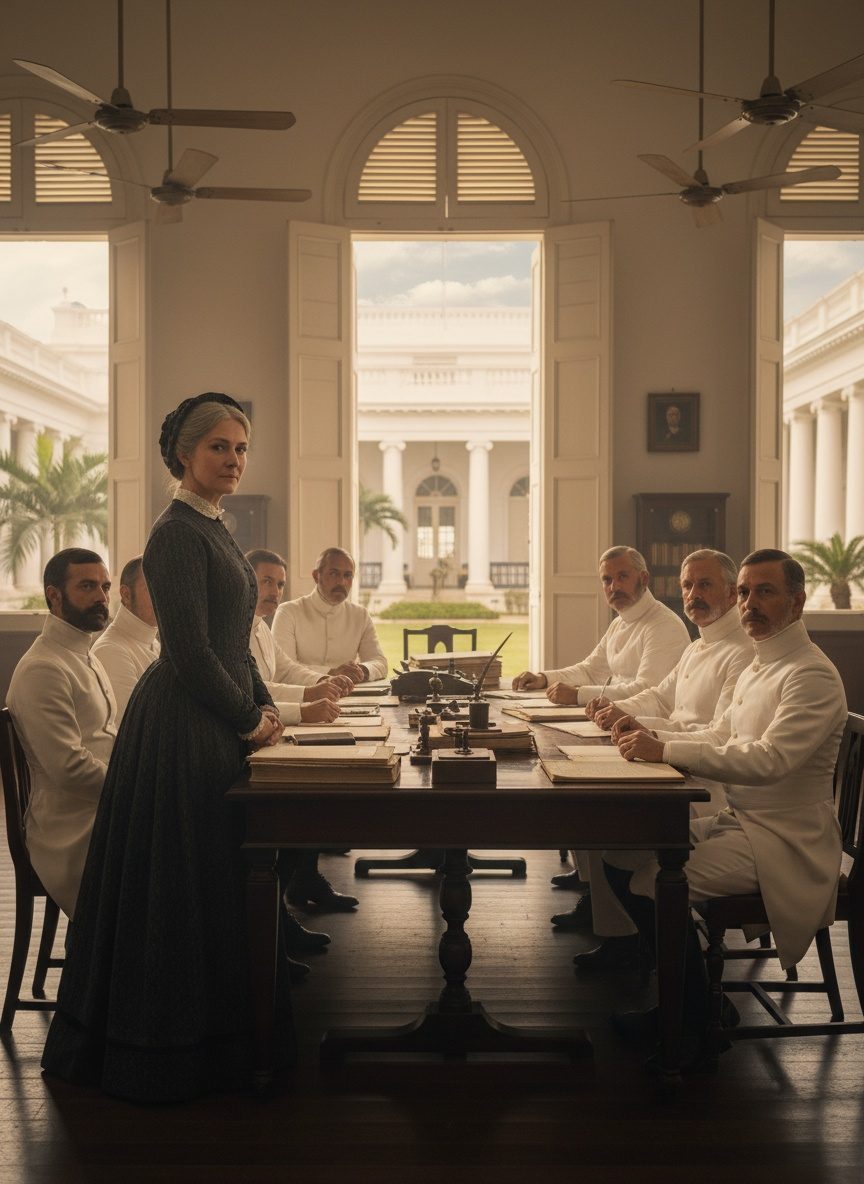
The heat in Calcutta was sweltering on that humid afternoon in 1866. The sun beat down mercilessly on the frenetic streets, where the clang of horse-drawn carriages jostled with the cries of market vendors hawking their wares. Inside the Governor's residence, however, all was quiet. An Englishwoman stood poised in the dimly lit council chamber, her presence at odds with the somber colonial decor. Mary Carpenter was here on a mission—with no army, title, or power. What she did have was a dogged determination and the moral indignation that came from witnessing injustice that could no longer be ignored. Her words would dare to challenge an Empire, compelling even the most hardened officials of the Raj to sit up and listen.
One Woman's Journey with a Mission
Mary Carpenter was no stranger to reform. Hailing from Bristol, she had already carved a reputation as a formidable advocate for the underprivileged children of Britain. Her work in establishing reformatories and schools for destitute youth was pioneering. But Carpenter was not content with changing her own country; she was compelled to widen her gaze to the colonies where she saw a dire need. She embarked on her journey to India armed with nothing more than her notebook and conscience, traversing the seas to a world on the cusp of change.
The India that Carpenter arrived in was a country in transition, creaking under the weight of British rule yet vibrant with cultural riches. Amidst its complexity, one fact stood starkly clear: the Indian girl child was deprived of education almost entirely, invisible in her own land. Carpenter's mission was audacious—to make her presence felt, to evoke the conscience of those with power and, crucially, to lay the foundation for a future where India's daughters could learn and thrive.
The Grim Reality Inside India's Classrooms
On her first explorations through the educational landscape of colonial India, Carpenter was confronted with a disheartening reality. While some progress had been made in educating boys, with a handful of missionary and government schools feebly trying to cater to them, girls were left behind, their potential locked away by societal conventions and neglect. Carpenter witnessed firsthand the absence of basic schooling for girls, a bleak truth she documented rigorously in her notebook, detail upon detail of an unjust system.
The challenge lay not just in setting up schools but in dismantling a web of traditions that kept the girl child away from books and classrooms. Her days were spent visiting remote villages, speaking to families, and understanding barriers from within the pervasive patriarchal setup. Her discoveries were startling even to her. No colonial reports had perhaps captured the starkness of the divide she saw: a generation of girls growing up in the shadows, untouched by the light of education that her own life had been so enriched by.
Speaking Truth in the Chamber of Power
With her evidence meticulously compiled, Mary Carpenter approached the most powerful seats of the British Raj. The scene was remarkable. An Englishwoman, without the social trappings of power, daring to lecture colonial officials on their moral responsibility, beseeching them to recognize their duty toward the children of India—notably, its girls. The gravity of her words emerged, weighty and unavoidable, as she recounted the stories and statistics of her visits. The colonial officials were unaccustomed to such directness but knew they couldn’t ignore her earnest plea.
Carpenter's arguments were not simply emotional appeals; they were a calculated exposé of colonial negligence, interwoven with human stories that could not be unseen. She articulated the connection between the lack of education and the perpetuation of poverty and societal stagnation, presenting girl’s education as not just morally imperative, but also pragmatically necessary for the betterment of an evolving India under British watch.
The Dawn of Change
Momentum, though hard-won, was now on Carpenter's side. Her persistence bore fruit—a shift began. By 1870, just a few years following her call to action, the first girls’ schools in India started to take root. Enclaves of learning emerged in remote stretches, where classrooms filled with the chatter of girls, their bright eyes filled with a thirst for knowledge that had long been denied. Carpenter’s role was foundational; she leveraged her networks back in Britain to funnel funds and resources, ensuring that these schools wouldn’t just be established but also sustained.
Perhaps what was most remarkable was that Carpenter's earnest efforts lit a flame within India itself. Inspired by her work, locals took up the cause, and Indian reformers such as Jyotirao Phule and Savitribai Phule took strides toward ensuring local girls were not left behind. Her efforts had literally sown seeds that would grow long after her departure, diversifying into a wider movement for gender equality in education that would snowball across decades.
In the Wake of a Legacy
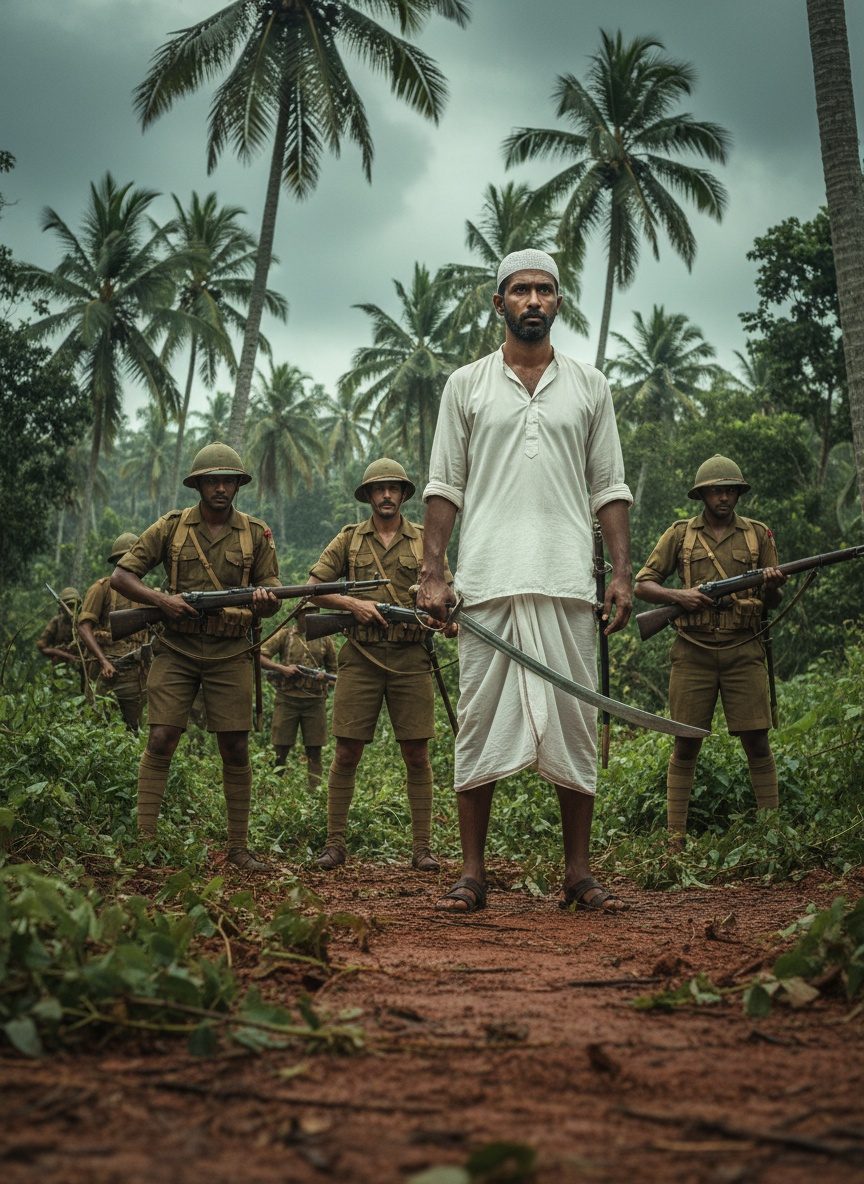
Mary Carpenter returned to England, but the legacy of her courage persisted in the hundreds of intelligent girls who could now envision a different destiny. This was the Victorian woman’s real revolution—effected not just through ceaseless advocacy but by inspiring a new mindset within India and the colonial machinery. Carpenter showed that the power of words, when spoken with truth, is indeed mightier than the sword.
The story of Mary Carpenter serves as an enduring reminder of what can happen when resolve meets an unwavering commitment to justice. In an era when so many voices were drowned by the tide of imperialism, hers was a voice that not only spoke but resonated, igniting change that altered the lives of generations. Her story matters profoundly—because it demonstrates how one person’s determination can challenge an empire and rewrite the destinies of many. As we remember her work, we are called to question our current educational inequalities and reminded, as she once reminded the towering Raj, that there is always more to be done.